Wholesale energy prices in the National Electricity Market (NEM) over summer were lower in northern regions and higher in southern regions compared with the previous quarter and same quarter last year—the result of a combination of factors shaping a changing energy market.
This was the takeaway from the Australian Energy Regulator’s (AER) latest Wholesale markets quarterly report for January to March 2025.
AER Board member Jarrod Ball said this quarter’s results were the reverse of the previous quarter, when wholesale energy prices rose in northern regions but fell in southern regions.
Related article: Wholesale electricity prices see-saw between regions in NEM
“The mixed market outcomes we saw over summer highlight the complex relationships between weather conditions, shifting energy demand and the increasingly diverse mix of generation types in the National Electricity Market,” he said.
Price decreases in NSW (-43% compared to Q4 2024) and QLD (-31% compared to Q4 2024) were primarily driven by a reduction in the number of high price events.
A high price event occurs when the 30-minute wholesale electricity price exceeds $5,000 per megawatt hour. There were 12 less high price events compared to last quarter and 15 less than the same time last year.
High price periods emerged during times of unusually high demand or when operational issues, including planned and unplanned network outages, reduced availability of lower-priced generation.
Increased prices in SA (+21% compared to Q4 2024) and VIC (+25% compared to Q4 2024) were largely driven by high demand during hot weather, while the rise in TAS (+49% compared to Q4 2024) was in part due to hydro generators reducing their volume of lower-priced offers into the market in response to dry conditions.
Electricity prices were very low or negative during times of high renewable output. A new record of 699 negative prices was set for NSW in this quarter, with large-scale solar and wind setting the price more often.
Year on year, generation in the NEM by intermittent renewables (large-scale solar and wind) increased significantly.
Related article: Modelling shows renewables the cheapest path for Australia
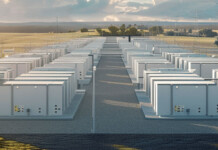
“A record volume of industrial-scale batteries entered this quarter, and the amount of electricity discharged from batteries rose 85.5% compared to this time last year,” Ball said.
QLD set an all-time maximum daily demand record of 11,258MW on 22 January (the previous record for QLD was set on the same day in 2024), while quarterly minimum demand records were set in NSW, SA and VIC.
Overall, downstream gas demand decreased from the previous quarter (from 63.4PJ to 53.6PJ) with the warmer summer weather but was marginally higher than the record low demand experienced in the first quarter of 2024.