Interview: Nadia Howland
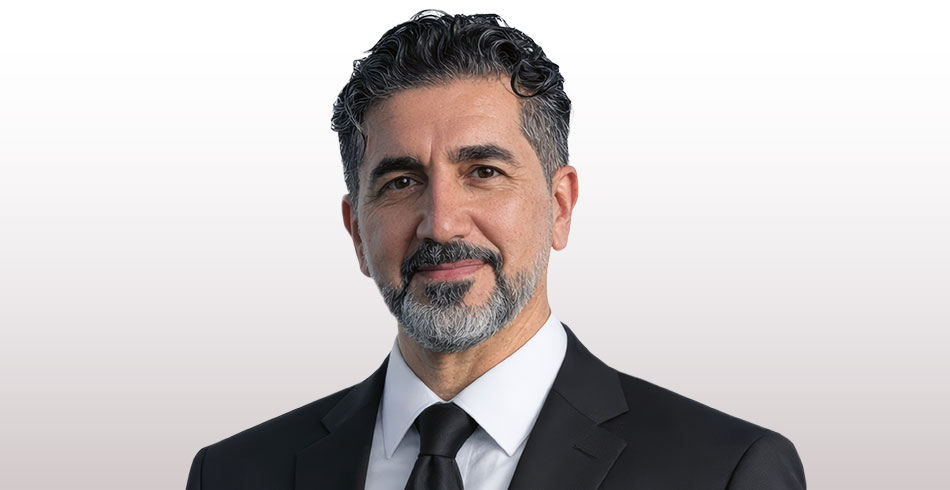
Energy Source & Distribution learns about CSIRO senior research scientist Dr Dia Milani’s incredible journey from refugee to renewable energy innovator.
Dia, please tell us a bit about yourself:
When I was in primary school, my family and I were forced to flee my home country, Iraq, to escape the tyranny of Saddam Hussein’s regime. Despite enormous challenges, I continued my education abroad as a refugee, until earning a Bachelor’s degree in Mechanical Engineering from the University of Aleppo.
In 1999, I sought asylum in Australia, determined to rebuild and prosper my career. While learning English, I undertook engineering refresher studies for migrant professionals, followed by a Diploma in Detail Drafting at NSW TAFE. My growing passion for the natural environment eventually led me to pursue a Master’s degree in Environmental Engineering Management at the University of Technology Sydney in 2005.
During the severe NSW drought of 2007, I was driven by a critical question: Are there unconventional methods to unlock new sources of freshwater? This curiosity took me to a PhD journey in chemical and biomolecular engineering at the University of Sydney. My research demonstrated that harvesting water from thin air is technically feasible and scalable. However, it also revealed a major technoeconomic and environmental challenge related to the high energy demand and associated carbon footprint. Confronting this problem shifted my focus toward integrating renewable energy solutions, laying the foundation for my ongoing career in decarbonisation and climate mitigation strategies and solutions.
Related article: CSIRO unveils $3M upgrade to renewable energy lab
Tell us a bit about your work at the Sustainable Carbon Technologies Group:
My research is driven by a single imperative: to develop efficient, scalable solutions to some of the world’s most urgent challenges—energy efficiency, greenhouse gas emissions, and water scarcity. As renewable energy technologies advance and global awareness of climate change intensify, there is a critical role for chemical and environmental engineers to help reshape the future of industry.
A central focus of my work is decarbonising “hard-to-abate” sectors, including energy, fuels, chemicals, and minerals processing—industries traditionally defined by high energy use and significant carbon footprints. I specialise in process intensification, integrating renewable energy with conventional systems to reduce both emissions and operating costs. In particular, I explore how solar energy can be harnessed to power energy-intensive industrial processes, while enabling the capture and utilisation of carbon emissions—turning a liability into a resource.
At CSIRO’s Sustainable Carbon Technologies Group, I collaborate with a multidisciplinary team of talented engineers, chemists, and designers to accelerate these innovations. Together, we are developing practical pathways to help Australia transition to a low-carbon economy and achieve its net-zero ambitions.
You transformed the concept of solar-assisted carbon capture (SA-CC) technology to the new concept of ‘solar-powered’ carbon capture (SP-CC). How does this work?
The concept of solar-assisted carbon capture (SA-CC) arise from a simple but powerful idea: harvest the sun’s heat to produce the carbon-neutral steam needed to regenerate the absorption liquid of the carbon capture unit retrofitted to a power or industrial plant. However, integrating intermittent solar energy into tightly balanced industrial steam cycles presents a major challenge. Conventional solutions, such as thermal energy storage, often introduce inefficiencies and energy losses that limit the overall performance.
To overcome this, I developed the concept of solar-powered carbon capture (SP-CC)—a step change in how carbon capture systems are designed. Instead of relying on a plant’s steam cycle, SP-CC decouples the process entirely, using solar energy directly within the capture system to regenerate the absorption liquid. This eliminates the need for thermal energy storage and enables a more flexible, autonomised, and renewable-driven pathway for carbon capture.
Supported by the NSW Department of Planning and Environment and in collaboration with the University of Sydney, this work has helped redefine the role of solar energy in industrial decarbonisation, leading to multiple high-impact journal publications and opening new directions for scalable, low-carbon technologies.
In early 2025, you secured a three-month placement at the National Renewable Energy Laboratory—now called the National Laboratory of the Rockies—in Colorado. What was that like?
I was honoured to receive CSIRO’s prestigious Julius Career Award (JCA), a recognition that enabled high-impact international collaboration with leading research organisations. Building on a newly established Memorandum of Understanding between CSIRO and the U.S. National Renewable Energy Laboratory (NREL), I became the first researcher to activate this partnership—helping turn a strategic agreement into a working scientific collaboration.
This placement was both a milestone and a catalyst. It created a unique opportunity to advance our shared work in mineralisation—an emerging pathway for permanently storing carbon—while bringing together complementary expertise from both organisations. By approaching the challenge from different scientific angles, we were able to identify new synergies and accelerate progress in ways neither team could achieve alone.
Beyond the technical outcomes, this experience played a critical role in building trust, alignment, and long-term collaboration between researchers. I had the opportunity to exchange knowledge, learn advanced techniques, present our work to international peers, and engage directly with cutting-edge developments in the field.
This collaboration not only strengthened ties between two world-leading research organisations, but also contributed to advancing scalable solutions for carbon management.
As someone who is now playing an active role in helping progress our energy transition, do you think this speaks to the importance of continued immigration and refugee programs in our country?
Australia stands out as a nation that not only welcomes refugees and migrants, but warmly empowers those with purpose, talent, and ambition to thrive. Its enduring values of fairness and multiculturalism create a powerful platform where inclusion and diversity are not just accepted—but they are amplified.
This environment enables skilled migrants to contribute meaningfully across every sector of society, from science and innovation to the arts and sport. Time and again, refugees and migrants who arrived seeking opportunity have gone on to shape Australia’s identity and global reputation—becoming leaders, pioneers, and cultural icons.
Their success stories do more than highlight personal achievement; they demonstrate the tangible value of inclusion. They inspire the next generation, challenge stereotypes, and become visible role models for others—showing what is possible when opportunity meets determination. In embracing diversity as a strength, Australia continues to build a more dynamic, innovative, and globally connected society, where I proudly feel I belong.
Related article: CSIRO trials robotic maintenance workers at large solar farms
What do you enjoy doing when you’re not working?
I spend time exploring Australia’s extraordinary natural landscapes. From its rugged bushland to its pristine coastlines, the country’s unique environment continues to shape how I connect with both place and purpose. I express this connection in simple but meaningful ways: nurturing life through gardening, immersing myself in bushwalks, and finding balance by the ocean. These moments are more than leisure—they ground me, spark creativity, and reinforce my commitment to protecting the natural world. Australia’s environment is not just something I enjoy; it is something I deeply value and feel responsible for preserving for future generations.