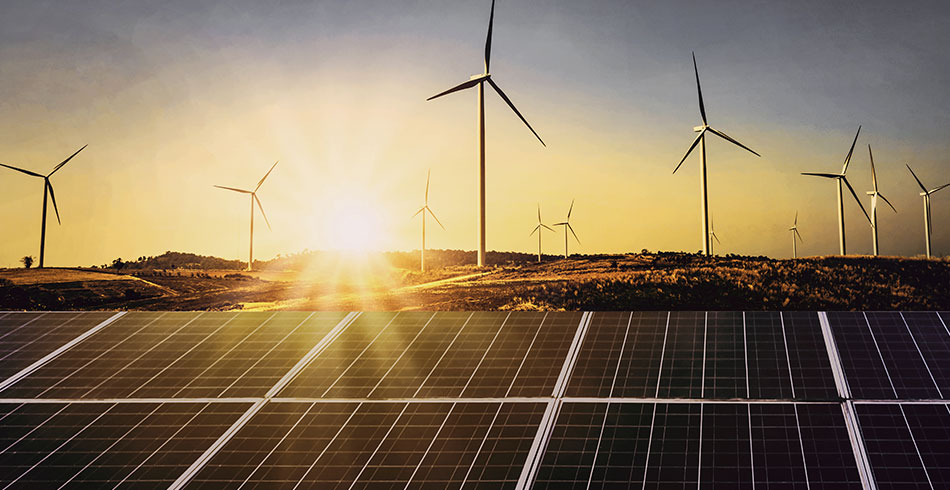
The Global Electricity Review 2026 by global energy think-tank Ember has revealed renewable generation capacity met 99% of global electricity demand growth in 2025—marking the first year since 2020 without an increase in generation from fossil fuels.
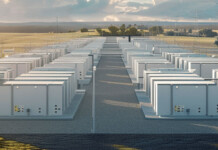
Australia installed enough grid-level storage to shift over 50% of new solar generation in 2025, with benefits such as lower power prices and reduced curtailment already recorded.
Related article: Renewables overtake coal globally for first time on record
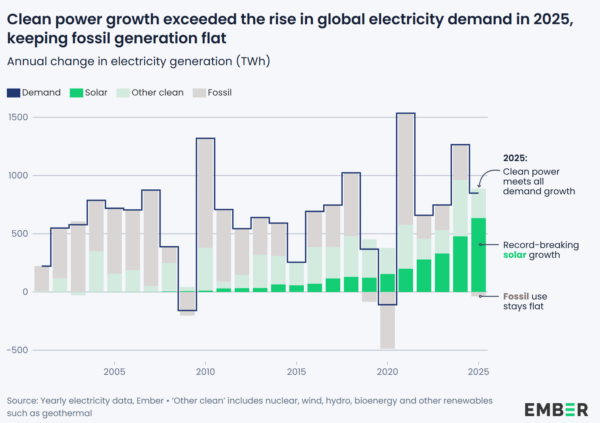
Record solar growth meant clean power sources grew fast enough to meet all new electricity demand in 2025, thereby preventing an increase in fossil generation. This was the first year since 2020 without an increase in electricity generation from fossil fuels and only the fifth year without a rise this century.
China and India, historically the largest contributors to the global rise in fossil power, both recorded a fall in fossil generation in 2025. In both countries, record clean power additions outpaced demand growth. This brought global net growth in fossil generation to a halt.
Solar power cemented its role as the dominant driver of change in the global power sector, with its record growth meeting three-quarters of the net rise in electricity demand in 2025. Solar’s rise was 18 times larger than that of gas—the only fossil fuel that increased in 2025. Global solar generation is now the same size as the total electricity demand of the EU.
China once again led solar build-out, recording more than half of the global increase in both solar capacity and solar generation in 2025. This pushed the share of solar and wind in China’s generation mix to 22%, surpassing the OECD average (20%). India also ramped up clean power deployment. Renewable generation growth doubled its previous record, and India installed more new solar capacity than the United States for the first time.
In another global milestone, renewables overtook coal power in 2025. Solar, wind, hydropower and other renewable sources together contributed more than a third of global electricity generation for the first time in the modern power system. Conversely, the share of coal power fell below a third for the first time in history.
The accelerating build-out of solar power is increasingly taking place alongside battery storage deployment, enabling the next paradigm shift—from daytime solar to anytime solar. Battery costs fell sharply for the second consecutive year. In 2024, battery costs dropped 20%. In 2025, they fell a further 45%, while deployment grew 46% to an estimated 250GWh. As a result, the world installed enough battery capacity to shift 14% of the new solar generation in 2025 from midday to other hours of the day.
Related article: 2025 a record-breaking year for renewables in Australia
Click here to view Ember’s Global Electricity Review 2026.