More renewable electricity was switched on in the final quarter of 2025 than in any other quarter on record, according to the Clean Energy Council’s (CEC) latest Quarterly Investment Report.
The report found nine large-scale wind and solar projects were commissioned during Q4 2025, delivering 2.1GW of new generation capacity—equivalent to powering at least 1.4 million homes. The strong result broke the previous quarterly record of 1.3GW in Q3 2021.
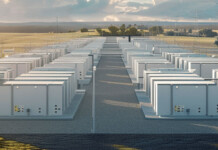
Utility-scale battery deployment also hit an all-time high. The quarter added 1GW/2.3GWh of new storage capacity—more than tripling the previous record set just one quarter earlier (541MW/1766MWh) and pushing 2025’s annual battery total (1.9GW/4.9GWh) above the combined output of the previous eight years (2.2GW/3.8GWh).
Related article: Renewables over 50%, wholesale prices down… Is the energy transition succeeding?
Investment momentum strengthened in the last quarter of the year, with five renewable generation projects reaching financial close in Q4. These projects represent 1.2GW of new capacity and $3.5 billion in value—an uplift from more subdued investment in the prior three quarters. It’s the second-highest investment total recorded in a single quarter, behind Q4 2022 ($4.3 billion).
Clean Energy Council CEO Jackie Trad said, “The final quarter of last year saw many new renewables records broken. Sixty-three percent of total renewable generation capacity that was switched on in 2025 was delivered in Q4 (2.1GW). That scale of projects being commissioned in a single quarter is an Aussie first.
“In addition, renewable energy supplied over half (51%) of all electricity in the NEM for the first time during Q4 2025, and reached up to 77% of peak demand when the grid was pushed to its limits during January’s extreme heatwaves.
“As more renewable projects come online, we’re seeing them do exactly what they’re designed to do: stabilise the energy system as coal-fired generators retire. It’s more evidence that Australia’s transition to renewables is well underway,” she said.
Trad said Australia was in a critical handover period from coal to renewables, and that maintaining positive investment momentum will require faster planning approvals and grid connection across jurisdictions.
Among the states and territories, the report found South Australia led the nation with the fastest average time from financial commitment to commissioning—19 months for solar farms and 23 months for onshore wind. SA and Victoria were tied for the quickest battery development timelines, averaging 20 months.
Queensland commissioned the most clean energy projects in Q4 last year (four), as projects approved under the former state government came online, however, it continued to have the longest delivery timelines: 23 months for solar, 37 months for wind, and 28 months for utility-scale batteries, against a backdrop of major energy policy reforms introduced by the current government in 2025.
Related article: Milestone as renewables supply over half Australia’s grid
Key highlights from the Q4 report:
- Q4 2025 outperformed all other quarters on record for commissioned renewable generation projects, as nine wind and solar farms brought 2.1GW of capacity online.
- Australia’s battery surge continued outside the home, with utility-scale batteries also setting new records, adding 1GW/2.3GWh of new capacity in Q4.
- An uptick in renewable generation investment saw five projects (1.2 GW) worth $3.5 billion reaching financial close—an uplift from the previous three subdued quarters.