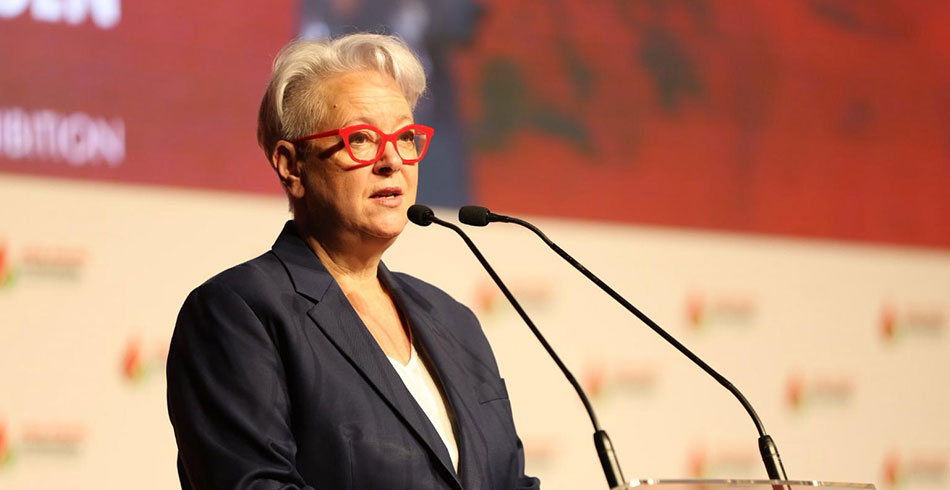
New South Wales Minister for Climate Change, Energy, the Environment and Heritage Penny Sharpe has announced the NSW Renewable Fuels Strategy at the Asia Pacific Hydrogen Summit & Exhibition.
The NSW Renewable Fuels Strategy outlines 20 actions to accelerate the production and use of renewable fuels in NSW, to drive down emissions and underpin industrial activity in NSW.
Related article:
Renewable fuels include green hydrogen, biomethane, sustainable aviation fuel, biodiesel and renewable diesel. With some actions including:
- Providing up to $130 million funding through the Net Zero Manufacturing Initiative to support commercial-scale production of renewable fuels from emerging technologies
- Providing up to $40 million in the Industrial Decarbonisation Grant to accelerate biomethane production
- Providing $1.5m to fund research and innovation to improve industry capability
- Supporting the expansion of GreenPower certification to renewable fuels and co-products.
The Australian Hydrogen Council (AHC) welcomed the launch of the strategy.
AHC CEO Dr Fiona Simon said, “We are thrilled to see the NSW Government outline its ambition for renewable fuels across the state today, and acknowledge the vital role of hydrogen in achieving it.
“NSW Government continues to take a pragmatic leadership approach that can have real effects on the bottom line for developers of emerging renewable fuels. Hydrogen is a feedstock for renewable fuels, and comprehensive and inclusive policies that provide for various options and blends is important to realise Australia’s decarbonisation ambition.
“Governments must now do more to work together and invest in open-access industrial infrastructure—electricity, water, ports and pipelines—staged for growth and shared across multiple industries.
Related article:
“Our task is to build the parts of the future system that are reachable now: the first shared infrastructure, the first credible export corridors, the first governance mechanisms that can outlast political cycles.
“If we can do that, we’ll turn the rhetoric of collaboration into reality—into a functioning market that delivers energy security, industrial competitiveness and genuine decarbonisation for NSW and our region.”