Distance has buffered Australia from the full impact of the Middle East oil crisis, giving the federal government valuable time to prepare the nation for the looming fuel supply crunch, according analysis from IEEFA Australia.
The last of the oil tankers to leave the Persian Gulf before the beginning of the Iran conflict and the closing of the Strait of Hormuz reached Asia, Europe and North America earlier this month. Australia’s oil supplies, meanwhile, face a longer lag, as most of its imports are first refined in Asia.
With pressure mounting on trading partners in Asia, competition for supply will only intensify, exposing Australia’s heavy dependence on fuel imports, particularly diesel, warns the note Managing Australia’s diesel squeeze.
Related article: What the Geelong refinery fire reveals about our fuel supplies
“Australia is one of the world’s highest users of diesel on a per dollar GDP basis, with a diesel consumption about three times as high as the US and Japan, and twice as high as Canada,” IEEFA Australia CEO Amandine Denis-Ryan said.
“A prolonged crisis would put significant constraints on the ability of key diesel producers in the Asia-Pacific region to continue exporting it. Most Asia-Pacific countries would need to either slash their exports or even start importing to meet their domestic demand.”
Only 13% of Australian diesel is refined domestically, making the country the world’s biggest importer of diesel, and leaving it acutely vulnerable to market volatility. Major economic sectors such as road and rail transport, agriculture and mining largely run on diesel.
“Diesel prices have had larger increases and more volatility than crude oil and petrol prices,” Denis-Ryan says.
“At their peak in early April 2026, diesel prices had tripled compared with prices at the start of the year, while there was an approximate doubling in price for crude oil and petrol.”
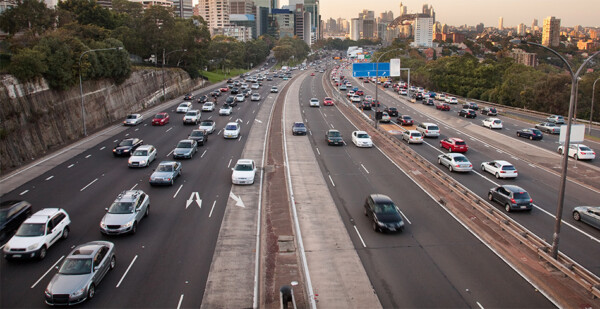
According to IEEFA, the good news is that there are a lot of steps Australia can take now to mitigate the impact of a diesel squeeze. Road transport is the largest user of diesel by far, representing 55% of Australia’s diesel use, dominated by light commercial vehicles and trucks.
“There are many opportunities to deliver fast improvements in fuel efficiency in road transport, particularly through eco-driving, speed reduction and improved maintenance and logistics,” Denis-Ryan says.
“Eco-driving involves avoiding unnecessary acceleration and braking, maintaining a steady speed at low revolutions per minute, shifting up gear early and minimising idling. The best truck drivers use 35% less fuel than the worst drivers just through their driving practices.”
Logistics giant Linfox was an early adopter back in 2012, reducing its carbon emissions by 14% through an eco-driving programme embedded in the company’s performance management system. Other eco-driving studies have shown fuel reductions of 5-22%.
Similar results can be achieved in agriculture, mining and rail transport, with savings of 15%–40% through improving driving practices, tyre, engine and road/track maintenance, improved payload management, planning and logistics.
“The government should urgently ramp up its efforts on rolling out education and training for drivers in those sectors on how to improve fuel efficiency, and incentivise the implementation of fuel-optimisation solutions,” Denis-Ryan says.
“In addition to helping mitigate any potential supply shortfalls, these initiatives would reduce the financial impact of the oil crisis on businesses.”
Electrification is an obvious solution to the looming diesel squeeze. While electric vehicle (EV) uptake is accelerating in Australia, the country lags badly in electric light commercial and truck sales.
With 10% of drivers responsible for up to 40% of all kilometres driven, heavy road users are low-hanging fruit for government initiatives to reduce diesel dependence.
“Australia could achieve strong diesel demand reduction by targeting those drivers to shift to EVs. In the short term, focusing on high-usage diesel cars could make a material dent in car diesel use within just a few months,” Denis Ryan says.
Barriers to freight electrification would need to be addressed, such as mass and width limits, night curfews and deploying fast chargers on major routes.
Related article: EV sales surge as demand grows amidst fuel crisis
There are also a few steps Australia should take now to ensure it is ready to implement stronger interventions if the need arises. This includes gathering up-to-date data on the diesel requirements of critical industries, developing the systems that would be required to implement fuel rationing, and accelerating the deployment of solar and battery storage to remote communities reliant on diesel for their electricity generation.
“Australia’s location means it may feel the crisis for longer than other countries, but it is also buying the country time to prepare for a possible diesel squeeze,” Denis Ryan says.
“The government should not squander this opportunity.”