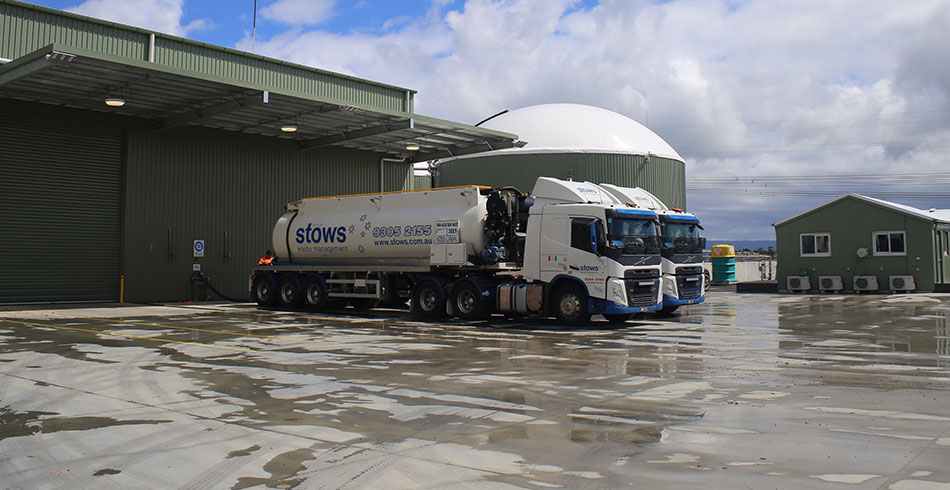
Lilydale’s new food waste to energy facility has received its first commercial food waste delivery, marking a major step toward a cleaner and more sustainable waste service for the region.
Developed by Yarra Valley Water, the state-of-the-art facility will transform food waste from local businesses into renewable electricity, helping to cut greenhouse gas emissions, divert waste from landfill and support Victoria’s circular economy.
Yarra Valley Water managing director Natalie Foeng said the first delivery was a proud milestone after years of planning and construction.
Related article: Waste-to-energy in Australia: how it works, where new incinerators could go, and how they stack up
“This moment marks the beginning of operations at our Lilydale facility and an important step in creating clean, renewable electricity from food that would otherwise go to waste,” she said.
“This facility will generate more than a third of our renewable electricity needs at full capacity and provide a reliable waste solution for local businesses.”
Lilydale is the second and largest food waste to energy facility Yarra Valley Water has constructed and builds on the success of its first award-winning site in Wollert.
Local food producers and distributors are delivering organic waste to the Lilydale site, where it is processed inside sealed tanks known as digesters. Bacteria naturally break down the waste to create biogas, which is used to generate renewable electricity.
Once fully operational, the facility will process approximately 55,000 tonnes of food waste each year and generate over 39,000kWh of electricity per day—the equivalent of powering more than 2,200 Victorian households.
Foeng said, “As one of Melbourne’s major water utilities, we’re always looking for practical ways to operate efficiently and sustainably, while delivering value to our customers and communities.
Related article: From rotten eggs to renewable energy: the power of waste
“By reducing waste and generating renewable electricity, we’re taking action to meet our Scope 1 and 2 emissions reduction targets and taking pressure off water bills.”
The Lilydale facility will gradually increase operations over the coming months as testing and commissioning continue, ensuring the right mix of food waste is used to optimise future electricity production.
The site is expected to start generating renewable electricity in early 2026 and reach full capacity over the following year.