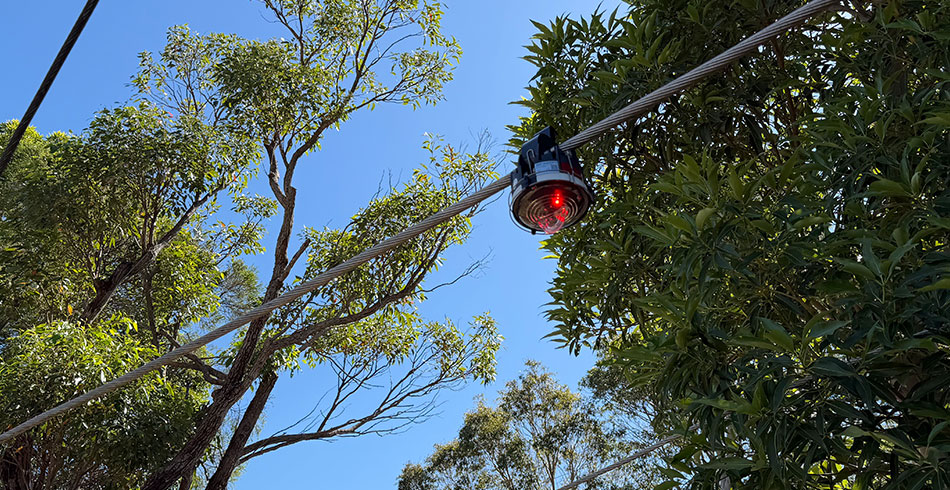
New smart technology being rolled out across the Ausgrid network is helping crews restore power to customers faster, when outages occur.
Around 700 Line Fault Indicators (LFIs) will be installed across Ausgrid’s network area, with the Hunter being the first region to see the technology deployed—where crews are already seeing the benefits of the technology in the field.
When faults occur on the network, crews have traditionally needed to patrol long sections of powerline to find the cause of the outage before repairs can even begin.
Related article: Ausgrid launches new community battery initiative in Sydney
LFIs quickly identify the likely location of a fault on powerlines—significantly reducing the time crews spend searching for the cause of an outage.
Ausgrid field delivery manager Matt Grant said the technology was helping reduce the time it takes to locate faults, meaning faster restoration for customers across the region.
“Storms can cause faults across the network, and sometimes the hardest part of restoring power is simply finding exactly where the problem is,” Grant said.
“With 10% of the rollout now in service, we are saving on average around an hour in the time it takes us to find the fault and subsequently, be able to restore power.
“These devices give our crews a head start by indicating where a fault has occurred, which means less time searching and more time restoring electricity to homes and businesses,” he said.
Reducing the time crews spend locating faults not only helps restore power sooner but also reduces the community’s exposure to potential electrical hazards following storms or damage to infrastructure.
Related article: Hitachi Energy to deliver ElectraNet’s first SF₆-free switchgear
“With storms often impacting the Hunter at this time of year, every minute counts when it comes to restoring power. This technology helps our crews work faster and more safely—which ultimately means less disruption for our customers,” Grant said.
The initiative forms part of Ausgrid’s ongoing investment in network resilience, reliability and customer service, ensuring the electricity network is better equipped to respond to outages and extreme weather events.