By Phil Kreveld
Australia has a kind of knitted electricity system, one where various parties are making up the ‘garment’ according to individual tastes. It is no way to make a cardigan. Nor is it for the country’s most important national asset, basic to the economy and welfare of its citizens.
The closest we came to a national plan was the setting of the 2030 (82% renewables) and 2050 (100% renewables) targets. As the nation heads to a federal election, one where electrical energy is likely to figure large, a bit of analysis is needed, if not overdue. The following points summarise the present situation:
- The pricing of electricity makes for ‘gaming’, i.e., ‘rebidding’ by gas and coal fired generation as energy scarcity periods (cloud cover, dusk, ‘dunkelflaute’) approach. This a natural consequence of companies maximizing profits for the benefit of shareholders;
- Large-scale generation and transmission project choices ignore rooftop generation in distribution networks, e.g., ‘no transition without transmission’. Yet, during long periods of high intensity insolation, there is so little power flow in transmission lines that the Australian Energy Market Operator (AEMO) requires large battery storage systems to be in discharged condition to facilitate transmission voltage control;
- The concept of baseload as a necessity has been dead for some years now because of high variability in demand (caused by rooftop solar) and in large scale renewable generation;
- Although it is not mentioned other than in technical papers, e.g., by AEMO engineers, the electricity system requires the presence of synchronous generation to provide grid strength so that the bulk of renewable generation using grid following inverters can operate reliably and stably;
- Designers of generating assets and those in transmission and distribution appear to live in separate, soundproof rooms.
Related article: Sailing between Scylla and Charybdis: the renewables Odyssey
The national electricity system and its market were never an integrated design; it resulted in a ‘collage’ of state electricity systems, commencing in 1994. The advent of solar and wind energy has continued to inspire the ‘knitters’ to fashion portions of the garment according to climate change aspirations and latest fashions, e.g., small modular nuclear reactors.
Notwithstanding the importance of anthropogenic climate change, and therefore the important role of renewable energy, its choice as preferred energy source is being questioned because we are frustrated in making the electricity system work for us. The cost of electricity is the most worrying aspect in the public eye. Renewables are evidently not low-cost energy providers—that’s the experience! What we have failed to see clearly is that the electricity system has become a seesaw of energy versus capacity costs (Fig 1) as a result of solar, wind and battery energy resources replacing coal and gas-fired generation.
Energy (gigawatt hours) and capacity (gigavolt-amps)
Energy (power multiplied by the duration of its availability) and Power are at opposite ends of the seesaw. For most of last century, the seesaw was close to balanced. National energy usage per annum was about half the total power generation capacity (in gigawatts) multiplied by the hours in a year (gigawatt hours). Things were predictable as was pricing of electrical energy.

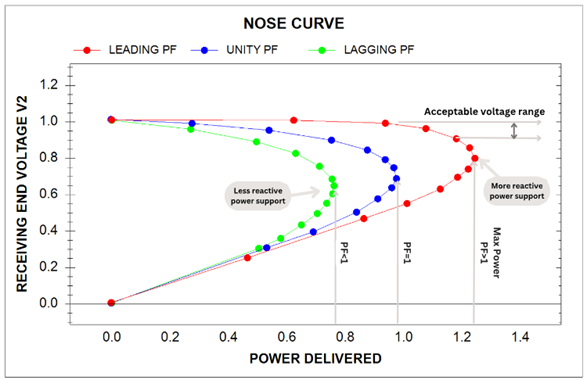
But no longer. Not only do we now need much more aggregate power (capacity) to deliver the required energy, but the seesaw swings wildly because of two factors; domestic rooftop solar—and the vagaries of large-scale wind and solar generation. The ‘weight’ of capacity has overtaken that of energy. AEMO estimates that by 2050 we will have fifteen times the aggregate demand capacity of today to service twice today’s yearly energy demand). Therefore, capacity is becoming the important cost factor—not energy, because someone has to pay for all that capacity construction in generation and transmission and ongoing operation, maintenance and replacement. This applies to generation assets and to transmission lines as the latter are restricted in maximum power AND energy because as lines become longer to remote renewable energy zones, more investment is needed by way of interposed substations to maintain power flow stability (see Fig 2).Yet, we haven’t lost our fascination with the cost of a kilowatt hour nor its potential for bringing down governments even though politics isn’t going to provide an intelligently designed national grid.
Renewable generation capacity is not dispatchable, and were it not for storage batteries, much of it, of the order of 60 to 70% would be wasted. A kilogram of coal represents 8-kilowatt hours of primary energy. We can choose to leave it in the ground, digging it up from the coal deposit when needed. Batteries are one-thousands as energy dense as that lump of coal from which we extract about 10% as electrical energy. For batteries the ‘deposit capacity’ is measured in hours or perhaps a day as opposed to decades for coal. And although we can charge batteries for a ‘rainy day’, once fully charged, excess generated energy is spilled.
Capacity
The requirement for capacity to greatly exceed the average capacity associated with annual energy consumption has already been mentioned. But there’s more to consider for reliable and stable electricity because the large factor by which it exceeds the average capacity is also an aggregate, averaged value that only accounts for percentage availability due to climate conditions so as to meet aggregate energy needs.
It does not account for instantaneous capacity in participating generators, needed to sustain voltages in the various parts of the grid due to ‘contingencies’ (loss of a transmission line, sudden load changes, faults, etc.). For synchronous generation this is not a problem as it can provide somewhere between 3 and 6-times rated capacity. It does present a challenge for renewables—an economic challenge if they have to incorporate sufficient ‘headroom’ to meet such high ratios because that would represent gross underutilisation of wind and solar assets in order to provide ‘grid strength’.
Securing headroom in solar generation is impractical but a small margin, of the order of 10% is possible for wind generators. Therefore, battery storage systems are required to provide peak capacity.
Planning
The organisations making up the electricity sector are ‘in it to win it’. When the commercial gains falter, they look to governments to step in, for example the Capacity Investment Scheme, which bets the taxpayer contribution against the possible commercial gains made by successful bidders in CIS auctions.
Atavism is not a solution, i.e., turning back the clock to the days of large-scale synchronous generation. We can build solar farms and powerful inverters at great speed, wind taking longer but still at a fraction of the time to build most conventional synchronous generation-based power stations. The climate change argument for renewable forms of generation is becoming irrelevant, if not yet buried, because renewable generation has become a commercial off the shelf reality.
Related article: How much rooftop solar capacity can Australia handle?
The main areas to be considered in a comprehensive engineering plan are:
- Distribution network engineering changes required to provide long periods of energy autonomy. This will include expansion of solar PV hosting capacity, voltage control, microgrid operation, as well as participation in black start;
- Subjecting new renewable energy zone proposals to not only energy supply requirements but also to not compromising voltage stability under sharp power flow variation conditions; The design would be based on energy zones that would be trade-offs between proximity to areas of consumption and cost of transmission to remote locations, for example locating battery systems at terminal stations to reduce the need for grid construction or augmentation.
- Review of frequency control ancillary services because these are likely to prove increasingly ineffective in the control of voltage forming, reactive power supporting and grid following inverters, once these have replaced all synchronous generation.
There major roadblocks in the path to an orderly renewable transition. To move them out of the way, we need:
- A revision of electricity pricing taking account by way of a mix of energy and capacity or even solely based on capacity.
- A national, single authority with responsibility for a comprehensive engineering design based on wind, solar and batteries only, possibly with some gas-fired and thermal storage, clean synchronous generation and Snowy 2.0 as well as DC links to Tasmania including ‘integrated’ control taking account of distribution networks with rooftop solar capacity.
Lack of a thorough pricing revision is holding up sensible system development because it ignores the need for capacity, and therefore affects item 2 because changes in engineering are restricted in having to comply with markets. Rather than more yackity-yack-yack, it is electricity pricing revision that is the precursor to renewables progress.
It requires government and opposition to stop the posturing and to form a unity ticket in the interests of national security. It will require getting the Australian Energy Market Commission, the Australian Energy Regulator and the Australian Energy Market Operator in one room together with the government and opposition, away from the media—and for as long as it takes to form schemes to take to private briefings with generator, transmission and distribution network owners.
It will be very challenging but without a meeting of the minds we will have our ‘energy’ sapped by constant squabbling instead of properly designing the national electricity system—and sending discouraging signals to the electrical energy investment community.