Researchers are developing an AI-powered system to improve energy flow between apartment buildings, paving the way for cheap, clean power in high-density environments.
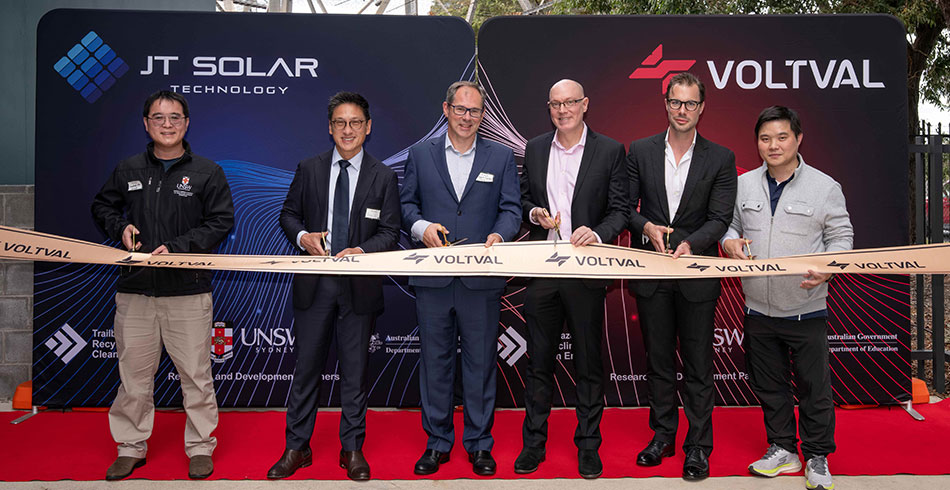
Researchers at UNSW Canberra have joined with industry partners Voltval and JT Solar Technology to pilot a groundbreaking AI-powered energy system to bring rooftop solar and battery storage to millions of Australians living in apartments.
Voltval and JT Solar have developed a Modular Power Portal System (MPPS) that integrates rooftop solar power generation with shared battery storage for apartment buildings.
Related article: Australia’s next-gen solar PV centre scores $95.4M funding
Supported by a $1.2 million grant from the Australian Department of Education’s Trailblazer Recycling & Clean Energy (TRaCE) program, UNSW researchers will add an advanced AI layer to the MPPS so it can better predict and improve energy use across multiple properties, making the platform smarter, more efficient and ready for real-world use.
While Australia leads the world in rooftop solar uptake, the benefits have largely bypassed the more than 2.5 million Australians who live in apartments. There are many reasons solar adoption has stalled in apartments, including complex shared ownership arrangements, outdated metering infrastructure, and buildings that were never designed for distributed energy.
Dr Ripon Chakrabortty from the School of Systems & Computing at UNSW Canberra said the AI-enabled optimisation technologies developed at the University will develop new models for clean energy deployment in high-density urban environments.
“Through this partnership, we will develop and validate advanced AI-enabled optimisation technologies that can intelligently coordinate shared solar and battery resources across multiple residents,” he said.
The technologies forecast energy generation and demand, coordinate distributed energy resources and balance electricity flows between apartments in real-time.
Associate Professor Huadong Mo, who co-leads the project with Dr Chakrabortty, said their work is expected to increase use of renewable energy and lower operating costs for participating buildings by as much as 30%.
“The next phase of Australia’s clean energy transition will depend on ensuring that apartment residents can participate in the benefits of distributed energy resources,” he said.
The project will involve a multi-site pilot of their technology spanning commercial and residential sites across Sydney. The real-world performance data generated will validate the system for these initial site types and build the evidence base needed to scale deployment across the broader range of building types the MPPS is designed to serve.
Related article: Father of modern solar looks to new tech frontier
Director of JT Solar Technology Jason (Jiangang) Xiao said, “The UNSW partnership has given us the research depth to properly validate what we have built and the confidence to take it to market.
“The same barriers holding back clean energy adoption in Sydney’s apartments and strata developments exist in dense urban environments worldwide. We believe the MPPS can help rapidly decarbonise buildings at scale and contribute to a more resilient and inclusive energy future.”