The town of Collie in Western Australia is now home to the nation’s biggest battery, with Synergy’s Collie Battery Energy Storage System (CBESS) becoming operational in time to support the state’s main grid during peak demand.
Synergy celebrated the operationality of its Collie Battery Energy Storage System (CBESS) in February this year.
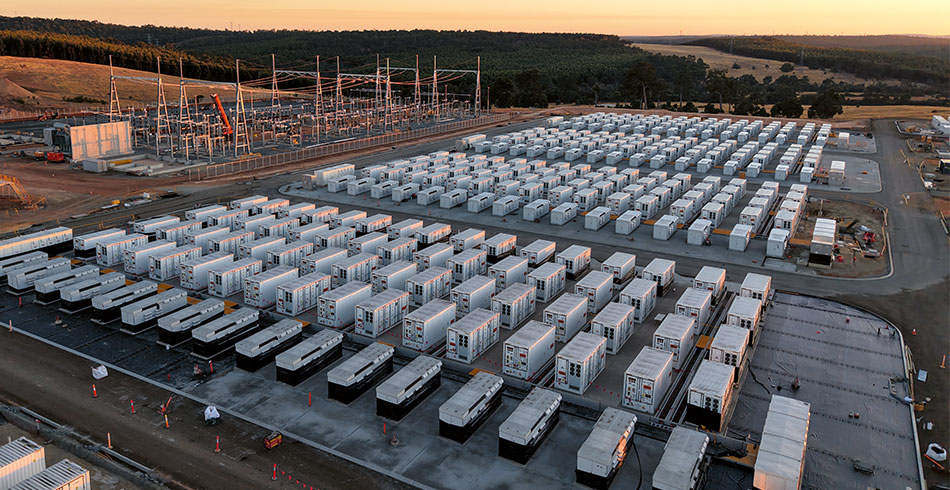
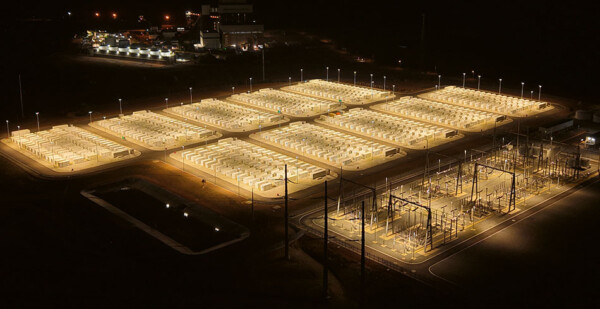
Located opposite Collie Power Station, CBESS has a capacity of 500MW and 2,400MWh of energy storage. It is currently the biggest battery in Australia, capable of powering 785,000 homes for more than four hours.
It is the third grid-scale battery delivered by the Western Australian Government in just over three years. The government’s plan to exit state-owned coal by 2030 and bring on large-scale renewable generation and storage will put downward pressure on prices.
Related article: Western Australia’s biggest state-owned battery operational
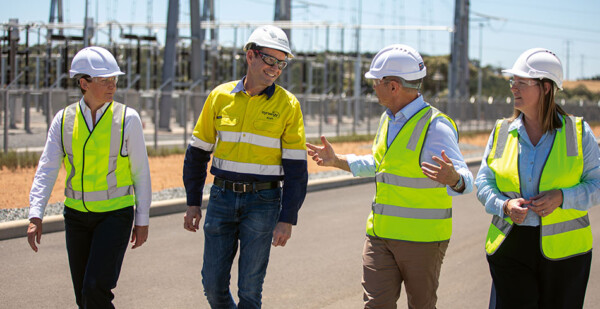
Premier Roger Cook said, “Collie has played a vital role in powering Western Australia for decades, and under my government, it will continue to do so.
“Not only is the town now home to Australia’s biggest batteries, but its future has also been bolstered by our updated Just Transition Plan, which will provide further certainty to the local workforce.”
WA Energy and Decarbonisation Minister Amber-Jade Sanderson said, “Synergy’s Collie battery will capture wind and solar generation and use it to power homes when needed.
“Renewable generation and storage backed by gas is the least-cost energy mix for households and businesses and will put downward pressure on prices as we exit State-owned coal fired power by 2030.”
The Collie battery can operate flexibly, making use of the 640 battery containers and 160 inverter units.
“Each battery container weighs just over 36 tonnes and has enough lithium-ion batteries inside to power 70 electric vehicles,” Synergy CEO Kurt Baker said.
“The batteries cover about 150,000sqm, which is about the size of 580 tennis courts.
“Together, Synergy’s Collie battery and our two other batteries in Kwinana (KBESS1 and KBESS2) can store more than 3,500 MWh of energy.”
Synergy led the delivery of CBESS, with CATL providing the batteries and Power Electronics providing the inverters. The overall facility engineering integration was completed by GHD, which included the 330kV switchyard.
Synergy commissioned multiple vendor control systems and performed Australian Energy Market Operator (AEMO) hold point testing to operationalise CBESS on the South West Interconnected System (SWIS).
Constructing CBESS in the regional location was a significant difference between this project and Synergy’s previous battery projects in Kwinana.
Synergy committed to the expansion of the existing Collie Hills Village accommodation facility from 190 to 300 rooms to meet project worker peaks. Collie Hills Village is only 6.5km from site. The close proximity of the accommodation provided a significant safety and labour productivity benefit, avoiding longer worker commuting times in addition to the community investment.
CBESS was also constructed over two winters in a high rainfall area, which required logistical coordination.
“The highlights of this project were watching how quickly the site transformed and when key milestones were met,” Baker said.
“Three such milestones included the final battery container being lifted into place, the two 37.5m-long switch rooms being placed with a dual crane lift and the first energisation of the 330kV switchyard.
Related article: Synergy’s Kwinana batteries support peak demand in SWIS
“Safety was a critical factor throughout the delivery of the project and this will continue going forward.”
Relative to other power generation assets, batteries have lower maintenance and operating costs, however safety systems and cooling systems need to be inspected regularly.
“Since the commencement of operations in the SWIS, the power of CBESS to store and then provide reliable energy back into the system has already been evident,” Baker said.
“Synergy has a long history in Collie, and this battery will continue the region’s ongoing role in WA’s energy system.”