Synergy’s two Kwinana batteries are now charging and discharging into Western Australia’s South West Interconnected System (SWIS), and its Collie battery is expected to be operational by the end of the year.
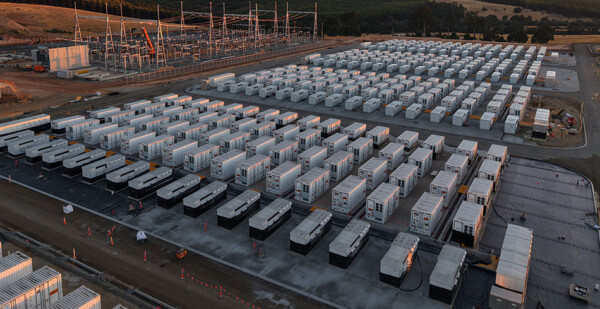
Synergy’s Kwinana Battery Energy Storage System One (KBESS1) provides 100MW/ 200MWh of energy capacity and storage, Kwinana Battery Energy Storage System Two (KBESS2) provides 225MW/900MWh, and its Collie Battery Energy Storage System will provide 500MW/2000MWh when it begins operations later this year. Together, the three batteries will have a combined storage capacity of 3100MWh.
Related article: Synergy celebrates completion of second Kwinana Battery
Synergy future energy major project manager Terrence Loh was responsible for leading the Kwinana battery projects.
“Constructing these batteries within the Kwinana Power Station site, next to where the old coal-fired power station is being deconstructed, highlights the importance of these batteries in the energy transition,” he said.
“There was a strong understanding from the entire project team that KBESS2 would play a critical role in supporting the energy system over the 24/25 summer period, particularly during peak demand events.
“We were immensely proud to see it in action over the summer and through its successful commissioning to now being available to support the system over the long-term.”
During summer 24/25, the SWIS reached a record peak demand day on 20 January 2025.
At the height of the peak, at 6.30pm, 241.3MW of energy was being injected into the SWIS by Synergy’s batteries, representing 5.4% of the total energy generated.
Synergy CEO Kurt Baker said this demonstrated the important role Synergy’s batteries are playing in the changing system.
“Synergy’s KBESS1 was the first large scale battery to be connected to the SWIS and, alongside KBESS2, we can now tangibly see the positive impact batteries are having on the system,” he said.
“Both batteries are now storing energy when demand is lowest and delivering it back into the system during peak times, while also providing stability by responding to other system needs.
“The batteries are supporting the continued uptake of residential rooftop solar and integration of large-scale renewable assets.”
Synergy has been at the forefront of deploying and testing battery technology in Western Australia, with learnings from KBESS1, the first large scale battery connected in the SWIS, enabling the following two batteries to be developed in quick succession.
“The electricity system was set up to connect either loads or generators, so there was a lot of work to do across the board to enable batteries to operate effectively,” Baker said.
“KBESS1 was the first project in the portfolio. Synergy was privileged to build the battery and help grow understanding and capability in this field across the entire state.”
One of the biggest structural advancements of Synergy’s KBESS2 and CBESS, are the size and design of the individual battery modules.
The CATL battery modules used in Synergy’s KBESS2 and CBESS are housed within standard shipping containers, allowing for five racks of batteries per module in comparison to the one rack per module design that was used at KBESS1.
“In addition to the standardised size of each module, which made shipping, transportation and lifting on site easier, the battery modules house more components within the containers which helped reduce installation work involved,” Terrence said.
“The physical infrastructure needed to support the batteries included inverters and extensive cabling, as well as software—which was essential in order to orchestrate all the batteries, so they can work together to support the system.”
Synergy’s CBESS, which more than twice the size of KBESS2, is made up of two battery facilities which will be able to operate independently in the system once connected.
Related article: Project spotlight: Kwinana Battery Energy Storage System
Synergy future energy major project manager Marlon Cooray, who is leading the delivery of CBESS, said the speed of delivery and scale of the project was possible as learnings from the Kwinana site were implemented early on.
“One of the flow-on benefits of the Kwinana projects has been the shorter timeframe enabled for CBESS,” he said.
“Our familiarity and confidence with the batteries has allowed for more dedicated focus on the differences of delivering the CBESS project such as building the switchyard, managing construction and supporting our people working in a regional location.”