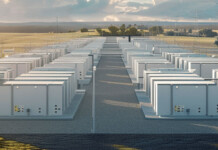
Vistra has completed construction on Phase II of its Moss Landing Energy Storage Facility in California, which is now the world’s largest battery energy storage system.
The 100MW expansion now brings the facility’s total capacity to 400MW/1600MWh, allowing it to store power and release it to California’s grid when required.
“This facility provides a solution California desperately needs and this expansion was able to come online at the right time—as the summer heat intensifies and demand for electricity is at its highest. It is possible because of the partnership between Vistra and the State of California, Pacific Gas and Electric Company, LG Energy Solution, and Burns & McDonnell,” Vistra CEO Curt Morgan said.
“The state’s laudable immense buildout of intermittent renewable power has both lowered emissions and presented a reliability challenge. California produces an excess amount of renewable power during the day while the sun is up, but often struggles to meet demand as the sun goes down. Our Moss Landing battery system helps to fill that reliability gap, storing the excess daytime power so it doesn’t go to waste and then releasing it to the grid when it’s needed most.”
Related article: AGL to install grid-scale BESS at Torrens Island
With construction kicking off in September 2020, the Phase II expansion project was completed in July 2021, well ahead of schedule despite challenges presented by the pandemic.
Vistra’s enormous lithium-ion battery system is sits alongside its existing Moss Landing Power Plant in Monterey County, a site that’s been providing electricity to Californians since 1950.
“What’s great about this particular site is that it has the space to support even further expansion—up to 1500MW/6000MWh—while responsibly utilising our existing site infrastructure, including existing transmission lines and grid interconnection,” Morgan continued.
“California leads the country in the transition away from fossil fuels and the Moss Landing Energy Storage Facility stands as a model for how batteries can support intermittent renewables to help create a reliable grid of the future.”
The 100-MW/400-MWh Phase II expansion is operating under a 10-year resource adequacy agreement with Pacific Gas and Electric Company (PG&E). The 300MW/1200MWh Phase I project has a similar 20-year resource adequacy agreement with PG&E.