US firm Black & Veatch has successfully delivered the Philippines’ first megawatt-scale floating solar photovoltaic (PV) facility, marking a milestone in renewable energy innovation and sustainable mining practices.
Related article: ‘Limitless’ energy: how floating solar panels near the equator could power future population hotspots
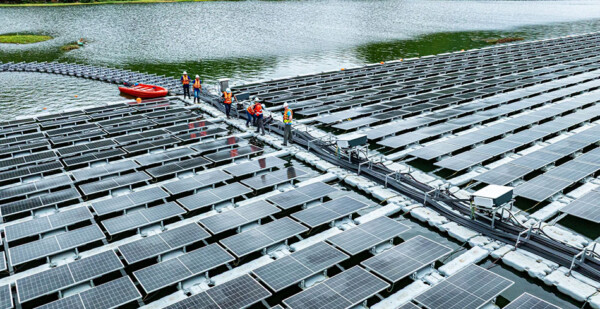
Commissioned by Carmen Copper Corporation, the 3ha floating solar array on Malubog Reservoir features 8,540 solar panels generating up to 4.99MW of clean energy—enough to meet 10% of the mine’s power needs.
The project is designed to scale up to 50MW, with the potential to fully power Carmen Copper’s operations with renewable energy.
Black & Veatch managing director Asia Pacific Jerin Raj said, “This project exemplifies how engineering excellence and environmental stewardship can converge to deliver transformative infrastructure.
“Our engineering, procurement and construction professionals worked alongside the Carmen Copper team to complete this project on time and on budget in just 15 months, with more than 250,000 man-hours without lost time due to injury. We are incredibly proud of our team that delivered this first-of-a-kind facility in the Philippines.”
Black & Veatch served as the EPC contractor, managing every phase from design and sourcing to installation and commissioning.
Floating solar—also known as floatovoltaics—offers a compelling solution for land-constrained regions. By utilising water surfaces, it improves panel efficiency through natural cooling and reduces water evaporation.
Related article: Ocean Sun to bring floating solar tech to Australia
Using solar panels fixed at a constant tilt angle, the power from the sun will prove invaluable during peak energy hours, paring dependence on fossil fuels while underscoring Carmen Copper’s desire to meet environmental compliance standards and achieve its own goals to be more energy responsible.