Pacific Energy has signed a 20-year power purchase agreement (PPA) with Horizon Power to deliver a new hybrid power system to the regional town of Leonora in Western Australia.
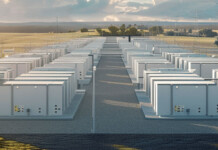
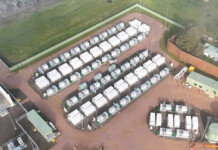
The new power system, co-located at a dedicated site near Leonora’s airport, will comprise 2.7MW of diesel generation, a 2.4MW solar farm, and a 9.9MWh energy shifting battery energy storage system (BESS).
Related article: Pacific Energy signs 20-year PPA with Horizon Power
The hybrid system will deliver approximately 60% of the town’s forecast energy demand using renewable energy.
It will be the second energy shifting BESS that Pacific Energy will develop for Horizon Power, after the 49.6MWh combined energy shifting and grid forming BESS that it will begin delivering to Exmouth later this year.
Leonora’s new BESS will optimise renewable energy penetration, placing the town among a select group of Australian regional towns achieving such high levels of renewables.
The system will provide Leonora’s total town power supply under the PPA from 2027 and will operate under a similar model to the other 10 systems Pacific Energy owns and operates for Horizon Power across WA’s regions.
It will be supported by Pacific Energy’s in-house, 24/7 Remote Operations Centre to ensure reliability and prompt response times to any unscheduled outages.
Pacific Energy CEO Mike Hall said, “Achieving 60% renewable energy penetration in a remote town like Leonora demonstrates what’s possible when smart technology meets a strong commitment to decarbonisation.
“Leonora plays an important role in supporting the broader gold mining region, and this new power solution strengthens our footprint in the Northeastern Goldfields. It’s a smart, scalable system that reflects our long-term commitment to powering the communities and industries that drive Western Australia’s economy.
Related article: Horizon deploys advanced metering across Kimberley region
“The project builds on our long-standing relationship with Horizon Power. Together, we’re delivering a solution that’s not only technically robust but also aligned with the energy needs and aspirations of regional Western Australians.”
Construction is expected to commence in April 2026, with completion due in the first quarter of 2027.