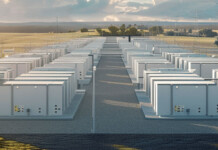
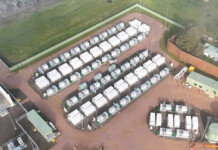
Renewable energy retailer and project developer Flow Power has announced plans for a State Significant Development (SSD) project in Corowa, New South Wales.
The proposed project is a 100MW/200MWh Battery Energy Storage System (BESS) that will enhance grid reliability, support renewable integration, and deliver long-term social and economic benefits to the local community.
The proposed Corowa Battery will be located behind the existing Corowa Substation. Once operational, the battery will store enough energy to power the equivalent of all homes in the Federation Council area for a full day.
Related article: AGL seeks enviro tick for Beresfield Battery in the Hunter
The Corowa site was selected for its location, adjacent to existing high-voltage transmission infrastructure, which reduces environmental impact by eliminating the need for additional transmission lines and ensures efficient connection to the grid.
With growing solar generation from local rooftops, commercial facilities and the nearby Corowa Solar Farm, large-scale energy storage will help balance supply and demand, ensuring renewable energy can be better integrated and utilised across the grid.
“This is an exciting project for the Corowa Community, and for New South Wales,” Flow Power head of community and stakeholder engagement Kait Williamson said.
“We’ve been listening closely to the local community, council, neighbours and businesses, and are committed to delivering a project that strengthens the local grid, while creating lasting economic and social value for the region.”
The Corowa Battery will store energy generated within the region, including renewable energy from local solar projects, and release it during periods of high demand. This will contribute to more affordable, reliable, and sustainable energy for everyone.
Related article: Stanwell to host its first eight-hour battery in Gladstone
Flow Power is currently progressing through the New South Wales Department of Planning, Housing and Infrastructure’s SSD process. In June 2025, a Scoping Report was submitted, and Flow Power is now preparing a detailed Environmental Impact Statement (EIS) for submission before the end of the year.
The EIS will include independent technical assessments covering noise, visual impact, bushfire risk, traffic management, and social and economic impacts. Once complete, the EIS will be placed on public exhibition for community feedback.
To reduce both noise and visual impacts, landscape screening, such as walls, trees, and shrubs, will be installed to create an effective buffer. Early technical assessments indicate that noise levels will comply with NSW noise guidelines, and the landscape and visual impact assessment is currently underway.