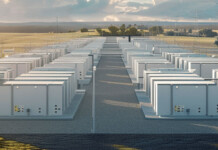
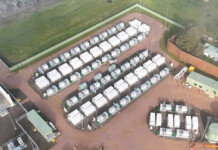
Green hydrogen developer InterContinental Energy (ICE) has revealed details of its new Australian-designed P2(H2)Node system, which it says has the potential to revolutionise the green hydrogen industry.
The P2(H2)Node is a patented modular system designed to transform how green hydrogen is produced by directly integrating electrolysis plants with wind and solar farms, eliminating the need for long-distance electricity transmission, cutting costs and boosting efficiency.
By standardising design and using modular construction, ICE says the system will deliver up to 10% lower capital expenditure and up to 10% higher operational efficiency than conventional approaches.
Related article: Western Green Energy Hub to undergo enviro assessment
The system has taken ICE’s Perth-based team four years of intense innovation and engineering to develop, with patents granted in Australia and the US, and patents pending in several other countries.
InterContinental Energy CEO Alexander Tancock said the Node system would reduce complexity, accelerate project deployment, and make giga-scale green hydrogen production both economically viable and globally scalable.
“The P2(H2)Node system is designed with global application in mind, particularly for coastal and remote regions rich in renewable resources but lacking robust grid infrastructure,” he said.

“Its decentralised, modular, and flexible architecture allows for efficient deployment in a variety of settings, making giga-scale green hydrogen production feasible in locations where traditional models face significant barriers.”
Tancock said conventional centralised models required expensive electricity transmission, leading to energy losses and inefficiency, however, the P2(H2)Node system flips this model by co-locating giga-scale hydrogen production with wind and solar farms, ensuring power is used where it’s generated.
ICE believes the Node system could unlock the full potential of its portfolio of giga-scale projects, which includes its largest project, the Western Green Energy Hub (WGEH), being developed in partnership with CWP and Mirning Green Energy on Western Australia’s southern coast.
Related article: Western Green Energy Hub seeks upgrade to massive 70GW
ICE Australian head Isaac Hinton said the system would enable low-cost, large-scale production of a range of hydrogen derivatives, including ammonia and e-fuels.
“With the support of recently announced Federal Government hydrogen incentives, WGEH is projected to drive down production costs for green ammonia below US$650 per tonne, unlocking transformative investment opportunities and significant job creation in Western Australia and the country more broadly,” Hinton said.
“By making green hydrogen, ammonia and e-Fuels cost-competitive, the P2(H2)Node will support decarbonisation across hard-to-abate sectors like steel, shipping, aviation, and fertilisers.”