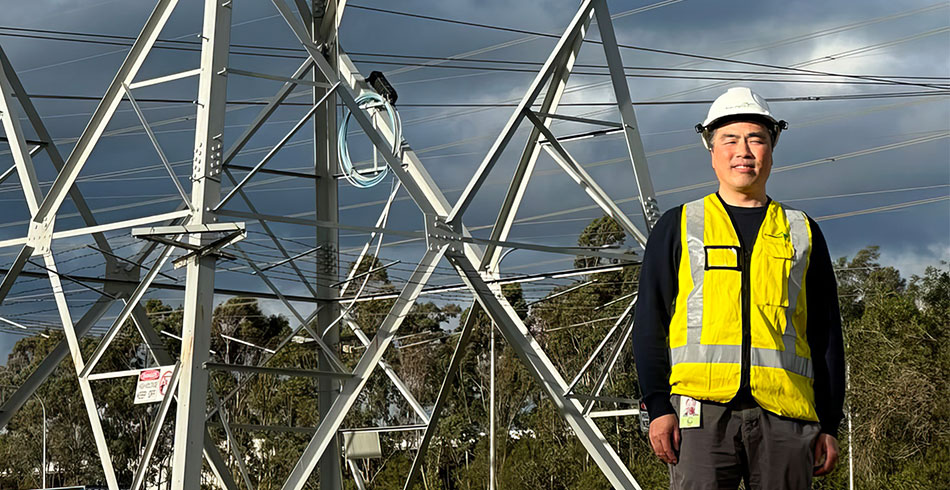
New South Wales transmission network operator Transgrid has welcomed University of Technology Sydney Associate Professor Li Li to its Network Transition Planning and System Resilience teams to work alongside engineers planning for the challenges in reshaping the power system.
Dr Li’s placement is part of UTS’ Professional Experience Program, which enables academics to apply their research in industry settings over a six-month period.
His research covers power systems, microgrids, distributed energy and smart grid technologies, with a focus on how increasingly inverter-based grids can be operated reliably.
The esteemed academic expects to gain a deeper understanding of how planning, operational, regulatory and strategic considerations converge in real decisions—experience he says is difficult to gain from within a university alone.
“Transgrid sits at the centre of many of the most important challenges associated with Australia’s energy transition,” Dr Li says.
“For an academic researcher, this provides a valuable opportunity to understand how the problems we study are experienced in practice and how research can contribute to real-world outcomes.”
Related article: Transgrid begins grid preparations for syncons
Forecasting the future grid
Dr Li spends much of his work life conducting research and teaching, and as such, sees his placement with Transgrid’s Network Transition Planning (NTP) and System Resilience teams as a unique experience.
“It is important to understand how things actually work in the industry, and how engineers solve critical challenges in creative and practical ways that could inspire the research community,” he says.
“I want to see where there may be gaps between what we research and teach at university and what the industry needs. I can then bring those real-world problems back to UTS to help shape our research and education, and also give our students a better understanding of the challenges they will face when they enter the industry.”
For network operators such as Transgrid, the real implications of the energy transition and its impact on grids are constantly evolving. The NTP team is essentially tasked with the tricky job of anticipating the needs of the future grid without the benefit of a crystal ball.
“The NTP team considers future system challenges while solving current operational challenges and maintaining resilience,” Dr Li explains.
“Every day is different. One day can involve working on specific tasks, attending team or town hall meetings, and having discussions with managers and engineers. I also meet with people from other teams, join knowledge-sharing sessions and technical seminars, and sometimes attend meetings with external stakeholders.
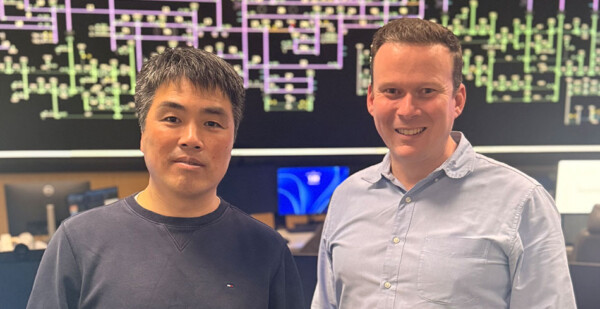
“Some days take me outside the office as well. I have had opportunities to spend time at the regional depots, visiting their control rooms and substations, which gives me another perspective on how the network operates in practice.”
Dr Li’s research focuses on two areas, the first being data centre flexibility—an increasingly important issue on both regulatory and operational fronts.
“Data centres are becoming an increasingly important part of the power system, so I’m looking at where flexibility can come from, what these facilities may be capable of providing to the grid, and where there are still gaps in research and industry knowledge. I’m also sharing some of my research experience in this area with Transgrid colleagues,” he explains.
“The second area is system resilience focusing on cyber resilience for transmission networks. I’m reviewing Australian and international standards and guidance. The aim is to bring the different perspectives from industry and research together and the purpose is to build understanding on emerging cyber risks and how to make the system resilient.
“What I enjoy about both areas is that they sit at the intersection of research and real industry challenges. That gives me an opportunity to contribute what I know, while also learning a great deal from the people working on these issues every day.”
Security and reliability at every stage
One of the biggest challenges for network operators is maintaining power system security and resiliency throughout the energy transition.
As coal-fired power plants retire, the grid must contend with renewable generation, storage and large new loads such as data centres connecting to the network.
“Many of these are connected through power electronics, so the future power system will behave quite differently from the system we have operated for many decades,” Dr Li explains.
Transgrid’s 2026 Transmission Annual Planning Report and System Security Roadmap sets a path for this transition. The challenge is to make sure the system remains secure and reliable—not just at the end of the transition, but at every point along the way.
“That is what makes this transition so interesting from engineering and research perspectives,” Dr Li says.
“We know broadly where the system is heading, but we also need to understand how to operate it safely and securely as the generation mix, technologies, and electricity demand continue to change. This is a great opportunity for a researcher to be with a team looking at the full picture of the future energy transition.
That ‘big picture’ perspective is vital for both academia and the wider industry.
“A lot of academic research is theoretically driven, and sometimes the results can be mathematically elegant but difficult to implement in a real power system,” Dr Li says.
“Research also relies on assumptions to make complex problems manageable. Some simplification is necessary, because it helps us understand the fundamental problem. But sometimes those assumptions do not fully capture real-world operating conditions, constraints and uncertainties.
“My experience with Transgrid has made me think more carefully about the gap between research and real application. For me, the question is not only whether a research idea works in theory, but whether it can realistically be applied to a large and complex power system. That is something I would like to bring back to my research and teaching at UTS, and it is one of the most valuable lessons from the placement so far.”
Theory becomes practice
Seeing the renewables transition in full swing is something Dr Li describes as “genuinely exciting”.
“More than 10 years ago, we were already studying many of the challenges associated with large-scale renewable energy integration, including power-electronics-interfaced resources, bi-directional power flow, four-quadrant power conversion, limited fault current, reduced system inertia and grid-forming inverters,” he says.
“At the time, many of these were largely research topics. Today, we are seeing the impacts and opportunities of these changes as the energy transition accelerates.
“It’s rewarding to see that some of the research we were doing was quite forward-looking. It also motivates me to keep looking ahead and asking, what are the next challenges we should be working on now?”
And while industry is dealing with real challenges in real systems, it relies on consultation and collaboration with academia.
Transgrid executive general manager of network Jason Krstanoski says, “As one of our long-standing partners, UTS is well placed to work alongside us on helping to solve some of the most important challenges facing Australia’s energy future, with the rapid growth of geographically-dispersed renewable generation, the need for new sources of system strength, and as demand increases to accommodate electrification of transportation, industry, and the emergence of data centres.
Related article: Transgrid shortlists nine big batteries to help bolster grid
“Transgrid is honoured to work alongside such a learned academic and researcher as we face unprecedented change during NSW’s deep transition to a power system operating at 90% renewable energy in 2035.”
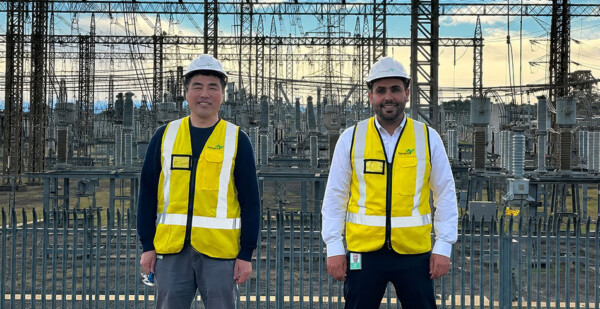
Transgrid acting manager of Network Transition Planning Dr Hassan Haes Alhelou says there are clear benefits to having academic expertise support the business.
“One of the greatest benefits of having an academic embedded within an industry team is the ability to look at complex challenges through a different lens.
“Researchers are often well positioned to explore emerging concepts, challenge established assumptions and think creatively about potential future solutions.”
Dr Li agrees.
“I think there is a real opportunity for closer collaboration between industry and universities,” he says.
“I will take these experiences back to UTS and use them to help shape my research towards emerging problems where academic work can make a practical contribution.”