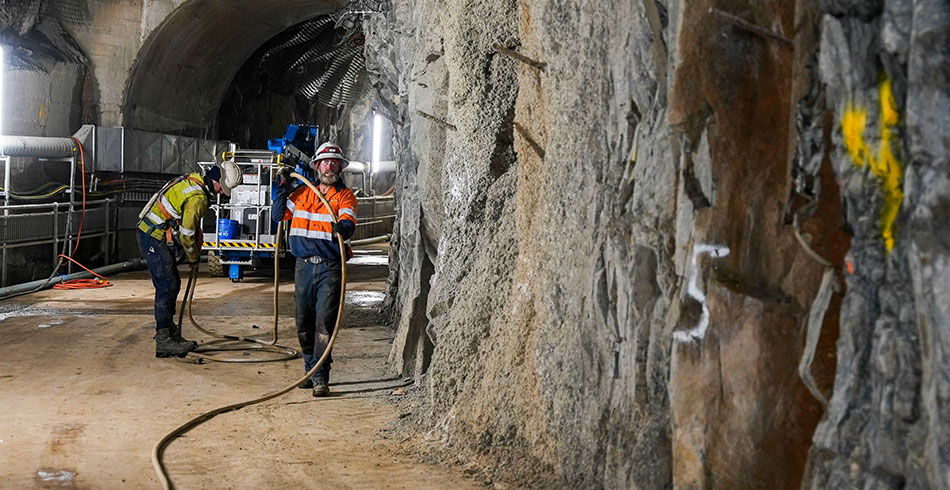
Hydro Tasmania recently completed the first stage of refurbishing a 1km-long, steel-lined penstock tunnel at Poatina Power Station—forming part of a long-term restoration project designed to extend the penstock’s life for decades to come.
With a generation capacity of up to 360MW, Poatina is Hydro Tasmania’s second-largest power station and has been operating for more than 60 years.
Work is underway to upgrade a section of an important piece of infrastructure at the power station—a massive pipe called a penstock.
This 1km section of steel-lined penstock tunnel is the critical link between the upstream headrace tunnel and the overland penstock.
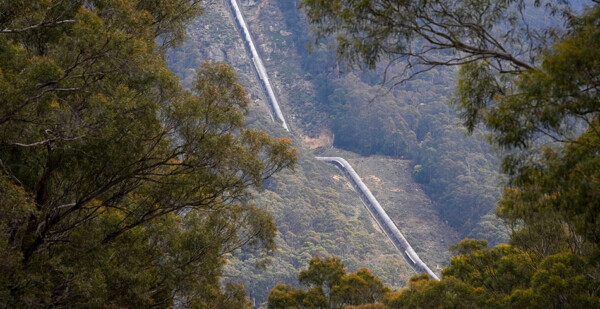
Water travels through 8.4km of tunnel and penstock to Poatina Power Station, which is located more than 150m beneath Tasmania’s Great Western Tiers in a giant artificial cavern.
Hydro Tasmania has just completed the first stage of recoating the inside of the steel-lined penstock tunnel with a special protective paint to prevent corrosion of the metal pipeline.
The restoration project is focused on protecting the inside of the steel penstock and extending the life of the asset.
The works are being carried out in two stages to better align with irrigation seasons. The station is now back in service, with the next stage scheduled to start in April 2027.
During the first stage, crews recoated 50m of penstock, including work in the hilltop valve area, the upstream section of the penstock, and part of the downstream pipework.
For Hydro Tasmania senior project manager Karlo Poslon, the project is about ensuring critical infrastructure remains reliable.
“This work is about more than applying a fresh coat of paint. The specialised coating protects the steel from corrosion and abrasion, helping extend the life of the asset for decades to come,” Poslon explains.
Related article: Hydro Tasmania completes $35.5 million Edgar Dam upgrade
A robotic helper
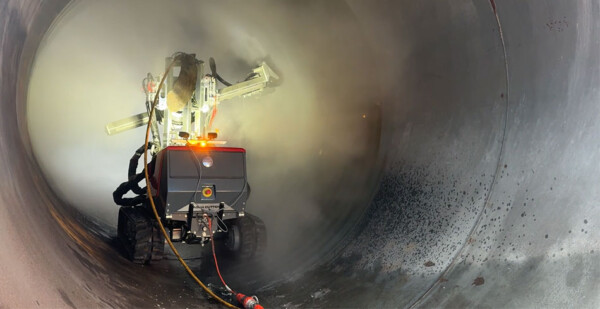
Before a new coating could be applied, crews first had to remove the original coating from inside the penstock. Working in a confined space hundreds of metres from the nearest access point presented significant challenges, so the team turned to robotic technology.
“We’re using a robotic ultra-high water jetting robot to take off the coating,” Poslon said.
“The abrasive blasting gets it to a standard where it’s ready to paint.”
The technology helps create a safer work environment while delivering the surface preparation standards needed for a coating system designed to last for decades. It is also a glimpse of what is to come when crews return to tackle the remaining 950m of pipeline.
Watching paint dry
Applying the coating is only part of the challenge. The specialised epoxy coating is designed for harsh industrial environments and provides a tough, abrasion-resistant surface capable of withstanding years of water flow.
To ensure the coating performs as intended, teams must carefully control the environment inside the penstock while the paint cures.
“To maintain optimal conditions for the paint system that we’re using, we need to keep the steel above a minimum of 10°C, with a target temperature of between 20-25°C,” Poslon says.
Dehumidification units, ventilation systems and heaters were in use around the clock to maintain a warm, dry atmosphere inside the pipe. The coating then cures over several days to reach its required hardness.
Checks and balances
Given the importance of the penstock, quality assurance plays a major role in project delivery.After application, the coating undergoes multiple inspections, including checks by an independent coating inspector. Specialist testing is used to identify even the smallest defect that could allow water to reach the steel beneath.
“By the time this job is done, all those defects are gone and we’re pretty confident that paint is going to hold up until the next refurbishment period,” Poslon explains.
The new coating should ensure the penstock operates safely for at least 30 years.
Related article: Huxley Hill Wind Farm gets new lease of life
Futureproofing in progress
The penstock restoration is just one of several major projects underway at Poatina. Hydro Tasmania is also progressing refurbishment of the power station’s second turbine and upgrades to critical mechanical, electrical, and control systems across the station.
Poatina site manager Julian Quinn says the outage for the penstock recoating provided a rare opportunity to undertake an extensive package of works at Tasmania’s second-largest hydropower station.
“Poatina is one of the most important power stations in Tasmania, generating around 10% of the state’s total generation capacity,” he says.
“During this outage we’ve completed major electrical upgrades and progressed the refurbishment of a 60-year-old generating unit. This will help ensure the station remains reliable for decades to come.”
The work is another step in progressing Hydro Tasmania’s $200 million investment in upgrading all the turbines at Poatina, with one turbine upgrade completed earlier this year.
Poatina Power Station features six Pelton turbines, each capable of generating 60MW of electricity. Five of the units were commissioned in the 1960s, with the sixth added in the 1970s.
Quinn says the station’s second generating unit will continue to be refurbished while the station was back in service and is expected to be completed in early 2027.
“The original electrical control systems were around 60 years old, so we’ve replaced those with modern technology that is better suited to the needs of today’s electricity system,” Quinn explains.
“We’ve also replaced key turbine components, including the Pelton runner and nozzles that direct water onto the turbine, and carried out significant maintenance work to prepare the machine for many more years of operation.”