Energy Source & Distribution gets to know Andrew Butler, managing director of clean energy retail company Nectr.
Andrew, tell us a bit about yourself:
I was born and raised in regional Victoria and first began working in the energy sector as a linesman apprentice, climbing power poles for the then-State Electricity Commission in Victoria in the 1980s.
I’ve experienced first-hand the changes in Australia’s energy industry from the ’80s and through the ’90s as privatisation of the sector saw a phased transition into the energy industry of today.
Over the years, I’ve worked for big energy retailers, such as AGL Energy, and have led retail energy start-up ventures, including Australian Power & Gas and Alinta Energy East Coast Retail in Australia. All this has given me deep insight into energy infrastructure, wholesale markets, and industry trends, and this, combined with the expertise of the Nectr team, puts us in a powerful position to disrupt energy retailing in Australia.
Related article: Nectr recognised for cheapest clean energy plans
2022 has certainly been a challenging time for electricity retailers. How has Nectr navigated this?
In the first six months of 2022, Nectr experienced strong growth and we received several industry accolades in 2022, including the Canstar Blue Green Excellence Award—Energy. We also ranked among the top 10 Australian energy retailers in Greenpeace’s 2022 Green Electricity Guide. When domestic and global factors caused unprecedented spikes in wholesale electricity prices, many retailers were forced to ask their customers to choose another supplier, and Nectr experienced an unprecedented influx of new customers wanting to sign up to our renewable energy plans. Of course, we tried to help as many new customers as possible, but our existing customers had to be our priority. To protect our existing customers from price increases, we placed a temporary hold on accepting new customers for our electricity plans for a period and encouraged Australians to consider solar and battery for their homes to get them started on energy independence. Now, markets have normalised somewhat, and we are again welcoming new customers.
What, in your opinion, can be done from a regulatory standpoint to support both energy retail businesses and their customers?
We believe there should be a more urgent and collaborative approach between government and industry to find a solution to the ongoing energy market crisis. Unless we work quickly together, competition in Australia may be affected for decades to come, as has been witnessed in the UK. Retailers cannot bear the cost alone.
The fundamental rules by which the market operates were developed a long time ago for an industry that relied on a relatively small number of very large, centralised coal, gas, and hydro generators that feed into the electricity grid to supply consumers electricity.
Today, we’re seeing a much larger number of smaller generators connecting into the grid including wind, solar and battery. We’re also seeing large numbers of rooftop solar and home batteries, which have the potential to play a much larger role in supplying energy into the grid. This new energy mix requires rules and regulations that can keep up with these changes.
There’s also been a lot of exciting developments at Nectr and its parent company Hanwha recently—what can you tell us about this?
Nectr is backed by Hanwha Energy, a global leader in renewable energy solutions, and we’re very excited to share that its Australian arm, Hanwha Energy Australia Pty Ltd, has secured $150 million in investment to fast-track the growth of its innovative renewable energy business. These funds will enable us to develop digital platforms to connect distributed energy sources across the electricity grid via a virtual power plant, develop and acquire utility-scale renewable energy assets such as solar farms and large-scale batteries to supply the NEM.
We will continue to build on the strength of Nectr by offering our award-winning renewable energy plans to SME and C&I customers, provide more Australians with access to our compelling suite of solar, battery, and solar + battery bundles, and continue to invest in technologies and platforms to deliver excellent customer service.
Looking ahead, what do you see as the biggest priorities for the company and the energy sector?
For Nectr, our biggest priority is to make rooftop solar and home batteries affordable for all Australians and provide them with technology that allows them to save money and make informed decisions about their energy usage.
The energy sector in general will continue to undergo massive disruption and rapid restructure, the likes never seen before in Australia, and sadly many retailers both small and large will struggle to survive this transition.
Consumers will grow very tired of the ongoing politics and rising costs of energy and will take the power back into their own hands. They will install rooftop solar and home batteries and join a network of others who can generate, store, and share energy and simply say goodbye to the old energy generators and retailers for good.
Any upcoming projects you’re working on with the team that you can share here?
It’s a very exciting time for Nectr as we ramp up the development of technology to enhance customer experience at every level.
In early 2023, we will be launching the next version of the Nectr App, which will give our customers access to real choice and flexibility when it comes to how they generate and consume energy. This will mean that Nectr customers with rooftop solar and battery solutions stop being energy customers and become energy “Prosumers”, as they will be producers and consumers of green electricity all connected via technology.
Related article: Nectr takes solar + battery offer to Australia’s capital
Underpinning this is the development of a virtual power plant technology platform, which will enable us to aggregate power from our participating solar and battery customers and dispatch it back into the grid. This will be a game changer for the energy sector.
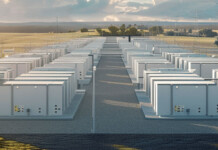
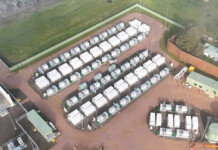
We’re also investing in utility-scale generation through Hanwha Energy Australia. We have development approval to build two solar farms in NSW: a 43MWac project at Gregadoo near Wagga Wagga, and 120MWac project and 30MW/60MWh Battery Energy Storage System at Jindera, close to the city of Albury.
What do you enjoy doing when you’re not working?
I am training for this year’s Sydney to Hobart Yacht Race on Boxing Day in the newly-formed Two-Handed division. It will just be me and one other person sailing together, with up to four days to complete the 628-nautical-mile journey. It’s a big step up from my last Sydney to Hobart race where I was skipper of a fully crewed boat with 12 on board. So, I hope we can make it together safely this year with just the two of us.