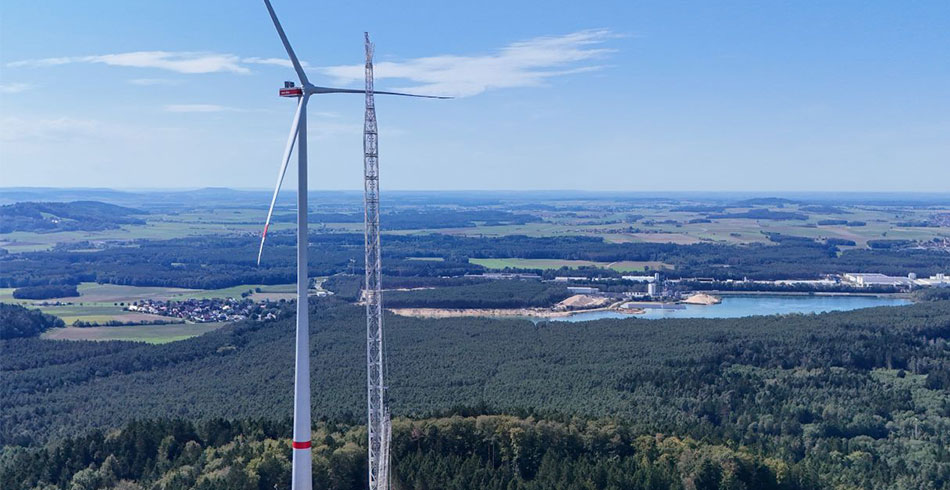
Wind turbine manufacturer Vestas has set a world record by installing an onshore wind turbine with the world’s tallest hub height.
A new EnVentus V172-7.2 MW turbine has just been installed in Winnberg, Germany, reaching a record hub height of 199m.
Related article: Vestas trials red turbine blades to mitigate bird collisions
The project features a Firmengruppe Max Bögl concrete hybrid tower based on the Modular System 3.0 concept, with Max Bögl also serving as the customer for this prototype installation.
Together with the modular EnVentus platform, Vestas says it demonstrates how proven solutions can be brought to market efficiently and at scale through strong partnerships across the European value chain.
“As permitting constraints, land availability and grid access increasingly shape project development, maximising site performance by partnering across the value chain is more important than ever,” Vestas said in a post on LinkedIn.
“This milestone demonstrates how innovation can increase energy production by accessing stronger and more consistent wind resources through modular design, helping to capture more energy and create greater value for customers.”
The company says a second prototype is planned for installation next year that will further advance high-hub-height solutions for onshore wind.
Vestas is set to install 40 of the V172-7.2 MW EnVentus wind turbines at the 288MW Palmer Wind Farm in South Australia, marking the first deployment of the model in Australia.
Related article: Vestas to install latest wind turbine tech at Palmer Wind Farm
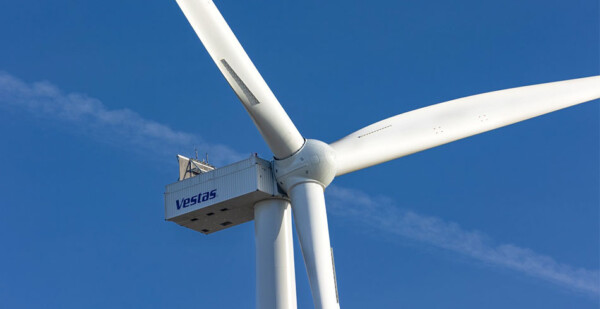
The company says the V172-7.2 MW EnVentus turbines run more efficiently, capture more energy, and perform better in tough conditions.