By Phil Kreveld
‘It’s system strength, stupid’, was the title of an earlier article. It paraphrased James Carville’s ‘it’s the economy, stupid’, a phrase launched in 1992 during Bill Clinton’s successful campaign against George H W Bush for the presidency of the United States.
‘System strength redux’ revisits its importance. Though not mentioned as such in the current political stoushes, system strength is implied in wishing for the retention of gas-fired synchronous generation in Australian grids. Opposition leader Sussan Ley, on Friday, November 14, said we “need to step on the gas” as a solution to the nation’s electricity requirements.
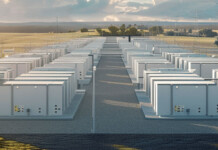
She may not necessarily be aware that the Torrens Island battery energy storage system is taking over the task of ‘firming’ (the popular term used by politicians and others for not leaving it all to renewables) of Torrens A gas plant in South Australia. Maybe Ley will be heartened to know that Torrens B will carry on for another three years.
Related article: Step on the gas to speed up renewables transition—Huh?
Before examining system strength and its significance, it should be divorced from energy economics. In the latest climate wars, this seems a point of confusion. Coal and gas are subject to world market prices, and although both are energy sources as well as providing ‘firming’, they are expensive compared to solar, wind and batteries, i.e., they should be employed sparingly if at all.
Politicians, energy economists and media commentators live in a very different world to that of engineers. There is impatience with the renewable transition (too slow), energy costs (too high), and the madness of trusting in ephemeral resources like wind and sun. Meanwhile, engineers puzzle how to make it all work properly when infinite buses are gone, a remaining but increasingly distant concept in old electrical engineering books gathering dust.
System strength—the ‘mot de jour’ of the engineering fraternities and sororities—has replaced the ‘infinite bus’ (or connection point). The latter as its name seems to imply, is infinitely strong, supplying to whatever connected to it with the same amount of voltage, irrespective of how much power is being drawn from or supplied to the bus. And, the voltage is always an absolutely perfect sinusoid, without any blemishes (harmonics).
Whereas the infinite bus truly is an analytical abstraction with some relevance to synchronous generation, system strength brings us back to the real world. It has risen in importance since synchronous generation is being steadily replaced by inverters, be they solar, wind or battery-energised. Sussan Ley, in wishing to ‘step on the gas’ is in effect saying ‘let’s try and head back to the days of the infinite bus’.
Of course, the Coalition, the same as Labor, avoids the use of engineering terms. However, ‘system strength’ (referred to as ‘firming’) appeals to both sides of politics, and to the opposition it is the bridge to gas, to nuclear, even coal, maybe with carbon capture—and it is conflated with cheaper energy than would be the case with renewables.
We will not go down that rabbit hole in this article, leaving to others to judge between ‘she says—he says’ disputation. However, as an aside, there is little doubt that wind, solar and batteries are the ‘technique de jour’ so that engineering that stuff into the national grids to work reliably would appear to make sense.
To the Australian Energy Market Operator, system strength is its way of relating to the infinite bus. Basically, it translates to short circuit strength—the more current that flows when a connection point is short circuited, the bigger is the system strength at that connection point.
AEMO also makes reference to the shape of the alternating current (AC) voltage, which ideally should retain its lovely sinusoidal purity, no matter what is attached to the point of connection (bus). Why its importance? A somewhat arcane device within almost all inverters, the ‘phase locked loop, PLL for short, works best when inverters are connected to buses with high system strength.
There is some furrowing of the brows in engineering circles because of two things: (1) with the shutting down of much traditional generation, system strength is declining, and (2) nearly all inverters connecting to the grid have PLLs to keep them working correctly—even those connected to large-scale battery storage systems, and termed ‘firming’. The PLL enables inverters to ‘follow’ the grid voltage.
It will now be clear that the closing down of much coal-fired generation is a matter of concern as synchronous generators can supply very large short circuit currents therefore materially contributing to grid strength. The expectation (note the underlining) is that voltage forming inverters (also called ‘grid forming) will take over from synchronous generators in supplying grid strength for the bulk of grid-following inverters.
Another way of thinking is ‘that someone has to supply voltage’ so that we all can turn on the lights, the aircon, and the oven for our roasts because the energy for near all that is coming from the ‘grid followers’.
Related article: Essential energy, net zero, and more on Spain
One side of politics, as already mentioned, wants to ‘step on the gas’. It is a suggestion with some merit, as it would provide system strength. By contrast grid forming inverters can take over the job of synchronous generators, but as the technology, and economic advantages stand, with between a fifth and a third of the system strength of traditional generator contributions. However, were a financial incentive to be provided, we could ameliorate that grid strength deficiency.
‘Stepping on the gas’ would be an interim solution while figuring things out. A note to Ms Ley: talk to Kerry Schott, chair of the erstwhile Energy Security Board, as keeping synchronous sources to a larger extent than forecast in AEMO’s step change integrated systems plan, was part of the ESB recommendation.
System strength (lack of) is the Achilles heel of the renewable transition, and it would seem that everyone except the for the boys and girls hard at work making the bits of the Meccano set work harmoniously, the others in the electrical energy universe continue to build their dreams.