By Vanessa Swinson, Sustainability Manager, Energy Queensland
Nothing reinforces the need to account for climate change risks like a string of severe weather events, which have taken their toll on communities across Australia over the past year.
2024 was one of the warmest and wettest years on record with numerous floods, bushfires, and extreme heatwave events. Now 2025 has started with a bang, with Queensland continuing to count the cost of a cyclone and major floods. It is with this backdrop that most distribution and transmission services providers, including Energex and Ergon Energy Network, are preparing their inaugural Climate Disclosures.
In the countdown to the new reporting requirements under the Corporations Act and Australian Sustainability Reporting Standard—Climate Disclosures, I brought together distribution and transmission network service providers from across Australia for a virtual collaboration session.
Sharing knowledge is always important, but it is especially helpful at a time of major change, so we appreciated everyone’s input and insights.
Related article: Increasing Australia’s grid resilience in extreme weather
As ASIC Chair Joe Longo has noted, we are dealing with the biggest change to financial and disclosure standards in a generation.
Like many other industries, the electricity sector is dealing with the impacts of climate change on its infrastructure, people, property, and budgets, and the new mandatory reporting regime will bring the challenges and opportunities into sharper focus for our businesses.
We are all at different stages of this journey, but the endgame is that the risks and opportunities associated with a changing climate and decarbonisation, are so well integrated into our risk frameworks, business and strategic planning that it becomes business as usual.
The disclosure requirements present an opportunity to consolidate information and activities that are well-established and do a gap analysis to highlight what more can be done to build resilience in future.
The collaboration session highlighted the value we are all getting from undertaking climate scenario analysis—by analysing the future to inform present day strategic decisions. It is about understanding what a changing climate can mean for us in the short, medium, and longer term, and being prepared to mitigate the risks and seize the opportunities.
We are not only documenting the negative effects of climate change on our bottom line; we are looking at opportunities to have a positive financial and environmental impact as we support the energy transition and build a more resilient network.
Better disclosure of the financial impact of climate change makes it real for people. It brings home the impact now and into the future on our businesses and financial performance.
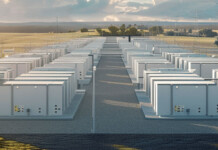
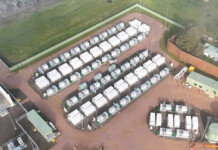
We already have exceptional rates of rooftop solar across Queensland and we are installing network-connected batteries to take full advantage of surplus renewable energy and dynamic connections to enable more of it, without compromising network security.
In communities too remote to be connected to the national electricity grid, we are working to increase energy security; which will be facilitated by, amongst others, generation from renewable energy sources.
We are also adapting our network assets. For example, we have installed fire-proof mesh on power poles in areas prone to bushfires to help prevent network damage and keep the lights on. With a changing climate we will see longer fire seasons, more high fire days and more extreme bushfires. Having a proactive strategy for bushfire management will be essential.
While every state is unique, and on any given day the weather will be vastly different across a continent the size of Australia, there are common challenges when it comes to managing climate risks.
Heatwaves have been identified by many electricity distribution service providers as a climate related risk, with multiple impacts on their businesses and the communities they serve—network peak demand soars with air-conditioning use and extreme temperatures can affect equipment, along with the health, safety and wellbeing of outdoor workers.
We are already taking action to reduce the risks to our people, our assets, and property, and when you look at some of the modelling that’s been done around the number of days where we can expect temperatures over 35 degrees, you can see why this will continue to be a major focus area.
While electricity networks are accustomed to reporting on direct and indirect (Scope 1 and 2) greenhouse gas emissions, the new Climate Disclosures take it a step further.
One of the things we’re wrapping our heads around is the Scope 3 emissions—these are associated with the upstream and downstream aspects of our supply chain.
It means that when we are purchasing goods and services, we now need to take into account the greenhouse gas emissions associated with those and that is a massive task when you consider the number of suppliers we have.
One of the things we are doing to reduce direct greenhouse gas emissions from Queensland’s electricity distribution networks is developing a strategy to remove sulphur hexafluoride (SF6) from our switchgear so we can be SF6-free in the future.
Related article: AEMC rule to make grid more resilient to weather events
Compiling the Climate Disclosure has been about a lot more than information gathering—it has sparked collaboration between disparate work groups, who can become accustomed to working in silos.
I think it has been very positive—the conversations and the ‘aha moments’ that staff have had. It’s about bringing different areas together to create a sustainable pathway and bring value to what we do as a business.
While achieving compliance is critical, the journey has almost been more important. The learnings from completing the climate impact assessments, climate scenarios and financial analysis have been invaluable.
If we can be more efficient and more resilient in the face of climate risks, then that’s good for our customers and communities. We’re addressing sustainability, affordability and keeping the lights on, which is our core business.