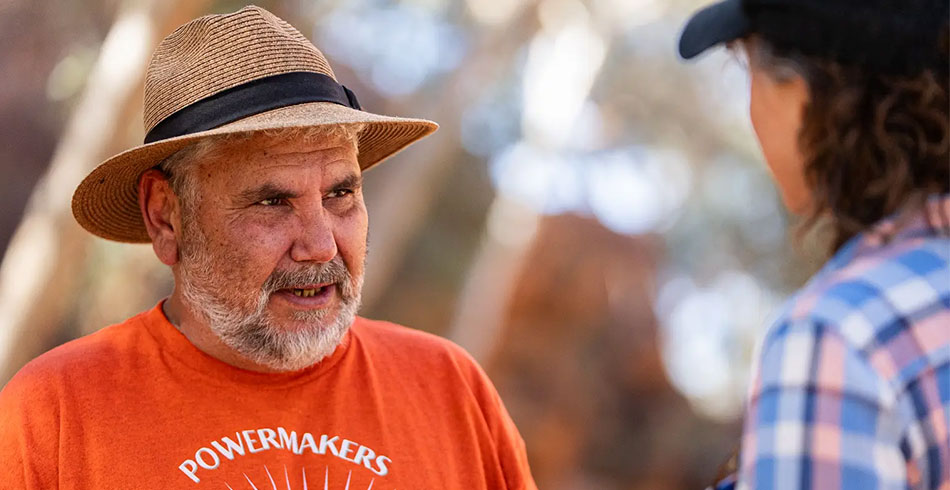
Twenty-six First Nations people have been selected from over 100 applicants to participate in PowerMakers—a transformative capacity building program for First Nations people pursuing clean energy solutions in homes, communities, and on Country.
Designed and delivered by the First Nations Clean Energy Network with assistance from trusted experts in government, academia and industry, and clean energy kin in Canada, this year’s annual PowerMakers program was held in Mparntwe (Alice Springs), Northern Territory from October 13-16, 2025.
First Nations Clean Energy Network co-chair Karrina Nolan said, “PowerMakers is about supporting and resourcing our community members to have access to knowledge and expertise to really engage in the clean energy transition.
Related article: First Nations community secures equity stake in big battery
“In the last five years we’ve seen a significant shift in the role of our communities in the transition to clean energy.
“The First Nations Clean Energy Network’s members through connecting community, industry and government have changed the story about what’s possible when we genuinely engage and consent to projects.
“However, irregular temperatures and climatic extremes are exacerbating energy insecurity issues.
“We know that it’s possible to play a greater role in how energy is generated and supplied, to respond to changing weather conditions, sub-standard housing and affordability, and to determine, collaborate and benefit-share in projects.
“First Nations groups—assisted by previous PowerMaker cohorts sharing knowledge back home with communities—are aware that work needs to be done to ensure our people aren’t left behind in Australia’s clean energy transition.”
PowerMaker 2025 participant Trinity Clarke, a director of Jabalbina Yalanji Aboriginal Corporation in Queensland, said, “We’re very interested in sustainable clean and reliable power for our mob. Not having reliable power is something we experience every day.
“We have secured funding to build a community-owned microgrid in Wujal Wujal which is very exciting. We know the issues in our communities and it’s something we’ve wanted for a while.
Related article: First Nations-owned Yurringa Energy inks contract with nbn
“Owning our own energy means we can look at further aspirations around storing food, and setting up a dialysis clinic, and other measures most people around the country take for granted, but which stay out of reach when you don’t have reliable power.
“Right now we’re working hard to set up governance frameworks for our new majority Yalanji-owned power company backed by a partnership between Jabalbina Yalanji Aboriginal Corporation and Volt Advisory.
“PowerMakers will provide me with an opportunity to learn from other mob and share our power journey in Yalanji country.”