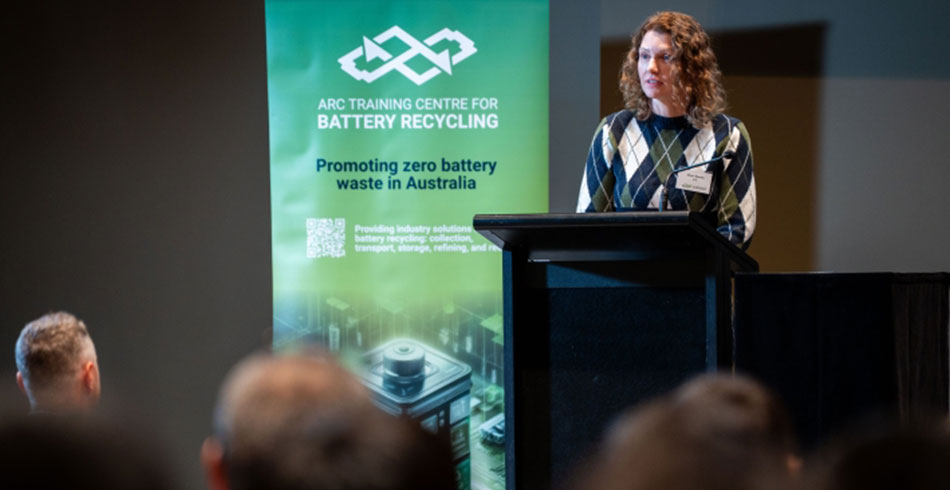
The Australian Research Council (ARC) has launched its new Training Centre for Battery Recycling at The University of Adelaide in South Australia.
As Australia transitions toward renewable energy systems and electric vehicles, battery use is significantly increasing, and so is the amount of battery waste.
Related article: AGL explores battery recycling for Hunter Energy Hub
The ARC Training Centre for Battery Recycling will address industry-centric challenges associated with battery recycling, including waste battery collection, transportation, storage, material refining, and reuse. This will be achieved through innovative, multi-disciplinary research over the next five years.
The research team at this new training centre are working to transform Australia’s battery and resource industry by building advanced manufacturing capability for recovering, reusing and recycling mixed battery materials that are essential for clean energy storage.
By establishing industry-based collaborative research partnerships, the Training Centre will foster the next generation of leaders in the battery recycling and circular economy sectors.
Over its lifetime, the Training Centre will train and mentor 19 PhD students and four postdoctoral fellows who will be embedded in industry-connect projects that are focused on developing novel recycling methods, assessing environmental impacts, and improving the recovery of valuable materials from battery waste.
Related article: CEFC backs battery recycling startup Renewable Metals
Through the ARC, the training centre reflects the government’s commitment to reducing environmental risk and creating a more sustainable Australian economy.
The investment has generated strong national and international collaboration, together with significant intergenerational knowledge and skills transmission among researchers to build Australia’s capability.