Victoria’s largest urban solar farm has been officially switched on at La Trobe University’s Melbourne campus.
The $10 million, 3.5ha solar farm marks a major milestone in the University’s ambitious journey towards achieving carbon neutrality by 2029 and is the landmark project in its Net Zero program.
Related article: La Trobe Uni inks 100% renewables PPA with Iberdrola
La Trobe’s regional campuses in Bendigo, Shepparton, Albury-Wodonga and Mildura are already certified as carbon neutral and its new Shepparton campus is the University’s first completely electric institution.
La Trobe has reduced its energy emissions by more than 50% since the commencement of the Net Zero program in 2019. This project is another significant step towards the goal.
“La Trobe is a leader in higher education and this project is an exemplar of our ongoing commitment to investing in sustainability and the environment,” Vice-Chancellor Professor Theo Farrell said.
“This investment will deliver ongoing emissions and cost savings to the university for the next 25 years.”
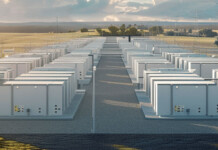
The solar farm features more than 4,300 solar panels and is constructed on 11,250 square metres of solar-generating area, producing the equivalent energy of 600 household systems.
It includes a 2.9MW solar energy system paired with a 2.5MWh Battery Energy Storage System (BESS), taking total solar generation for the Bundoora campus to 5.8MW.
More than 98% of the power generated at the site will be used at the Bundoora campus, significantly reducing energy costs and emissions. The site will also be connected to the grid, enabling La Trobe to provide support when required to help avoid power issues in the community.
In addition to sustainable progress in power, work at the solar farm is also boosting La Trobe’s biodiversity.
Related article: “Giant leap”: UQ researchers set new solar cell world record
The university is planting 40,000 plants and 600 trees as part of the project, increasing vegetation on the site by 200%, with a focus on indigenous species from La Trobe’s Nangak Tamboree Wildlife Sanctuary.
The solar farm site will also serve as a ‘living lab’ for a La Trobe-led research project that will investigate the viability, yields and quality of lavender grown in land shared with solar energy generation (known as ‘agrivoltaic’ systems), to optimise the productivity of the land.