By Phil Kreveld
The travails of oil tankers in the Strait of Hormuz have given new life to the critics of the renewables transition—some almost chortling with ‘schadenfreude’.
They have grasped at the opportunity to bring new life to fossil fuels which they fear might become economic fossils through politically inspired ‘green’ policies. To them it is an irresistible goal to score—but their efforts, were they to succeed, might well be an own goal.
Related article: Janus and the green transition
Ignoring the ‘anti’ commentariat is easy enough but unwise because it feeds into investment reluctance—exactly at a time when that could imperil the future of our national electricity supply. Your correspondent is an electrical engineer—not an economist but it seems that if others will give us good prices for our coal and gas, and we can buy cheap solar and wind generation technology to exploit lots of our solar radiation and wind resources—why wouldn’t we? Even so, their exploitation is not without serious challenges—and ignoring those is also unwise.
The ‘dunkelflaute’ argument, seen by ‘anti’ critics is not a relevant one. The real ‘kicker’ in the maintenance and expansion of the national electricity system is not so much the generation sources perse but the sheer physical size of the national grids. On a megawatt of transmitted power per transmission-line kilometre basis we rank very low on the efficiency scale. Remote, renewable energy zones do not improve things transmission-wise but often there is no alternate choice available. Also, suburban electricity generation by consumer energy resources (CER), could—if we wanted to—reduce the need to build some transmission projects.
Irrespective of synchronous generation (coal, gas, hydro) or asynchronous generation (wind, solar, batteries) our 5000km south-eastern grid presents a huge challenge in the maintenance of grid stability. From Queensland to South Australia, the grid occupies 83% of the wavelength of the 50Hz alternating current (AC) system—and that focusses the minds of engineering propeller-heads. The job of grid stability control falls mainly to the Australian Energy Market Operator—and yes, renewables do not make its life easier.
An electrical engineering reality is that irrespective of renewables or traditional sources, maintaining voltage and frequency stability in our European-size grid is a major task. Voltage and frequency stability are the ingredients in ‘keeping the lights on’.
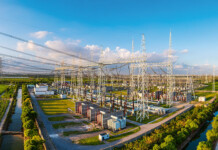
Voltage stability in long transmission lines subject to highly variable power flow requires major investment in var compensation, synchronous condensers, phase changing transformers, revised protection relaying and construction of more substations to house all this gear. It can easily add 30% or more to the actual line construction costs. Frequency stability is a factor in considering asynchronous versus synchronous generation. AEMO operates a complicated frequency support mechanism, the frequency control ancillary system (FCAS) originally designed for synchronous generation. Contrary to this correspondent’s earlier view that FCAS and its super-fast acting FFCAS would have no place in the future, it is more likely to be retained for battery-grid forming inverters, perhaps with more focus on locally initiated-control.
‘Back to the future’ proponents who desire a future of returning to lots of coal-fired generation, miss two essential, irreversible changes. Coal-fired generation only works with base-load because boilers cannot be turned off and on, and base-load has left us because of Australian mums and dads’ CER, festooning the roofs of suburbia and the regions.
The second point is that there is no longer investment appetite in Australia for these massive power stations. Inter alia; Those who comment that we are dependent on other nations for our solar and wind generators have evidently forgotten that we never ever manufactured our own steam turbines and generators, or our gas turbines or our own Pelton wheel drives for hydro projects.
Related article: Tilting at windmills
Does the strangling of the Strait of Hormuz encourage or discourage pressing on with the renewables transition? That is for you to decide, dear reader. Your correspondent sees no link at all between the two. We not only import fuels; we also import electrical engineering talent. Here are some countries they come from to contribute to our renewables transition: Iran, Türkiye, China, India, Myanmar, Chile, Italy, etc. We are grateful for their expertise—for the developments in solar, and wind generation technology in Denmark and China, and for the collaboration with centres of expertise in the USA and Europe who collaborate with AEMO to make the transition successful.