By Stefan Hufnagl, Industry Specialist Energy, COPA-DATA
Substation virtualisation is helping grid operators integrate renewables and prepare automation systems for the future. Software has long driven innovation across industries, improving productivity and reshaping how complex systems are managed. In the energy sector, this transformation is increasingly reaching substations, where virtualisation is becoming key to keeping automation systems fit for the future.
According to a McKinsey report, power grids must adapt to rapidly increasing shares of renewable energy sources, with electricity demand expected to increase by roughly 40% from 2020 to 2030—forcing utilities to rethink automation and control strategies to maintain reliability in more dynamic networks.
As the smart grid develops, software in the form of tools, algorithms, and platforms is playing a fundamental role. Numerous entities within the power system must communicate with one another, exchange control signals, assess forecasts, report yields or consumption, and optimise energy flows.
Related article: Australia’s energy ‘prosumers’ are transforming the grid
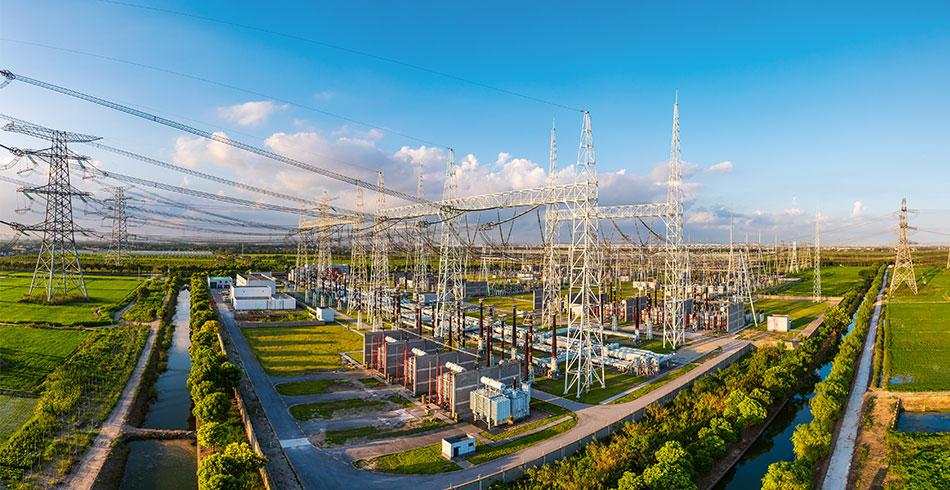
Even infrastructure that appears rigid at first glance—such as high voltage lines or substations—is gradually adopting more flexible, software based approaches. This is supported by digitalisation trends that enhance safety, productivity, and connectivity across energy systems, according to analyses from the International Energy Agency (IEA).
This shift is being driven by rising energy demand and the growing integration of decentralised renewable energy sources. Photovoltaics and other distributed assets feed variable amounts of energy into the grid, depending on weather conditions. These dynamics affect substations directly, increasing the demands placed on protection, automation, and monitoring systems.
The pressure on network operators
Grid expansion and modernisation are accelerating. Network operators are building and upgrading more substations than ever before, while also being required to monitor, maintain, and operate an expanding fleet of systems. This workload is becoming increasingly difficult to manage with traditional, hardware-centric automation concepts.
Modern substations often contain dozens of intelligent electronic devices (IEDs), each responsible for specific protection or control tasks. Installing, configuring, testing, and maintaining these devices represents a significant cost over the lifecycle of a substation. As system numbers grow, so does operational complexity.
Centralisation of protection technology
Centralised architectures offer a way to address these challenges. Instead of distributing protection functions across numerous individual devices, protection unit instances from multiple bays can be consolidated on a central server within the substation. Only the components required to digitally connect the primary equipment—such as merging units or switch control units—remain in the bays themselves.
This approach simplifies configuration and maintenance while enabling more direct communication between protection functions. It also supports advanced station-level applications, including disturbance recording, adaptive protection settings, condition monitoring, and cybersecurity supervision, all of which benefit from access to data across multiple feeders.
From hardware-bound devices to virtualised functions
Virtualisation takes centralisation one step further by decoupling software from hardware. Rather than being delivered as fixed-function devices, protection, and automation functions are provided as software components that can be deployed on a common hosting platform.
Much like modern smartphones that allow users to add or modify functionality through apps, virtualised substations enable functions to be expanded or adapted over time. This creates a flexible, software-defined environment in which automation, protection, human machine interfaces (HMI), and higher-level applications can coexist and evolve.
Opportunities and challenges
The advantages of virtualised substation automation include improved scalability, more efficient spare-parts management, faster commissioning, and greater flexibility through software-based configuration. At the same time, the transition introduces challenges related to redundancy, parallel operation of different system generations and the need for new skills at the intersection of IT and OT.
Standards such as IEC 61850 provide an essential framework for interoperability and vendor-neutral integration, supporting the gradual adoption of virtualised architectures without disrupting existing operations.
Related article: Canberra’s electricity network builds digital grid capability
A controlled path forward
Substation virtualisation is not about replacing existing systems overnight. Instead, it offers a practical way to modernise automation step by step, while keeping substations reliably operational at all times. Vendor-agnostic software platforms help bridge conventional, digital, and virtualised substations, enabling operators to manage today’s challenges while preparing for the grids of tomorrow.