The growing popularity of EVs presents a challenge for the electricity market as many EV owners prefer to charge their vehicles during evening peak hours, causing a surge in demand. To prevent overwhelming the grid, Cornwall Insight Australia says it is crucial that EV owners be encouraged to charge during hours of high renewable generation, such as mid-day or early morning.
New data from Cornwall Insight Australia’s EV uptake model shows that under an extreme scenario, 22 million electric vehicles (EVs) are expected to be part of the National Electricity Market (NEM) states’ fleet by 2052. The scenario is based on a high population and an EV penetration rate of 98% of total cars in Australia*. Figure 1 displays the projected number of EVs by state and user type under these conditions.
A considerable share of the charging load for EVs by 2052 is expected to come from trucks, which drive an average of 79,000 square kilometres per year. Offering financial incentives for off-peak charging to fleets could alleviate the stress on the network, reduce the need for power grid upgrades and save truck drivers a significant amount of money.
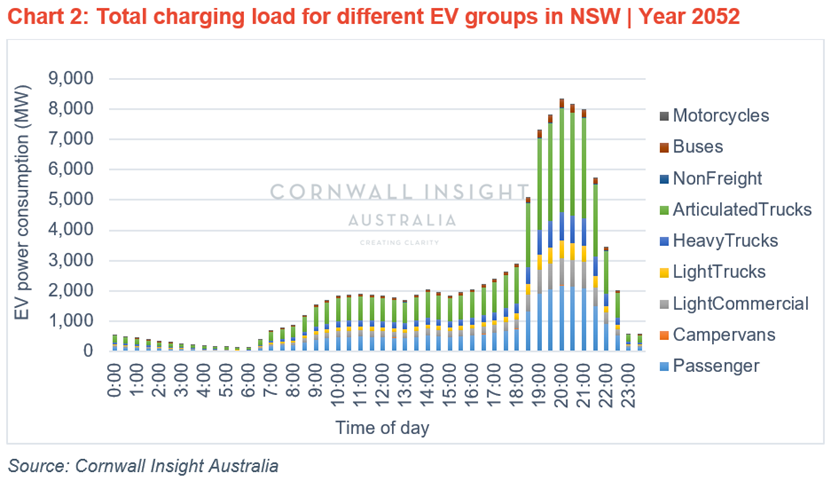
Figure 2 uses New South Wales (NSW) as an example of what could happen if the scale of EV charging is not properly managed. Cornwall Insight Australia’s data shows there will be an 8GW total demand for EV peak charging by 2052. This is compared to the current 10GW evening peak in NSW.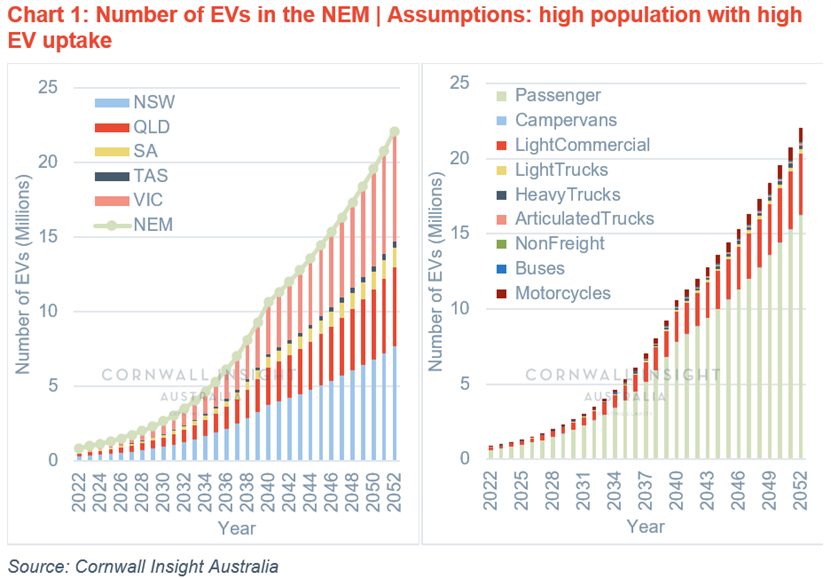
Cornwall Insight Australia energy consultant Mojtaba Jabbari Ghadi said, “The golden era of internal combustion engine cars is coming to an end, and we must start planning for the increased load on the grid from electric vehicles. To ensure the energy grid is not overwhelmed, it will be essential to encourage charging during non-peak hours.
“With truck drivers accounting for 60% of demand by 2052, focusing on this smaller but high-impact group instead of a vast number of passenger car users is a potential solution to lower grid stress.
“Properly implemented financial incentives can offer a win-win for both the electricity grid and consumers by easing pressure on the system and potentially saving drivers thousands of dollars.”
*Based on figures from the Australian Bureau of Statistics