Interviews by Nadia Howland
For the better part of a decade we’ve heard the well-worn phrase, “There’s no transition without transmission”. AEMO’s ISP promised it in spades, yet our major transmission projects are awash with cost blowouts and delays. Energy Source & Distribution asks three experts for their take on the state of transmission in the transition, and the best path forward.
Phil Kreveld, electrical engineer
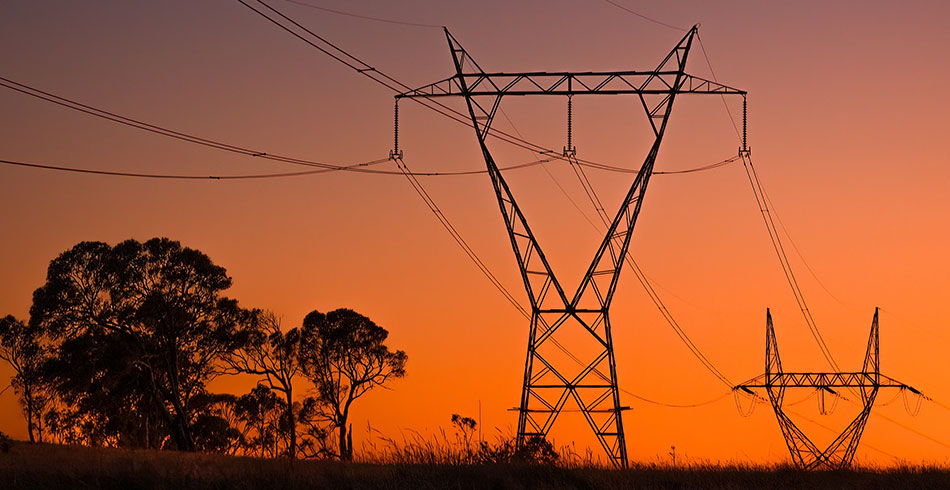
Imagine that we are transplanted to the future, 100 years from today. Would we still see massive transmission pylons with their overhead wires—would undergraduate engineers still be mastering hyperbolic function maths of long transmission lines? Or would electrical energy be locally generated—would it be mainly direct current at premises consuming low-voltage energy to suit printed-circuit DC motors for mechanical services, low-voltage DC for lighting, home entertainment, and industrially, process control, robotics, etc? Would many large energy consuming companies choose to have their own generation plant?
Australia’s renewable transition is best described as the clashing of two concepts; one from last century, and the other of rooftop solar as harbinger of other future technologies also bringing electrical energy generation in close proximity to energy consumption. We can already utilise fuel cells, micro turbines, Darrieus wind generators, and building integrated PV, but undoubtedly this range will be expanded. The one from last century is that of high-voltage transmission, essential for transport across long distances; the other being suitable for low voltage because of cheek-by-jowl location to energy consumption. Last century’s engineering feats are supported by the science of maintaining voltage and frequency stability; today’s technology is essentially cut loose from all that. Last century’s system is monopolistic; today’s is democratic in that there can be many individual investment decisions made. In a nutshell, the fork in the road we face is to stick with last century (“no transition without transmission”), or the opportunities for electrical energy generation and consumption the new technologies can provide in suitably modified distribution networks.
We have been led into this clash of new and old technologies by economics and regulation, the latter because the energy market is anything but perfect through the effective restriction to entrants. Economic models, we are told, will float up the needed technology solutions, negating the new technologies already at hand, and ready for new economic models. The essentially seamless transmission-distribution electricity system is broken up into artificial islands of rent seeking investors, kept in check by government appointed regulators. The result is that distribution networks have zero incentive to exploit opportunities in becoming generation and distribution businesses, and hence the mantra of ‘no transition without transmission’. As a consequence, we are piling complications on complications, sold as new market opportunities, e.g. Virtual Power Plant and Fast Frequency Control Ancillary Services—basically directed to keeping high-voltage transmission in business.
Related article: To dream the (im)possible dream
According to the Australian Energy Market Operator’s Integrated System Plan we will have six times the generation capacity in gigawatts of active power by 2050 but only twice the energy consumption—and AEMO expects to only control a power flow equal less than one sixth of the total generation capacity. Bishop Occam would cut away the mountain of reasoning and principles supporting our electricity system, and say ‘what is the essential principle?’ In doing so, the monopolistic character of transmission and distribution would be revealed for its stymieing, complicating, self-serving effect of constraining local generation and consumption. Based on the economic advantages of generation and consumption in proximity to each other and increased security, not provided by large-distance AC networks, distribution networks would concentrate on local terminal station large-scale battery storage with voltage forming inverters and generation (biofuel diesel, aeroderivative biofuel turbines).
This would provide voltage stability for phase-locked loop domestic and business solar inverters, and would also provide for partition into microgrids for enhanced stability and security of supply. Large-scale system disruption, an unfortunate feature of interconnected AC grids, would be a nightmare of past times—and system restarts would be simplified though well-defined local cranking paths. In short: vastly reduced MVA capacity would be a benefit in not having to establish magnetic flux in HV transformers and for charging current in long transmission lines.

Simon Bartlett, Chair of Electricity Transmission, The University of Queensland
Unfortunately it’s not just some transmission projects that are languishing—it’s every one of the major transmission projects that have been initiated by AEMO and the transmission network service providers (TNSPs). This includes EnergyConnect, Western Renewables Link, HumeLink, Central-West Orana REZ Transmission Project, VNI West, and the New England REZ Transmission Project. All have suffered from huge cost blowouts, large delays and widescale community opposition. None are even close to completion despite being part of the 2022 (or earlier) ISP. The cost of all projects were hopelessly underestimated in the first instance—and as their cost estimates blew out, so did their delivery timeframes.
Virtually all projects are comprised of AEMO’s standard building block of high-capacity double-circuit 500KV overhead transmission lines. Together the projects form a grid that lacks necessary robustness—being a new 500kV single transmission line stretching from Melbourne to New England in northern NSW without the necessary meshing and duplication that is needed to form a reliable and secure transmission network.
None gave proper consideration of the more robust option of building a meshed network of 330kV or 220kV new lines by replacing the existing aged network of 220kv or 330kV lines on their existing easements with high-capacity double-circuit lines. This is what was proposed as ‘Plan B’ for VNI West. AEMO rejected Plan B as they were blinded by their vision of a supergrid of 500kV double-circuit lines that formed interstate interconnections from Melbourne to New England.
AEMO and the TNSPs lack understanding of how HVDC should be used to bypass and offload the existing HVAC grid by running HVDC (possibly undergrounded) from remote renewable energy hubs right through to the load centres in Sydney West and the Hunter Valley. Undergrounding HVDC would have overcome social licence opposition that is now blocking the development of AEMO’s overhead 500kV grid in NSW.
What should be done now? First, let’s drop the idea that more interstate interconnection are justified. Concentrate instead on intraregional transmission from renewable energy hubs into the load centres.
Secondly, where the existing 220kV or 330kV grid is heavily congested, rebuild the existing lines on their existing easements. Thirdly, consider the use of long-distance HVDC from remote renewable energy hubs to the load centres in NSW and Queensland. Finally, consider undergrounding the HVDC to eliminate severe social licence opposition by undergrounding right through to the load centres.
The best way to achieve 82% renewables would be to reduce the spillage of existing and new renewables that is being caused by severe congestion of the existing transmission grids. This will not be achieved by building a new 500kV supergrid that is not connected to the renewables via the local 220kV or 330kV grid. We must replace the existing congested grid by rebuilding these old lines in situ on their existing easements.
Professor Bruce Mountain, Director of the Victoria Energy Policy Centre at Victoria University
Transmission has an important role to play in the energy transition. But transmission can be land-intensive and very expensive. Very high voltage lines require very tall towers and wide easements and so have big social and environmental impacts. So, to expand transmission you need to go about it carefully, with humility and with respect for the impacted parties. AEMO, and some of the transmission monopolies have shown us how not to do it.
The Integrated System Plan (ISP) is in essence a plan, originally called “NEMLink,” that AEMO first set out in 2011 as AEMO’s inaugural transmission plan. NEMLink is a grand vision based on enormous 500kV double-circuit interconnectors with their huge towers, wide easements, and enormous cost to strengthen interconnections from Tasmania to Queensland.
The case for these interconnectors in the fossil fuel era was always tenuous. In the renewables era they make even less sense: with renewable generation and batteries, electricity can be made and stored for comparable cost throughout the NEM. And solar radiation is extremely highly correlated between adjacent NEM regions, and wind generation is highly correlated. As our studies have shown, there are not many instances when wind is blowing in one region but not the other. The diversification benefit of these huge interconnectors, therefore, falls far short of its cost.
NEMLink was given a big boost as a result of the disastrous decisions of the Turnbull and Morrison governments, subsequently endorsed by the Albanese Government, to build the giant Snowy 2.0 pumped hydro power station in the very worst position you could put a large generator in the NEM. Suddenly, hulking great 500kV transmission lines—SnowyLink South (now called VNI West) and SnowyLink North (now called HumeLink) found their way into AEMO documents, along with MarinusLink, so implementing the NEMLink vision AEMO set out a decade before.

The ISPs that have attempted to justify this vision have had to rely on falsehoods and half-truths and consequently bogus cost/benefit studies. AEMO has nonetheless been supported by most energy ministers.
Many renewables developers naively imagined that the ISP would be good for them and did nothing to critically assess it. Environmental groups (fearful of undermining transmission expansion) were similarly uncritical. Customer groups seemed to pull whatever punches they otherwise might have otherwise tried to land.
And now as the failure is clear and the tidal wave of transmission costs nears the shore, AEMO and the transmission monopolies say that the “mounting costs” are a surprise and have nothing to do with anything they did. But AEMO, with the active support of most of the transmission monopolies, systematically under-costed its NEMLink vision in a deliberate strategy to ‘lock-in’ policy and regulatory approval.
We, and a few others, pointed to this from the outset. We don’t claim unique particular prescience and we were not saying things publicly that many did not already know. Many of those ‘inside the tent’, who would publicly extol the ISP, would snigger behind closed doors how ridiculously unrealistic it was. For these participants saying one thing publicly and another behind closed doors was thought to be terribly clever.
So, where to from here?
“Systems thinking” (or “integrated systems thinking” if you have a predilection for needless adjectives) is valuable. Trying to understand the electrical, social, and commercial systems that affect electricity demand and supply is good. Engineers are useful here, but so also sociologists, economists, dreamers and thinkers. AEMO has an important role in developing and sharing such systems thinking and should start employing and promoting sociologists, economists, dreamers and thinkers to collaborate with their engineers. Independent academics, consultants, and analysts should also play in these waters, hustling and jousting with each other and AEMO.
The bad policy mistake was to make the ISP ‘actionable’ and so to give AEMO a monopoly. It should be deeply worrying to those of our senior politicians who pursue the public good, that so few in energy circles were able to spot this policy flaw, and that even fewer were willing to call it out. If I was such a senior politician, I would reflect on this policy and institutional failure and put forward ideas to ensure it is not repeated.
Next, develop a policy and regulatory environment that values critique, ideas and agreement. This provides incentives to adapt and learn and the prospect of finding solutions that reflect acceptable compromises amongst the interested parties.
Policy makers should go out of their way to limit the extent of monopoly, and should make every effort to not get themselves into the position where they become hostage to past mistakes.
Related article: Cheap power to the people could shift the dial for renewables in the regions
This means politicians should favour arrangements that foster discovery and negotiation, often locally and regionally, from which learning can be shared and which can provide a basis for agreements that are able to evolve as circumstances change.
I am not sure of the appetite for such approach. The federal energy minister has now recognised the importance of collaboration, and that mistakes have been made in this area so far. This recognition brings with it the prospect of greater openness and a desire for negotiated settlements. But some state ministers seem to be doubling down, becoming ever more defensive for example by legislating new obligations on landholders to enforce the execution of the government’s plans. My suggestion would be to head in exactly the opposite direction.
Editor’s note:
We reached out to AEMO seeking its perspective on some of the issues raised in this article.
An AEMO spokesperson said, “Due to ongoing global supply chain constraints and workforce shortages, proponents’ cost estimates for transmission projects have increased significantly—in some cases by up to approximately 100% compared to costs in the 2024 ISP (after accounting for inflation).
“We recognise that higher costs for network development would ultimately affect consumer bills. These revised cost inputs are material, and we will consider them carefully as we model an optimal development path that delivers the most efficient outcomes for consumers, while meeting government energy and emissions targets.
“Previously identified transmission projects that have not progressed to anticipated or committed status will be re-evaluated in the 2026 ISP to ensure the updated investment path remains in the long-term interests of consumers.
“However, investment in the electricity network, along with other investments identified in the ISP optimal development path (ODP), will be essential in the coming years to increase the transfer capacity of renewable energy zones (REZs) and the backbone of the interconnected network.”