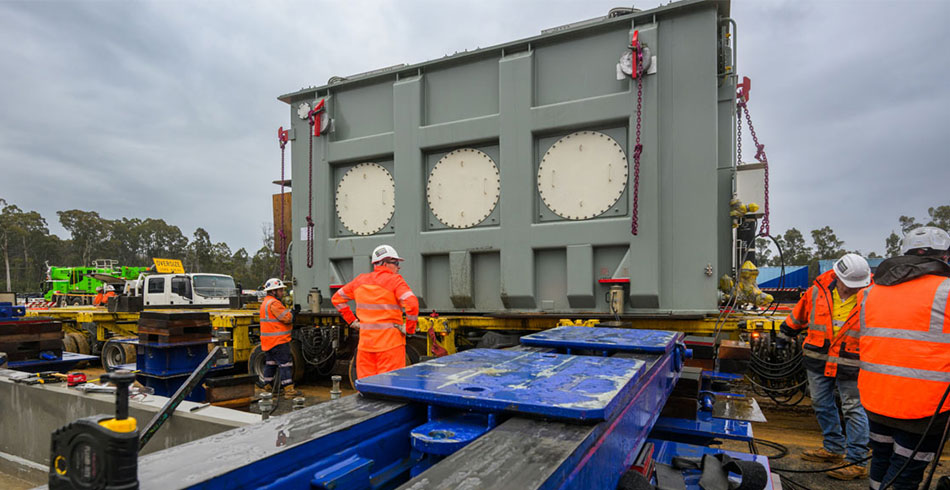
The last of of six giant 500kV shunt reactors for Transgrid’s HumeLink project has been delivered by Hitachi Energy, marking a major milestone in the massive transmission project.
A shunt reactor is a large absorber of reactive power that improves the efficiency, stability, and reliability of long electricity transmission lines.
Related article: Hitachi to provide high-voltage tech for HumeLink project
The HumeLink shunt reactors each weigh more than 120 tonnes and are the first three phase 500kV reactors used in Australia. They will be Installed at Transgrid’s Maragle, Bannaby, and Gugaa substations.
They will provide reactive power compensation in a complex 500kV double circuit line electrical loop as part of the 365km transmission link.
Hitachi Energy Australia managing director Bernard Norton said the critical pieces of electrical infrastructure were the “silent guardians” of the power system.
“Each one is like a giant electrical sponge, working to soak up excess reactive power, bringing the voltage back to a safe, stable level in these sorts of long transmission lines,” he said.
“HumeLink will provide a stronger connection between electricity generation and the homes and business that depend on it.
“This sort of interconnection in our electricity system builds the resilience that is needed for a sustainable and growing economy.”
Hitachi Energy’s service team is leading the onsite assembly, installation, and testing activities for all six shunt reactors, along with delivery and installation of 28 high-voltage circuit breakers.
The six shunt reactors were manufactured at Hitachi Energy’s advanced transformer and shunt reactor facility in Chongqing, China—one of the company’s key global manufacturing hubs serving the growing demand for worldwide grid infrastructure.
Related article: AER rejects Transgrid’s bid to recoup cost blowout
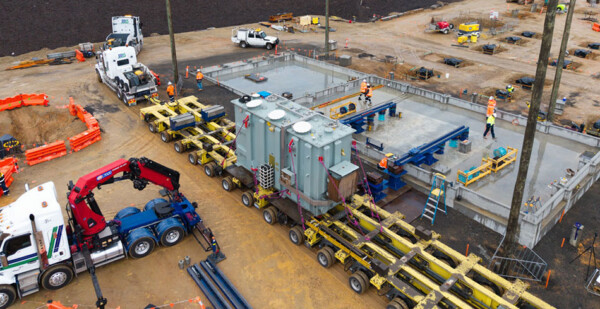
After arriving at Port Kembla, just south of Sydney, each unit was transported over approximately 480km by heavy-haul convoy before being delivered to its designated substation site. Final commissioning of the shunt reactors is expected to be completed by the end of the year.