World-leading technology developed by Australia’s national science agency CSIRO could soon play a key role in safeguarding spent nuclear fuel across the globe.
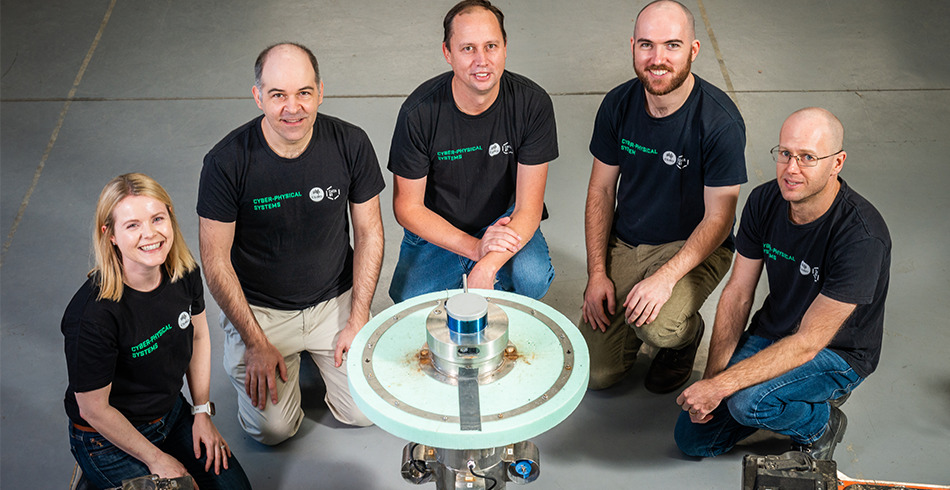
The Robotized Cherenkov Viewing Device (RCVD) was created through a collaboration between CSIRO’s data and digital specialist arm Data61, Hungarian robotics company Datastart, and the International Atomic Energy Agency.
Related article: ‘Close call’ in shelling near Zaporizhzhia nuclear reactor
The RCVD, which runs autonomy-enabling software designed by CSIRO’s Data61, has completed a successful test in an operating nuclear power facility in South America.
CSIRO technical program manager Rosie Attwell said the prototype system navigated a spent fuel pond and provided inspectors with real time data that can be used for safeguards verification.
“The test demonstrates that autonomous robots could soon assist with field measurement and analysis of spent nuclear fuel, providing greater protection for human workers,” Atwell said.
“Inspectors currently operate above the pond on a suspended platform, sometimes in 40-degree Celsius heat, using a handheld device to identify hundreds of used nuclear fuel rods.
“This new technology will remove humans from harm’s way and ensure the rate of safety inspections matches that of nuclear material.” she said.
The RCVD, a floating device, autonomously navigates a path across the pond while updating a real-time map with footage and data of the fuel assemblies.
It analyses each assembly’s position and unique signature to detect if fuel has been removed or replaced. Information is communicated back to human staff members.
The RCVD’s autonomy, navigation and mapping capabilities are underpinned by CSIRO’s Wildcat SLAM (Simultaneous Localisation and Mapping) technology, which achieved less than one per cent deviation from reality in DARPA’s Subterranean Challenge Final Event.
According to Dimitri Finker, technology foresight specialist at the IAEA, using an autonomous system will reduce the burden of carrying in-field verifications for the facility operator and for the IAEA.
Related article: CSIRO assesses Australia’s carbon sequestration potential
“It also significantly improves the quality of the data collected. The instrument can be optimally positioned close to the fuel, leading to more consistent and accurate measurements,” Finker said.
The prototype will continue to be tested, with plans for the device to be outfitted with computer vision to enhance autonomy in the next phase of development.