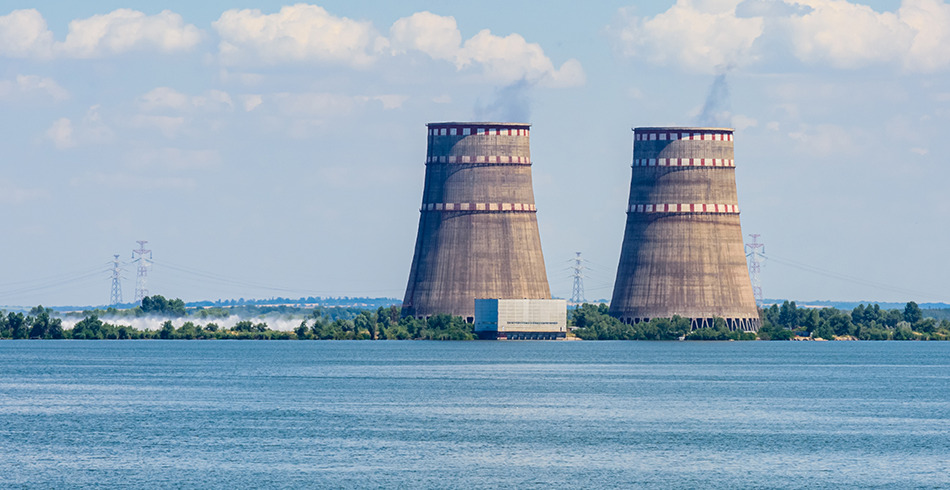
Ukraine narrowly escaped disaster during fighting on the weekend that rocked Zaporizhzhia, Europe’s largest atomic power plant with a barrage of shells, some falling near reactors and damaging a radioactive waste storage building, Reuters reports.
Russia and Ukraine traded blame for at least a dozen explosions at Ukraine’s Zaporizhzhia nuclear power station, which has been under Russian control since soon after it invaded the country but is across the Dnipro river from areas controlled by Kyiv.
Related article: Situation deteriorating at Zaporizhzhia nuclear power plant
Ukraine’s President Volodymyr Zelenskiy urged NATO members to guarantee protection from “Russian sabotage” at nuclear facilities. The head of Russia’s state-run nuclear energy agency, Rosatom, said it had discussed Sunday’s shelling with the IAEA, and said there was a risk of a nuclear accident.
The assault came as battles raged further east following Russian troop movements into the industrial Donbas region from around Ukraine’s recently recaptured Kherson in the south.
Whoever fired on the plant was taking “huge risks and gambling with many people’s lives”, said Rafael Grossi, director general of the International Atomic Energy Agency (IAEA).
IAEA experts toured the site on Monday, and the agency said they found widespread damage but nothing that compromised the plant’s essential systems.
“They were able to confirm that despite the severity of the shelling key equipment remained intact and there were no immediate nuclear safety or security concerns,” it said in a statement issued on Monday evening.
Reuters could not immediately verify which side was responsible. The attacks also hit one of Zaporizhzhia’s cooling ponds, a cable to one reactor and a bridge to another, according to an IAEA team on the ground citing information provided by plant management.
“We were fortunate a potentially serious nuclear incident did not happen. Next time, we may not be so lucky,” Grossi said in a statement late on Sunday, describing the situation as a “close call”.
“We are talking metres, not kilometres,” he said.
Related article: Ukraine rationing electricity and water after Russian strikes
Repeated shelling of the plant during the war has raised concern about a grave disaster in the country that suffered the world’s worst nuclear accident, the 1986 Chornobyl meltdown.
Radiation levels remained normal and there were no reports of casualties, the IAEA said. While there was no direct impact on nuclear safety and security systems, “the shelling came dangerously close”, Grossi said.
Read the full article here.