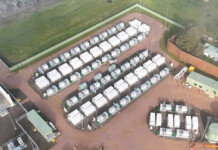
The Australian Government’s Cheaper Home Batteries Program (CHBP) has now reached more than 10GWh hours of capacity—70 times the capacity of the Hornsdale Big Battery in South Australia.
Announcing the milestone on LinkedIn, Australian Energy and Climate Change Minister Chris Bowen said, “More than 360,000 households have installed this capacity, cutting their power bills and helping drive down energy prices for everyone.
Related article: Australians driving record surge in home batteries
“Australians are getting on with it. They know what’s good for the planet is good for their pocket.”
The government also said more than 10,000 home energy upgrades had been delivered across Australia, financed by the Clean Energy Finance Corporation (CEFC) through the $1 billion Home Energy Upgrades Fund (HEUF).
Analysis by the Department of the Treasury found that electrification and the purchase of solar PV, batteries, and an electric vehicle can reduce typical household energy costs by about $4,300 per year.
Australians are taking advantage of the HEUF and the CHBP to bundle savings on rooftop solar, batteries and inverters. Since the 1 July launch of the CHBP, uptake of these clean energy technologies through the HEUF has tripled.
Since HEUF launched in May 2024, the CEFC has announced over $400 million in discounted finance for households, backed by seven co-financiers and leveraging an additional $400 million in private sector investment.
The co-financiers are lenders Brighte, Plenti, Plico, Commonwealth Bank, Westpac, ING, and Bank Australia, with more deals expected to be announced in 2026 and beyond.
Assistant Minister for Climate Change and Energy Josh Wilson said, “This important milestone with the HEUF shows that Australians have a real appetite for making their homes more sustainable and more efficient with reliable, renewable, and low-emission technologies.
“Just in the last quarter of 2025, we saw the number of HEUF loans almost double with homeowners take control of their energy use to slash their energy bills while decarbonising our housing sector.
Related article: Bunnings and Intellihub expand solar and home battery offer
“With residential buildings accounting for around 10 per cent of emissions, helping householders to improve energy efficiency is one of the quickest ways we can move closer to net zero and make a tangible difference for everyday Australians.”