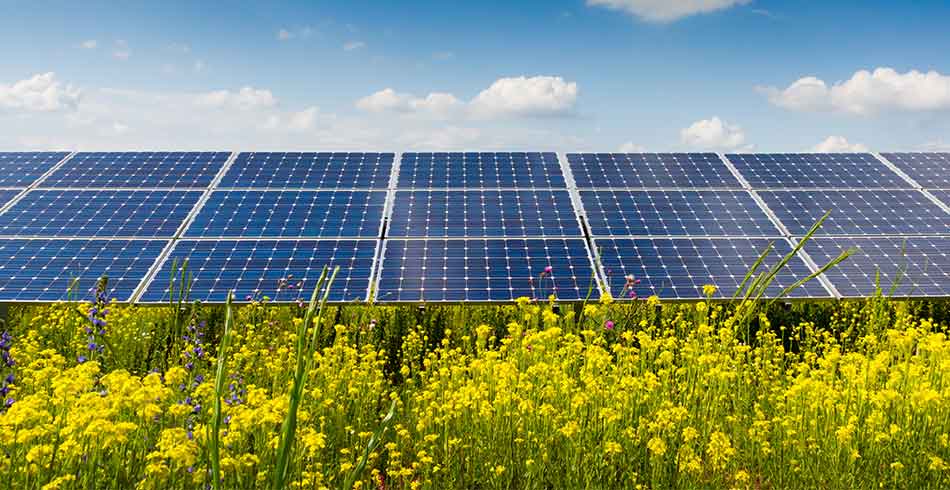
Renewable energy projects often face strong opposition over potential risks to wildlife and the natural environment. But now, focus is turning to how renewables that are crucial for generating low-carbon electricity might also help reverse biodiversity decline.
Community Power Agency—best known for its community energy project Haystacks Solar Garden—believes clean energy projects can deliver social, economic and environmental benefits to communities across Australia.
Recently, the agency’s regional coordinator Heidi McElnea teamed up with Stringybark Ecological founder and director David Carr and University of New England researcher Dr Eric Nordberg to pen a biodiversity guide that sets out how new solar farm projects can improve biodiversity on the same sites.
The Building Better Biodiversity on Solar Farms guide presents innovative strategies and tools to restore nature and integrate regenerative farming techniques while producing solar energy.
“Planning a renewable energy development offers a chance to consider shared land use,” McElnea explains.
“We know from projects being developed in Europe, the US and now emerging in Australia, that conservation and agriculture don’t need to come off second best to renewable energy.”
Related article: Vic to develop biodiversity tools for renewables developers
The double-edged sword
While the Building Better Biodiversity on Solar Farms guide is tailored to the unique ecosystem of the New England Tableland bioregion in northern New South Wales, its principles are relevant across the broad Australian landscape.
It emphasises that well-designed solar farms can achieve a net gain in biodiversity, without compromising solar generation capacity.
“By integrating biodiversity considerations from the outset of planning a new solar farm, we can achieve substantial benefits,” Stringybark’s David Carr says.
“This includes minimising negative impacts, fostering onsite biodiversity enhancement and collaborating with neighbouring communities to bolster local biodiversity.”
The guide comes at a critical time, as Australia grapples with the urgency of addressing the intersecting challenges of climate change and biodiversity loss, and prioritising larger, grid-scale renewables to boost the nation’s generation capacity.
“Often it’s due to the scale of new developments for renewable energy and the location of the projects in some cases,” Carr explains.
“Biodiversity in rural areas has declined significantly due to nearly two centuries of agriculture—clearing, grazing, weeds and pest animals, changed hydrology. What biodiversity is left is often just hanging on, to the point where we are seeing more and more once-common species become endangered.
In many cases, the biodiversity is strongest in areas which are less valuable for agriculture, such as steep or rocky country, but this is where wind turbines, power lines and pumped hydro schemes are going.
“The cumulative impacts of all this development in an already-fragile landscape will push many species over the brink and we will continue to see local extinctions if we are not proactive about it.
“On the other hand, if we don’t address climate change by moving from fossil fuels to renewable energy, the local biodiversity will suffer and probably to a much worse degree over the next century.”
Considerations for developers
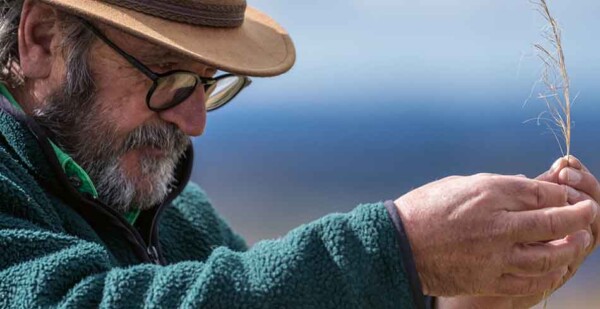
Dr Eric Nordberg is a researcher in the new field of ‘conservoltaics’, and has contributed some of his findings to the guide.
“Similar to artificial reefs in aquatic ecosystems, solar farms can serve as hubs for biodiversity enhancement, introducing structural complexity into the environment and providing crucial shelter and habitat for various species,” he explains.
Dr Nordberg says there are many important biodiversity considerations that must be looked at during the planning phase of solar projects, including:
- Multi-use considerations: What beneficial uses does the site have in addition to energy production, e.g,. cropping, grazing, wildlife habitat, etc.
- Minimise clearing and destroying habitat: Avoiding areas of high biodiversity, riparian areas, or known travel corridors.
- Recreate critical refugia that has been removed during construction (nest hollows, logs, rock piles, etc).
He says ‘gold standard’ renewables projects are those planned with biodiversity net gain approaches.
“Developers that have strategic management practices in mind to improve biodiversity value and habitats, are working with researchers to facilitate projects, and have been open and transparent, are leading the class. These developers are open to collaboration and improving how solar farms are managed.”
Carr agrees, noting regulators are likely to constrain development of projects that involve threatened species and ecological communities at risk of ‘Serious and Irreversible Impacts (SAII)’.
“Developers must demonstrate that they have done everything to avoid and minimise the impacts of their developments on biodiversity, or face pushback from regulators,” he says.
“Any offsets to cover damage to biodiversity after avoiding and minimising impacts will add significant costs to the project to purchase offset credits.”
Social licence is another key factor.
“Communities are going to strongly resist development that cause further loss of biodiversity. In addition, investors in renewable energy projects are unlikely to favour projects causing significant biodiversity loss,” Carr says.
“Biodiversity will continue to decline with loss of species, connectivity and landscape character and the finger of blame will be pointed at renewable energy.”
A collaborative approach to clean energy
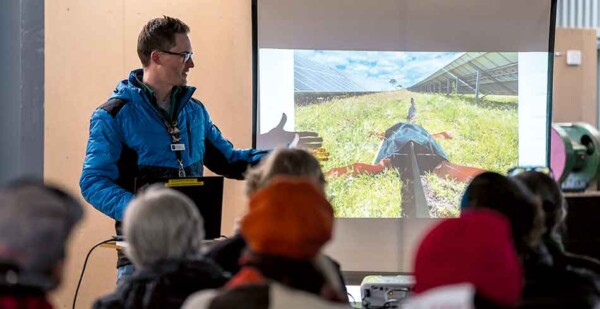
Sabiene Heindl is CEO of The Energy Charter—a unique CEO-led collaboration of like-minded energy organisations with a shared purpose and passion for customers and communities. Its #BetterTogether Biodiversity + Renewables initiative recently saw The Energy Charter partner with independent, not-for-profit advocacy organisation RE-Alliance to develop the Better Practice Renewables and Biodiversity: Opportunities for Collaboration Guide in collaboration with more than 30 contributors from the environmental and energy sectors.
The guide showcases several environmental interventions at every stage of renewable energy project development, from energy system design to end-of-life. It outlines some of what is possible through case studies and identifies opportunities for cross-sector collaboration.
“Developing better practices for limiting and managing impacts to biodiversity from clean energy projects relies on continuous improvement,” Heindl says.
“The Better Practice Guide steps out interventions and highlights key development stages that are important to get right. First, it is crucial to conduct thorough site selection to avoid significant environmental impacts. Early collaboration with local environmental organisations and Traditional Owners can help identify environmental priorities and build trust.
“Integrated vegetation and biodiversity management plans and co-location with agricultural or environmental land use practices can enhance biodiversity outcomes. While national standards can provide a framework, #BetterTogether local and regional collaboration is essential to tailor practices to specific environmental contexts.”
The Better Practice Guide recommends several actions for a well-considered rollout
of renewables:
- Data sharing: Encouraging the sharing of environmental data collected by renewable energy proponents to enhance local knowledge and conservation efforts.
- Rights of way as habitat: Utilising utility corridors for habitat restoration and wildlife corridors.
- Recycling and reusing: Supporting regional economic development in the recycling sector for renewable energy infrastructure components.
- Stakeholder engagement: Fostering partnerships with local communities and environmental groups to ensure projects align with local conservation priorities and gain community support.
“It’s vital that the renewable energy sector continues to innovate and collaborate to minimise environmental impacts and maximise benefits for biodiversity,” Heindl says.
“The Better Practice Guide is a testament to the positive outcomes that can be achieved through cross-sector collaboration. By working #BetterTogether through sharing knowledge, proactively engaging with stakeholders and a continued commitment to better practices, Australia has the potential to achieve its renewable energy targets while also protecting and enhancing its unique biodiversity.”
Related article: Transgrid partners with First Nations group on biodiversity
Nature Repair Market scheme
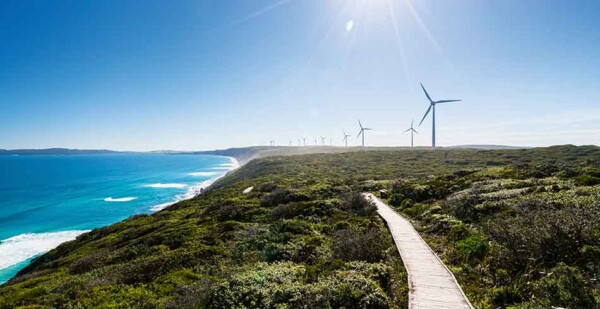
The Australian Government recently launched consultation on technicalities of its Nature Repair Market (NRM) scheme—also known as the Biodiversity Credits Market.
The Nature Repair Act 2023 came into effect in December 2023, establishing a framework for a world-first legislated, national, voluntary biodiversity market. The Act provides legislated rules to support transparency and integrity and to foster collaborative efforts to address environmental decline.
Administered by the Clean Energy Regulator (CER), the NRM is a voluntary national market that encourages people and businesses to invest in projects that restore and protect the natural environment.
The Nature Repair Market will deliver improved biodiversity outcomes by:
- re-establishing vegetation along waterways
- keeping pests and feral species from destroying native species and ecosystem.
Participants can carry out projects on Australian land, waters or a combination of both.
The scheme has two types of credits:
- ecosystem credits, which measure ‘ecosystems’, specifically threatened ecological communities, threatened species habitat for species that can be reliably predicted to occur with a plant community type and plant community types generally
- species credits, which measure the threatened species found at a location that cannot be reliably predicted to occur within the ecosystems identified.
The consultation is seeking input on key elements, including registration of biodiversity projects, biodiversity certificates, assurance and compliance, reports, audits, and notification.
Heidi McElnea believes there’s room for improvement with Australia’s biodiversity offsets.
“The government could overhaul our biodiversity offset schemes to better support revegetation efforts rather than just conserving existing areas of high-quality wildlife habitat,” she says.
“While protecting established areas is important, there is not an endless supply of habitat, particularly in a renewable energy zone context, with multiple projects vying to offset biodiversity losses on their projects.
“The more we can support and incentivise proponents of renewable energy infrastructure to design and implement nature positive planning for their sites and connected landscapes would help us to get better biodiversity outcomes.”
McElnea also wants to see First Nations people involved in land management partnership opportunities.
“Our First Nations people have a long history of land management but have been locked out of accessing many important places over the past 200 years.
“Partnership opportunities should be planned for and discussed early in project planning, which recognise Indigenous sovereignty and connection to Country. Cultural heritage assessments undertaken on project sites can also provide rich sources of information and opportunities to reconnect with culture and history.”