‘Super fungi’ engineered by Australian researchers could be used to extract critical minerals from toxic mining waste while also helping to remediate sites.
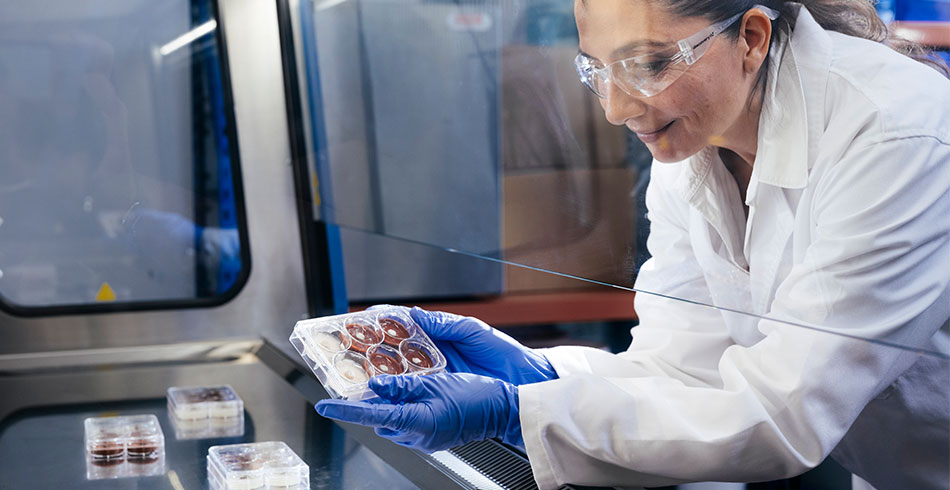
Environmental engineers at at The University of Queensland’s (UQ) new Biosustainability Hub are growing unique fungal strains that can be used to detoxify mining tailings and capture traces of important rare earths without the need for harsh chemicals.
Critical minerals are currently recovered from mining tailings using a method called leaching, which relies on acids and solvents that are expensive and can be damaging to the environment.
Related article: “Giant leap”: UQ researchers set new solar cell world record
A new leaching method pioneered by Dr Denys Villa-Gomez instead uses ‘super fungi’ strains that produce organic acids capable of cleaning mine waste and recovering valuable metals.
“We take fungi that grows naturally in mining and then we engineer them to actually be super, so they can cope with toxic environments and tolerate harsh conditions,” Dr Villa-Gomez said.
“We know the process works well for extracting high-value critical minerals such as vanadium and scandium, key compounds in electronics and microchips.”
The creation of the ‘super fungi’ is done through adaptive laboratory evolution, where the fungi are put under challenging conditions over time so only the strongest survive and evolve into more effective strains.
State-of-the-art bioreactors at UQ’s Biosustainability Hub then process the mining waste by combining it with the engineered fungi and feedstock.
PhD candidate Fernanda Soto-Montandon said as the fungi consumes the feedstock they begin producing natural organic acids as part of their metabolism.
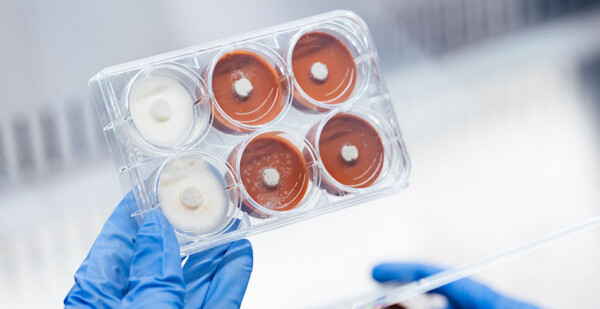
“Those acids then break down the mining waste, destabilising the mineral structure and releasing the trapped metals into a liquid form,” she said.
“From there, the metals can be recovered and reused, turning what was once waste into a valuable resource through a low impact biological process.”
Director of the $70 million Biosustainability Hub, Professor Esteban Marcellin, said the facility was helping manufacturing, energy, mining, and food production industries transition to cleaner operations.
“We use cutting-edge synthetic biology to engineer microbes and biological systems to turn waste, emissions and low value materials into sustainable, high value products,” Professor Marcellin said.
“The Hub provides companies with a bridge from fundamental discovery to real-world application.
“From sustainable mining and waste management, fermentation scale-up and bioreactor optimisation, we are accelerating the journey from lab to market.”
Dr Villa-Gomez said exploring the use of fungus as a bioleaching tool was an environmentally responsible and cost-effective alternative to traditional mineral extraction processes.
Related article: Australia and United States ink bilateral critical minerals deal
“In the future, it’s hoped we could deploy these fungi directly at mine sites, recovering minerals while helping remediate the land at the same time,” she said.
“We are engaging with industry partners to test these technologies in the field.”