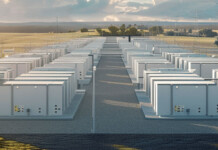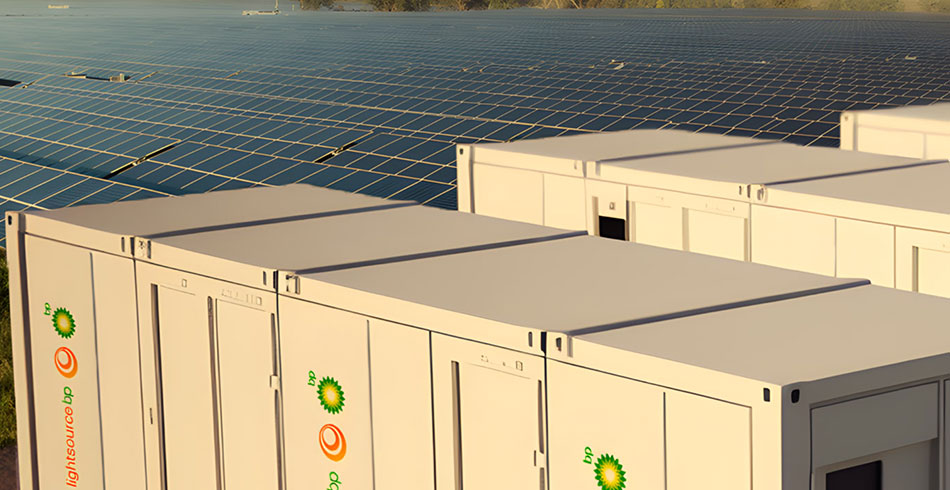
Lightsource bp has begun delivery on a 49MW/562MWh, long-duration DC-coupled battery energy storage system that will integrate with its 585MWdc Goulburn River solar farm near Merriwa, New South Wales.
Goulburn River is one of the first large-scale DC-coupled solar-battery hybrid projects to enter construction in Australia. By connecting the battery on the direct current (DC) side of the plant, it will share inverters, transformers and a single grid-connection with the solar array, reducing energy losses and shifting surplus daytime generation into the evening peak and overnight periods.
Related article: Lithium-ion battery projects lead landmark CIS tender
The hybrid project’s battery component is backed by a Long-Term Energy Service Agreement (LTESA) through the New South Wales Electricity Infrastructure Roadmap, while the solar component is supported by the Commonwealth’s Capacity Investment Scheme (CIS). These policy mechanisms provide long-term revenue certainty while accelerating renewable energy capacity into the National Electricity Market.
Located in a highly strategic position within the New South Wales grid, the Goulburn River development also includes plans for two additional co‑located battery energy storage systems beyond the current LTESA. One of these—a 450MW/1,370 MWh standalone battery—was announced this week as also having secured support under the Commonwealth’s CIS, reinforcing the role of large‑scale storage in enabling the lowest‑cost, reliable transition to dispatchable low‑carbon energy in line with the objectives of the CIS.
Lightsource bp chief operating officer APAC Adam Pegg said, “This is a pivotal milestone for Lightsource bp globally, marking the delivery of our first DC-coupled battery and reflecting the outstanding work of our team.
Related article: Lightsource bp begins construction on Woolooga Battery
“Reaching this stage on the Goulburn River battery is much more than a construction milestone—it shows how firmed renewables have moved from concept to a critical component of Australia’s energy future.”
DT Infrastructure will deliver engineering, procurement and construction services for both Goulburn River assets, with CHINT supplying the battery technology and providing long-term operations and maintenance. Construction on the solar farm and interconnection began in late 2024, and the battery now joins the build programme, with assets scheduled for energisation by late 2026.