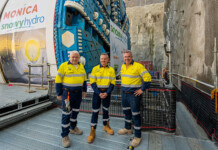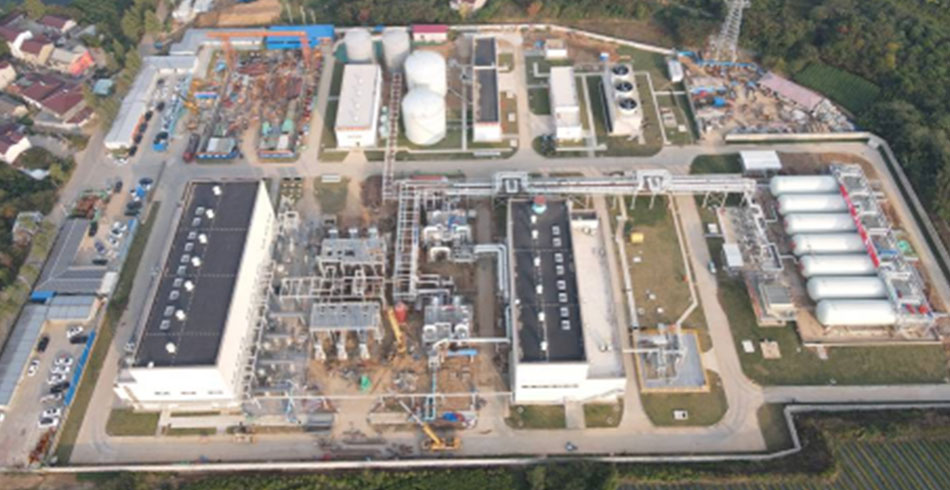
The world’s first non-supplementary fired compressed air energy storage power station, the Jintan Salt Cave Compressed Air Energy Storage Project in China, has begun sending electricity to the state grid.
The national pilot demonstration project was jointly developed by China National Salt Industry Group, China Huaneng, and Tsinghua University, and symbolises enormous progress in the research, development, and application of new energy storage technologies in China.
Related article: Hydrostor secures US$55M funding for Silver City project
The Department of Electrical Engineering of Tsinghua University established a professional technical research and development team to provide technical support for the project. Relying on the advanced non-supplementary fired adiabatic compressed air energy storage technology, the project has applied for more than 100 patents, and established a technical system with completely independent intellectual property rights.
The team developed core equipment including high-load centrifugal compressors, high-parameter heat exchangers, and large-scale air turbines, which are fully designed and made in China.
The project has an installed power generation capacity of 60MW, an energy storage capacity of 300MWh, and a long-term construction scale of 1,000MW.
Underground salt caverns have the natural advantages of large gas storage capacity, favourable sealing effect and high safety.
Salt cavern compressed air energy storage is a large-capacity physical energy storage technology to store gas in underground salt caverns. It compresses air into the salt caverns at the valley of power consumption and then releases compressed air to generate electricity at the peak, so as to improve the grid regulation capacity and new energy acceptance and consumption.
Challenges included difficulties in research, development and integration of equipment, lack of standard and experience in construction, operation and maintenance of power stations.
Related article: China unveils massive 1GW offshore solar farm
To overcome these hurdles, China National Salt Industry Group built the underground gas storage with its advanced cavity-making and injection-production technologies, while China Huaneng was liable for project construction, operation and maintenance with its power expertise.
As a model of industry-university-research cooperation, the project received strong support and assistance from the National Energy Administration, Jiangsu Energy Administration, State Grid, Changzhou City Government, and Jintan District Government.