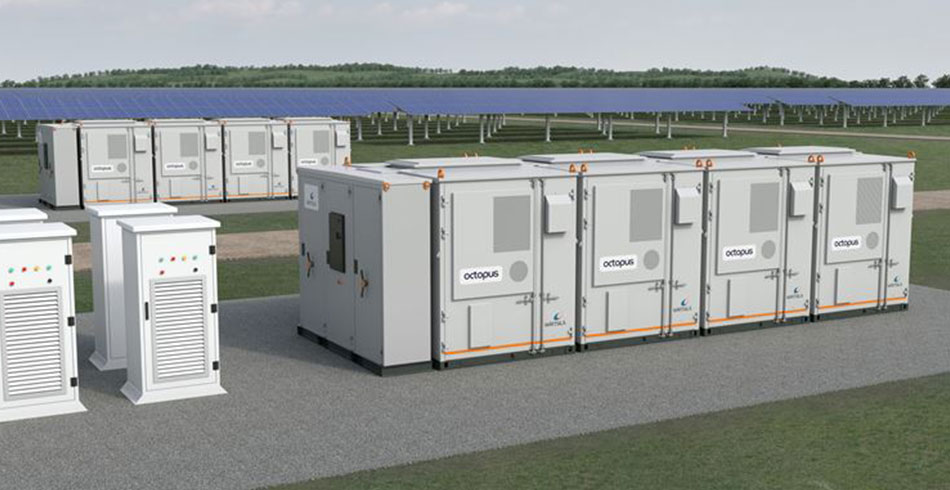
Technology group Wärtsilä has announced it will deliver the largest DC-coupled hybrid battery system in the National Electricity Market (NEM), reflecting a growing trend toward hybridisation of storage assets with co-located renewable generation.
While Wärtsilä isn’t revealing the name of the project or the customer at this point, it says the battery will have the capacity to power up to 120,000 homes and businesses once operational.
Related article: Berri Energy Project gets Aussie-first DC coupled battery
DC-coupled projects represent a shift in the future of renewable energy integration. By directly coupling solar generation with battery storage through a DC/DC converter, the architecture minimises energy losses to capture solar power that would otherwise be curtailed, significantly improving project economics, system efficiency, and overall grid stability.
The project has secured approval for its Generator Performance Standards (GPS), marking a critical milestone in integrating renewable generation and storage at scale. Securing GPS approval was crucial to ensure the successful design and approval of the innovative DC-coupled hybrid system, with Wärtsilä’s optimisation technology playing a central role. The project is supported by a 20-year service agreement.
Wärtsilä Energy Storage vice president of global sales management David Hebert said, “This project is significantly larger than our earlier DC-coupled project, underscoring the need for this type of technology in expanding at scale.
“It’s particularly exciting to work on the largest DC-coupled project in the country; DC-coupled technology is a breakthrough for hybrid renewable plants and a critical step towards establishing a financially viable renewable energy future. The project is a prime example of how hybrid renewable energy and storage solutions can help stabilise Australia’s grid while advancing decarbonisation goals.”
Related article: Wärtsilä to deliver battery for Octopus’ Fulham hybrid project
Wärtsilä’s intelligent controls and optimisation software, GEMS, will sit at the forefront of the project, managing the integration of both the energy storage system and solar assets with the grid’s connection requirements.
This project will be Wärtsilä’s ninth BESS site in the country, expanding the company’s local footprint to 1.5GW/5.5GWh of capacity. The project is expected to be operational in 2028 and will contribute directly to Australia’s net-zero by 2045 target.