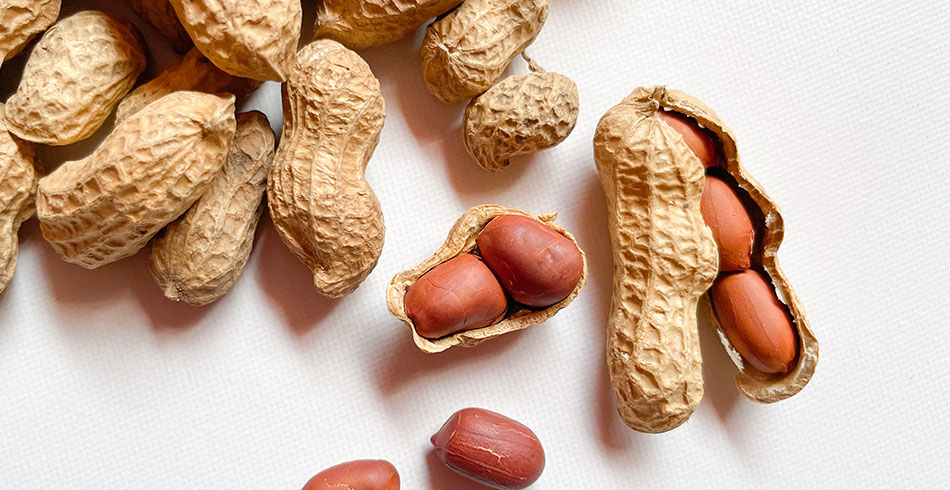
Researchers from the University of New South Wales (UNSW) have discovered a new way to make graphene, a remarkable ‘wonder material’, using just discarded peanut shells.
The development opens the door to cheaper, more sustainable electronics and energy storage devices and could help transform agricultural waste into valuable products inside phones and computers that are used every day by billions of people around the world.
“Graphene is famous for being one of the thinnest, strongest and most conductive materials known to science,” says Professor Guan Yeoh, who led the team.
Related article: Scientists use sunlight and gallium to make green hydrogen
“It is made up of a single layer of carbon atoms arranged in a hexagonal lattice, but is hundreds of times stronger than steel, conducts electricity and heat better than copper and is almost completely transparent.”
Those characteristics make graphene extremely useful in a range of technologies, including batteries and solar panels. However, graphene is expensive and difficult to produce in large quantities—requiring chemicals and energy-intensive methods.
“There are about 55 million tonnes of peanut crops produced globally every year, yet most of the waste from the shell is either discarded or recycled into low-value applications that don’t maximise their full potential,” Prof Yeoh said.
“What we have shown in this work is that basic peanut shells can be turned into high-quality graphene, using much lower energy than is currently required and therefore at a lower cost. We also do not need to use any chemicals, so there is an added environmental benefit.
“Graphene is useful for making stronger, lighter, and more conductive materials for applications in electronics, energy storage, medical devices, and even flexible technologies like sensors, solar cells, and wearable tech.
“The demand for many of those things is increasing rapidly, so it’s exciting to find a way of producing more graphene in a cost-effective way—and by using material that would otherwise be waste.”
Lignin is the key
The research team’s first breakthrough was to recognise that peanut shells are packed with lignin, a naturally occurring polymer in plants which contains lots of carbon.
This gave them the idea to grind up the shells and use a series of heat treatments to unlock their potential for graphene production.
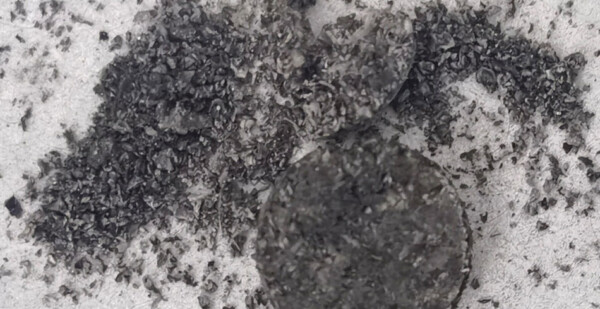
The first step involves the shells being heated to around 500°C for five minutes to remove impurities and convert the shells into a carbon-rich char material.
The second step subjects the char to what is known as flash joule heating, in which a flash of electricity rapidly raises the temperature of the material to around 3000°C for just a few milliseconds.
This enormous heat energy instantaneously rearranges the carbon atoms into single layers of graphene.
Current graphene production methods traditionally include carbon black at this stage, an industrial chemical which is predominantly made from fossil fuels like oil and natural gas.
But the UNSW team’s method uses only the peanut-shell derived char itself, thus being more environmentally friendly as well as simplifying the process.
Overall, the new process can be completed in around 10 minutes, offering the benefit of needing substantially lower energy usage than commercial methods in use today.
Future commercialisation
Although the amount of graphene that has been produced using the new process is currently small, the researchers are hopeful that with further development the process could be commercialised within three to four years.
Prof Yeoh says that a wide range of other organic waste could potentially be used to produce similar results.
“We’ve used peanuts as a test case, but the key ingredient to this process is the lignin which is present in many different plants,” he said.
Related article: Graphene-enhanced perovskite solar cell efficiency doubled
“So we are planning to also carry out experiments with other materials, such as coffee grounds, or banana peels, or anything else that can give us that good char to then turn into graphene.
“Considering how much organic material like that is available, our work demonstrates a good balance between the energy efficiency, the quality of graphene we end up with and the economic viability of the whole process.
“What we have done is really highlighted its potential for use in large-scale biomass-to-graphene manufacturing.”