By Neil Martin
Solar cells rely on silver to help generate electricity efficiently, but its rising cost and growing demand mean the renewables industry is keen to reduce its use without compromising performance.
Silver, a material commonly associated with jewellery and electronics, plays an important role in helping solar cells generate electricity. However, its rising price and growing demand are putting pressure on manufacturers, prompting researchers to investigate whether cheaper alternatives can do the same job.
At UNSW Sydney, Dr Ning Song and her research team, working closely with Scientia Professor Martin Green are exploring ways to reduce the amount of silver used in solar cells, or potentially eliminate it altogether.
The challenge is not simply finding a cheaper material. Any alternative must also help solar panels generate electricity efficiently—and do so reliably for decades, without undermining the affordability and environmental benefits that have helped make solar power so attractive.
Related article: Infinity and beyond: Aussie solar tech bound for space
Why do solar panels need silver?
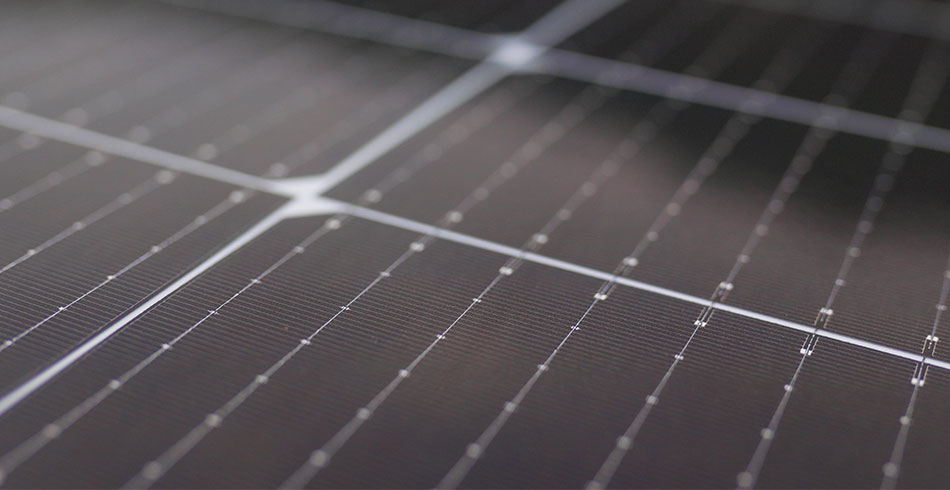
Solar cells contain extremely thin metal lines, called contacts, that collect the electricity generated within the cell. Silver is particularly well suited to this job because it conducts electricity exceptionally well and can be manufactured into fine lines using a relatively straightforward printing process.
“Silver is used for the metal contacts that get the current out of the solar cells,” says Dr Song, a senior lecturer in UNSW’s School of Photovoltaic and Renewable Energy Engineering.
“It has very good conductivity and is easy to screen print. So silver has been one of the best for performance, but not necessarily moving forward for cost and sustainability.”
Silver paste, which is used to form the electrical contacts, accounted for up to 30% of the cost of manufacturing a solar cell when silver prices peaked in early 2026, say industry analysts, although the share varies with cell technology, silver prices and paste consumption.
The rising cost of silver is one of the reasons that solar panel manufacturers are accelerating efforts to find alternatives, with researchers such as Dr Song vitally important in the process.
“In academia, we investigate the fundamental mechanisms behind how solar cells work, but we also develop new materials and manufacturing technologies to improve their performance and reduce costs,” she says.
“I think it’s a joint effort. Industry brings extensive manufacturing expertise and the ability to scale up technologies. By working together, we can combine scientific understanding with technological innovation to develop practical solutions for the solar industry.”
What could replace silver?
Researchers are investigating several alternatives, including aluminium, nickel and copper. Each offers potential advantages, but none is a straightforward replacement.
Aluminium is significantly cheaper than silver and is already used in some solar-cell designs. It is also used in established solar-cell metallisation processes, although its suitability depends on the contact structure and the processing conditions.
However, aluminium is less electrically conductive than silver, and the contact interface and firing process must be carefully controlled to avoid additional electrical losses.
Dr Song and colleagues are investigating ways to address these problems by adjusting the composition of aluminium pastes and optimising manufacturing conditions.
UNSW teams have demonstrated aluminium rear contacts in industrially relevant TOPCon solar cells can achieve 22.9% efficiency compared with 23.7% for silver-contact reference cells. The result shows the potential of aluminium while highlighting the need to further reduce electrical losses.
Copper is another attractive alternative because it is much cheaper than silver while offering similarly strong electrical conductivity.
However, copper can create problems when used in silicon solar cells. It can move into the silicon and interfere with the processes that allow the cell to generate electricity.
“Copper can also oxidise, potentially affecting its electrical performance and long-term reliability,” says Dr Song.
One approach uses silver-coated copper particles to reduce the overall silver content while helping manage oxidation and contact performance. Long-term reliability and process compatibility remain important considerations.
Nickel is also being investigated because it is relatively stable and already has established uses in semiconductor manufacturing.
However, nickel-based contacts can introduce electrical losses and other technical challenges.
In a recent study, Dr Song’s team, including PhD researcher Lizhi Sun and Scientia Professor Martin Green, investigated partially replacing silver with nickel in the rear contacts of industrial TOPCon solar cells.
With a suitable nickel powder, replacing 10% of the silver powder by weight reduced rear-finger raw-metal costs by 6.8%, with an absolute efficiency decrease of just 0.024 percentage points.
“Replacing silver with nickel is not simply about using a cheaper metal. We need to consider how the nickel powder affects electrical contact performance, printability and the amount of paste consumed during manufacturing,” says Dr Song.
The researchers found that increasing the nickel content could increase paste consumption and largely offset the expected cost savings. Their findings highlight the importance of considering both material properties and manufacturing requirements when developing practical alternatives to silver.
Related article: UNSW and UtmoLight set perovskite solar world record
No silver bullet
Dr Song says there is no single solution to the problem of replacing silver that will work for every solar cell.
“It’s really dependent on the cell structure,” Dr Song says.
“It’s hard to say which material will ultimately prove the most suitable.”
Dr Song believes continued research in partnership with industry could enable substantial reductions in silver use, and potentially silver-free contacts in selected cell technologies, over the coming years. The pace will depend on manufacturing compatibility, performance and long-term reliability.
One of the biggest obstacles to that timeline is reliability.
Solar panels are expected to operate outdoors for approximately 25 to 30 years, meaning manufacturers must be confident that alternative contacts will withstand prolonged exposure to environmental conditions.
“Although other options may have passed testing in the lab, industry still needs confidence from outdoor testing and that data may not yet be available,” Dr Song says.
“We have to make sure the modules are reliable over the long term so they can work efficiently for many years.”