New analysis reveals up to 30% of Australia’s coal generation capacity is unavailable on average, with governments being urged to end uncertainty over coal closures.
A new report from energy advisory firm NEXA Advisory calls on state and federal governments to stop extending the lives of ageing and increasingly unreliable coal-fired power stations and commit to a nationally coordinated closure plan to protect Australians from higher electricity prices and growing energy security risks.
Related article: New research says 75% of Australia’s coal-fired power plants will retire by 2035
The report, Coal Closure Certainty: The Missing Signal for an Orderly Transition, warns that repeatedly delaying coal plant retirements is creating uncertainty for investors and holding back the new generation, storage, and transmission infrastructure needed to replace them.
NEXA Advisory CEO Stephanie Bashir said governments needed to demonstrate leadership and deliver an ‘all in’, credible national plan to move Australia away from ageing coal generation.
“Delaying the inevitable is not a strategy. It is prolonging the pain felt by Australian households and businesses,” Bashir said.
“Keeping coal on life support is putting upward pressure on electricity prices while creating uncertainty for investors looking to build the infrastructure needed to replace it.
“New generation—both renewables and limited gas—storage and transmission all need the certainty that committed, coordinated coal closure deadlines provide.
“Australians expect their governments to show leadership, not continue the political squabbling that has plagued our energy transition for decades. State and federal governments must come together and deliver a national plan to wean the country off coal.”
The report highlights the increasing unreliability of Australia’s ageing coal fleet, finding:
- An average of 5.8GW of coal generation capacity was unavailable in 2025, representing 25.9% of the fleet.
- Some of Australia’s largest coal generating units were unavailable for nearly half their potential output in 2025, with Gladstone Unit 1 recording 67.5% capacity-weighted unavailability.
- In Victoria, extreme wholesale price events were almost five times more frequent during periods of high demand and low renewable output when coal unavailability was high, compared with periods of lower coal unavailability.
- On 12 June 2025, wholesale electricity prices reached $17,500/MWh, as approximately 3,100MW of coal capacity was unavailable alongside low wind generation, high demand and other market constraints.
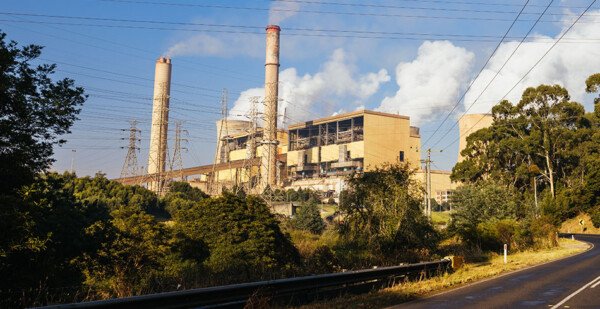
The report also points to the repeated extensions of Eraring Power Station in New South Wales as an example of the uncertainty surrounding coal retirement. Originally scheduled to close in August 2025, the plant’s retirement has been pushed back twice, most recently to April 2029.
The report sets out five recommendations for state and federal governments:
- Set firm, nationally coordinated coal closure dates: Establish an enforceable retirement framework, with dates agreed well in advance and extensions permitted only in exceptional, clearly defined circumstances.
- Plan backwards from each closure date: Align investment programs, transmission, storage and connection priorities with coal retirement schedules, with clear milestones and accountability for delivering replacement capacity.
- Establish a targeted strategic reserve: Procure backup capacity where genuine reliability gaps are identified, with reserves held outside the normal electricity market and activated only when needed, rather than providing ongoing payments to ageing coal plants.
- Plan around dependable capacity, not nameplate capacity: Account for the risk of equipment failures, maintenance outages and reduced output from ageing coal plants when assessing future electricity reliability.
- Accelerate replacement energy infrastructure: Remove barriers to new generation, storage and transmission, support long-duration storage and fast-track viable projects outside Renewable Energy Zones where existing network capacity can be used.
Bashir said governments were treating coal extensions as a solution to reliability concerns, rather than addressing the underlying delays in delivering replacement capacity.
Related article: Research reveals unreliability of Australia’s ageing coal plants
“Every time a closure date is pushed back, it shifts the goalposts for investors, making it harder to finance and deliver the generation, storage and transmission needed to replace coal,” she said.
“We cannot keep kicking the can down the road and expecting the transition to become cheaper, faster or more reliable.”