By Geoff Smith, CEO of Australian Spatial Analytics
As a social entrepreneur, data analyst, and CEO of Australian Spatial Analytics (ASA), my journey has been about bridging two worlds: the needs of the digital economy and the untapped talent of neurodivergent people.
I started my career as a data analyst in the oil and gas industry. But I felt a disconnect and quit my corporate life to travel, spending some time teaching English across Southeast Asia.
When I moved into an executive role at a disability employment provider, I was frustrated when I saw brilliant young autistic adults with excellent skills struggle to get work because they didn’t fit into the employment system. That led me to co-found ASA in 2020.
I know that neurodivergent people are the rockstars of the new digital economy. One of the biggest honours of my life was being named the 2025 Queensland Australian of the Year. It validates that we can do business differently, putting people first while delivering quality technical work.
Related article: Spatial experts recognised for work on Battery of the Nation
Australian Spatial Analytics (ASA) is a not-for-profit supporting the energy sector by providing high-quality, Australian-based geospatial and digital engineering services. Our role is twofold: delivering critical data solutions while creating meaningful careers for young neurodivergent adults, leveraging their strengths in pattern recognition, attention to detail, and problem-solving. We’ve undertaken projects for many energy clients across Australia.
ASA specialises in digital asset management. Our data services are vital for the management and modernisation of energy infrastructure, including the transition to renewables. This involves working with massive datasets to maintain digital representations of the real world.
Our biggest project was mapping and creating a ‘single source of truth’ for Queensland’s electricity assets, a massive undertaking that involved merging legacy asset information into a unified database. It’s one of the largest spatial databases in the world, with over 25 million features and counting (see our case study). The project was recognised with a Technical Excellence Award from the Geospatial Council of Australia.
This expertise helps utilities map the physical location and details of electrical infrastructure, facilitate asset inventory and management, and improve planning and maintenance decisions. Other projects have included electrical pole-top inspections to identify potential defects, LiDAR data quality assurance for bays (the network between electrical poles), and gas pipeline digitisation.
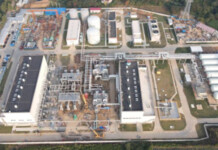
We also have a digital engineering arm that undertakes drafting services and As-builts (including the MacIntyre Wind Farm, one of the world’s largest onshore wind farms) and Building Information Modelling (BIM) for other infrastructure.

By providing these services wholly in Australia, ASA offers a secure alternative to offshore data processing, helping energy companies eliminate data sovereignty concerns (in line with the requirements of the Security of Critical Infrastructure Act 2018) and modern slavery risks in their supply chains. Over $1 billion in data work is sent offshore every year, so we’re also creating economic impact for Australia.
ASA is also a talent source. We’re a career pathway that provides on-the-job training and facilitates the transition of our data analysts into permanent positions within our partners, including energy companies, helping address STEM skills shortages. We’ve also delivered our Neurodiversity Training courses to enable neuroinclusion and neurodiverse teams.
With 20% of the population being neurodivergent (over five million Australians and 1.6 billion globally), the appalling 34% unemployment rate among autistic Australians shows that the system is failing.
The main issue is that workplaces are designed for neurotypical norms. Barriers include vague job advertisements and interviews that rely on social cues, such as eye contact. Open-plan offices often cause sensory overload through noise and lighting. Unwritten social rules lead to misunderstandings. The pressure to ‘mask’ behaviours and navigate complex bureaucracy causes burnout and prevents disclosure. Employers must remove unconscious bias and dismantle these systemic hurdles, ensuring talent isn’t blocked by stigma or inaccessible processes.
The solutions are simple: things like providing interview questions in advance and offering clear instructions to reduce anxiety. We encourage noise-cancelling headphones, dimmer lighting, flexible hours, and fixed desks. We adopt the mantra of ‘directness is kindness,’ emphasising clear, literal communication.
Autistic unemployment is not just a social issue—it’s also an economic one. Australia could add $43 billion to its economy every year if the autistic 34% unemployment rate were reduced by just a third.
Related article: Essential Energy gets regulatory waiver for training academy
If I could sit every recruiter in a room and tell them one thing, it would be this: you are screening out your best performers before they even step foot in the building. Employers need to start thinking about how neurodivergent people can solve their skills shortages. It’s not hard to enable neurodiversity in the workplace. You just need to make some minor tweaks.
The key realities for employers are that most accommodations are free and constitute good general management. In high-turnover industries like tech, autistic employees offer exceptional loyalty and retention when given a supportive environment. Hiring autistic talent is not charity; it is a productivity multiplier, particularly in ‘big data’ fields.
Neurodivergent brains often possess cognitive strengths that enable them to handle complex workloads that burn out neurotypical employees. We’ve proven it. Many organisations, including government departments, utilities, and engineering firms are hiring our data analysts as permanent employees because they recognise the value they bring.