There’s plenty of discussion about the electrification of everything, but the reality is Australia isn’t quite ready yet, writes Energy Queensland CEO Rod Duke.
I recently had an opportunity to share some of my concerns and observations about this at a forum hosted by the Committee for Economic Development of Australia discussing future fuels and Queensland’s energy transition.
It has taken the electricity sector 100 years to develop, design and construct today’s infrastructure—and now we’re going to need to quadruple its capability, or even more, in the next few decades or so just to keep pace.
Related article: Energy Queensland to expand regional battery fleet
Why? It’s pretty simple. Electricity will either be the fuel for the future of Australia, or it will be used to power emerging industries such as hydrogen production.
Energy Queensland has a lot of skin in the game.
It runs Australia’s largest electricity network business with an enterprise value in excess of $26 billion.
Our 7,400 employees deliver an annual program of works worth $1.6billion.
Our subsidiaries, Ergon Energy and Energex, support one of the world’s largest distribution networks, delivering 35,000GWh of power to 2.3 million premises and 763,000 retail customers from Tweed River to Torres Strait and from Brisbane across to Birdsville.
They’re moving electrons, with around 1.7 million power poles, almost 180,000 span kilometres of overhead powerlines, 29,000km of underground power cable and controlling it with nearly 11,000km of fibre optic cable.
With Queensland and Australia’s commitments to net zero carbon emissions by 2050, forecasts show that we will need to move from having electricity as around 25 per cent of this country’s primary energy usage to perhaps 80 per cent.
Almost every source of renewable energy ends up manifesting itself as electricity—solar, hydro and wind are the big three.
They are first converted into electricity which is then used to heat, cool, light, and power communities and industries.
Renewable energy by its very nature fluctuates depending on the time of day and the weather —too much power being generated during the day and not enough at night causes problems for networks and customers.
There is more than 4.2GW of distributed energy resources connected to our Queensland networks—that’s a couple of very big power stations—and includes 21 major solar farms and 26 large bioenergy generators.
As we connect more renewable generation to the network—and this is happening every day—there will be greater variability of electricity flows and a new issue of ‘minimum demand’ is creating challenges for managing voltage on the distribution network, and more broadly, causing system stability issues.
This increase in variability requires more network monitoring and controls to be in place.
As an industry, we need the electricity network to respond quickly to changes to make sure the lights stay on.
What that means for our network is that more investment is required in copper and aluminium and steel and equipment and people to make sure we can meet the demands of the grid of the future. We only have a few decades to do that.
Queensland—and Australia—will need storage for all the extra daytime generation … lots of it, in the form of batteries and pumped hydro.
Energy Queensland has already started addressing this issue.
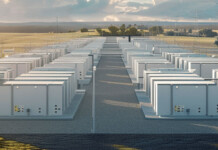
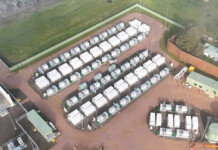
Construction is almost completed on five 8MWh network batteries at our substations in areas where there is significant roof top solar.
Our businesses would like to build more. We have to, because it’s clear Queensland, which boasts among the best solar resource in the world, will need much more energy storage capacity than is already being delivered.
Our engineering teams are developing tools to offer customers a dynamic connection that will support greater installation of renewables, batteries and electric vehicles for customers who want them, without putting excessive pressure on the network.
Customers will also need to play a vital role. They will soon have opportunities to be active participants on the network through advanced digital meters, cost reflective tariffs and ‘smart’ inverter standards that are being developed.
Related article: Can Australia support EVs with current infrastructure?
Fundamentally, our networks need to be able to move electricity between generators and users, not only to where they require it, but from when it is made, to when they use it. It is literally required to move electricity in time, and in space.
There must be greater investment in technology that allows better utilisation of the electricity networks.
The networks and the businesses running them must keep pace with the growing number of electric vehicles, batteries, solar PV systems and emerging industries that consume large amounts of electricity.
In short, we must continue to invest in the fuel of the future—electricity—so that our economy and our communities continue to grow and keep pace with the enormous amount of change that’s coming.