Siemens, with its solution partner Mescada, will develop a digital twin of InterContinental Energy’s patented P2(H2)Node, which brings hydrogen production together with wind and solar generation.
A world-first, the digital twin solution is expected to reduce the cost of hydrogen production by up to 20% and create a repeatable template that can be executed at scale, underpinning the Australian Renewable Energy Hub (AREH) and Western Green Energy Hub (WGEH) projects being developed by InterContinental Energy (ICE) in Western Australia.
Related article: Hysata and ICE join forces on giga-scale green hydrogen
The digital twin will allow ICE to test and compare different equipment and configurations under changing renewable energy and demand conditions, helping identify the optimal design before moving to front-end engineering design (FEED) and final investment decision (FID).
The project is co-funded by the Australian Renewable Energy Agency (ARENA) through its Advancing Renewables Program, which is contributing $1.56 million towards the $3.12 million project.
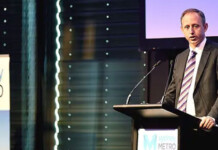
ICE Australia head Isaac Hinton said, “Our pioneering projects are at very large scale and in non-metro locations, so we need absolute certainty on design and cost before we commit to construction.
“The digital twin allows us to test technologies from different suppliers against cost and reliability targets to arrive at the optimal plant for FID. We expect this work with Siemens will deliver a cost reduction of up to 20% and gives us a repeatable template we can license to other developers globally.
“That matters well beyond our own projects, because clean energy produced at this scale can help decarbonise AI compute, steel, industry, fertilisers, and shipping.”
Siemens ANZ managing director digital industries Darryl Kaufmann said, “Energy at this scale can only be built with confidence if projects can be designed, tested and costed digitally before construction starts.
“ICE is among a growing wave of energy developers that want a digital twin from the earliest feasibility stage, rather than waiting until the build or operations, and gPROMS and COMOS give them a single, trusted source of engineering and cost data to do that. This project is a great example of collaboration between Siemens, Mescada, and ICE to deliver a world-first solution.”
Related article: Hadean’s hydrogen tech backed for steelmaking pilot
The project reflects a collaboration model that begins in the early phases of development with Mescada coordinating software delivery, onboarding and first-line technical support, while Siemens provides the technology and escalation support.
The approach is designed to carry through as ICE’s projects progress from feasibility into engineering and, ultimately, delivery.