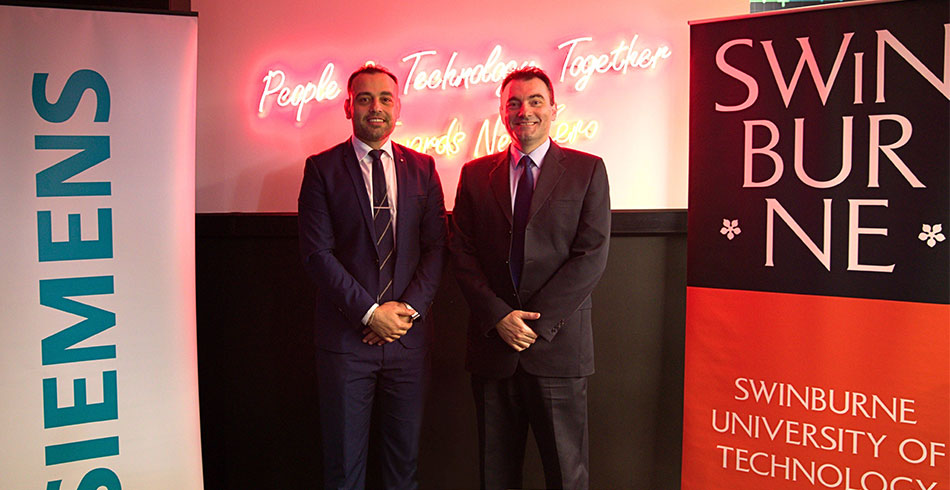
Siemens and Swinburne University of Technology are expanding their Australian energy and power systems collaboration internationally through the new Siemens Swinburne International Energy Transition Alliance for Industry Training and Innovation.
Building on the success of the Siemens Swinburne Energy Transition Hub in Australia, the alliance aims to establish a network of international energy training and innovation nodes across Asia, with the first planned to open in Malaysia by the end of 2026.
Related article: Siemens and Swinburne’s Energy Transition Hub opens
The alliance is designed to give energy industry professionals access to specialised training, advanced Siemens technology and practical expertise across areas including modern power systems, renewable energy integration, and the energy transition.
Operating as extensions of the existing $5.2 million hub in Melbourne, the international nodes will combine Siemens and Swinburne’s expertise with local partner institutions to support energy research, technology and industry capability. The Hub combines Siemens digital energy technology with Swinburne’s research, teaching and technical expertise and is accessible to students, academia and industry. It also supports industry training alongside research and commercialisation activities.
Siemens Australia and New Zealand managing director Peter Halliday said the international expansion demonstrated how industry and academia can work together to take Australian energy expertise to the world.
“The energy transition is a global challenge, and developing the right skills and capabilities is just as important as deploying the right technology,” he said.
“Australia has enormous expertise in tackling this transition. Through our collaboration with Swinburne, we’ve combined world-leading technology, research and practical industry experience. This next chapter is about taking that capability beyond Australia, starting in Malaysia, and working with local universities and industry to address each country’s own energy challenges.”
Siemens Asia Pacific head of grid software Jose Moreira said the initiative had enormous potential.
“Our collaboration with Swinburne continues to evolve, extending into other areas such as research on the role of AI in achieving Net Zero and the first Australian study on quantum timing to strengthen the future of power grids,” Moreira said.
Related article: New research hub to advance renewables and resources
“It is a strong example of how we can connect academic expertise with real industry challenges and develop solutions with practical impact. We now have an opportunity to take this model beyond Australia and expand it internationally.”