By Phil Kreveld
Snowy 2.0 has had a serious cost overrun, and the blame game is on. The first question is which of these figures is wrong—Turnbull’s $2 billion or the current projection of ~$22.2 billion?
The expected generation capacity is 2200MW or $11.4 million/MW based on the latest figures. A brand-new coal-fired plant would range from $3 million to $ 9 million/MW. A nuclear plant would be somewhere in the range of $20 million/MW.
Of course, the current projection for Snowy 2.0 might well go up again—but it seems in the nature of large projects—just take a look at UK’s Hinkley Point C 3.2GW nuclear plant.
Related article: Snowy 2.0 was never going to be cheap. But it will be much cheaper than relying on batteries for storage
It is a guess what the cost overrun was for Tutankhamun’s tomb in food for the workers. But shall we say that costing big projects has always been kind of difficult. So, rather than getting into a lather about the ‘battery of the nation’, let’s just get on with finishing the job. Those who would rather politic, please go ahead—but know it is of zero value.
What we ought to think about is whether we shouldn’t have more government-financed projects. Tutankhamun didn’t ponder long. This question if put to the business councils of Australia, would be met with derision. But wait, take a project like EnergyConnect and its huge cost overrun. It had Transgrid going to the Australian Energy Regulator for permission to raise the regulated asset base—and who do you think will pay for that? You and me by way of network charges in our electricity tariffs—as our descendants will fork out for Snowy 2.0.
Maybe we should think a bit more about projects that serve the nation as a whole. That might have us looking more closely at how we are going about the renewable transition—essentially a balkanised planning process. The underlying thought being that private industry is much more cost effective than government. Who says? Obviously, the investors, many of whom are foreigners, give it the thumbs up.
Wholesale electricity prices are going down—is that any wonder with mum and dad making their own electricity. But the way our network is configured we need big battery back-up and Snowy 2.0. The commercial investors are hanging back as low wholesale prices are very discouraging. It seems unavoidable that the renewable transition is asking for personal sacrifice by way of taxation or inflation or in limiting our rooftop solar so as to provide a living for the ‘big-time’ investors. Just as well Snowy 2.0 is on the way.
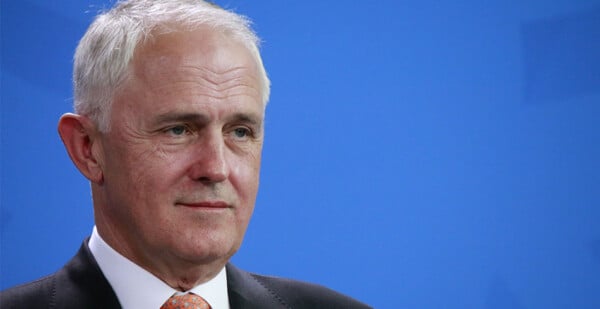
We kicked off with a question as to who was wrong on costs—well that’s easy; it was Malcolm Turnbull. However, he didn’t get that number in a dream. He got it from the Snowy folks (and can we please agree that they are not dills). The real question is who is more likely to contain the cost overruns, whatever they might amount to? Government-run construction outfits populated with ‘techy cardigans’ who wouldn’t know a balance sheet if they fell over it—or the commercial contractors. And not to be too cheeky, in electrical contracting, the general idea is to bid low and make money on the contract variations.
Related article: Snowy 2.0 cost reassessment balloons to $22.2 billion
Back in the old days, when your correspondent squeaked through elec eng, the cardigans started from the ground up, adding and adding bits and bobs to come up with project costs—and that eventually got at us to Julia Gillard stopping network ‘gold plating’ in 2012. Now things are different—get the project started, and then—oops—we better put in a couple of synchronous condensers, and phase changing transformer would be handy, etc., and could someone to put a call in to the AER.
Let’s end with miscellany of reflections: There’s no such thing as a free lunch, entropy stuffs up really good engineering solutions, and when you keep getting cost overruns—and investment falters, maybe, just maybe, have a good hard look at your planning processes before you put more money up.