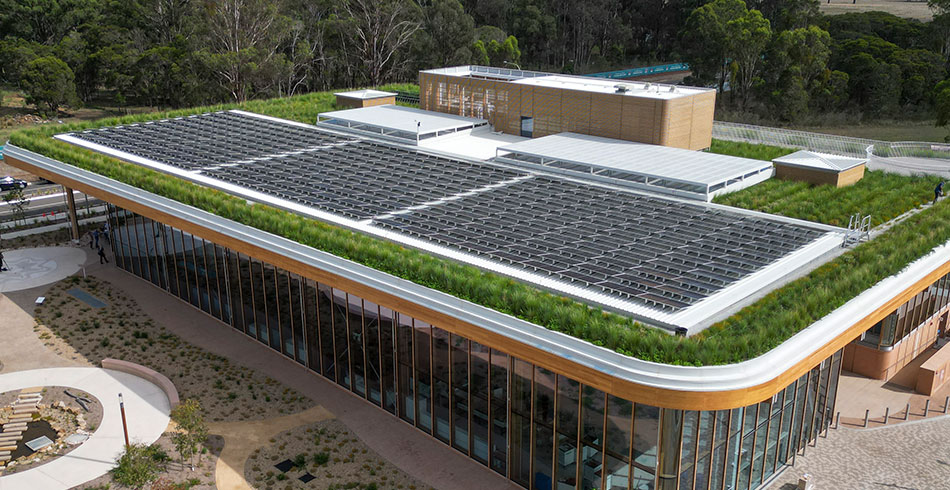
A study of a biosolar green roof in Western Sydney’s Bradfield City confirms that combining native rooftop gardens with solar panels reduces urban heat, increases renewable energy generation, and supports local biodiversity.
The research verified that the biosolar green roof increased solar energy generation by up to 23.25% during extreme heat events, while reducing roof temperatures by up to 28°C compared with a conventional roof.
The study also found the roof retained an average of 73% of stormwater runoff, removed more than 90% of key pollutants, and supported 39 species of birds, insects, mammals, and gastropods, demonstrating the benefits of integrating green infrastructure into urban development.
Related article: Father of modern solar looks to new tech frontier
The comprehensive performance assessment of the 1,300-square-metre biosolar green roof was led by the University of Technology Sydney (UTS) in collaboration with the Bradfield Development Authority (BDA).
As the first building delivered in Bradfield City, the 3,000-square-metre First Building showcases sustainable design through its use of low-carbon timber, rammed earth walls and an integrated biosolar roof. The building has already received multiple awards for architecture, design and sustainability.
For four months over summer 2025, the research team tracked and evaluated the performance of the biosolar roof across five areas: photovoltaic (PV) panel efficiency, biodiversity, stormwater filtration, air quality, and heat.
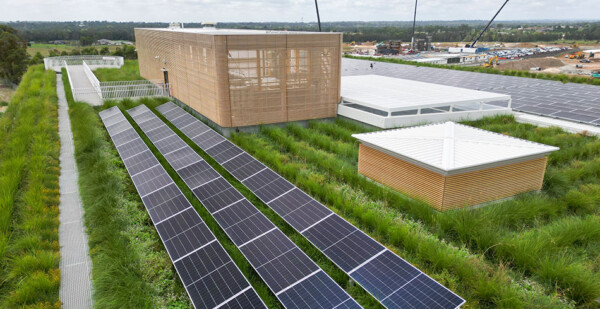
By installing solar PV arrays directly over the green roof footprint, the configuration allows the vegetation to naturally cool the rooftop microclimate, enhancing solar panel efficiency, while the panels provide partial shade to support the growth of the plants below.
Lead researcher, UTS Associate Professor Peter Irga, said the BDA project provided a unique opportunity to measure the performance of a biosolar roof without the influences typically present in an established urban environment.
“Usually, when we test a green or biosolar roof, the data is heavily distorted by surrounding urban factors such as traffic pollution, drainage issues and the urban heat trapped by other buildings,” Associate Professor Irga said.
“Because broader city-building activities had not yet commenced around First Building, we were able to obtain a much cleaner baseline to accurately assess the performance of the biosolar roof. The findings provide a robust, data-driven blueprint to inform future development across Bradfield City. ”
In Australia, one of the major challenges for solar generation is high temperatures. Solar panels perform most efficiently at 25°C, with efficiency dropping by up to 2% for every degree above that threshold.
The First Building’s biosolar roof addresses this challenge by combining 319 north-facing solar panels with more than 14,000 native Cumberland Plain plants. Through evapotranspiration, the vegetation cools the surrounding environment, enabling the solar panels to outperform those on a conventional roof by an average of 11.1% during summer, with peak gains of up to 23.25% on very hot days.
During extreme heat events, the biosolar roof was up to 28°C cooler than a conventional aluminium roof.
“We found the cooling effect of the vegetation was highly dynamic, and became more effective as the ambient temperature rose,” Associate Professor Irga said.
“This means the hotter the day, the harder the plants work to moderate the building’s microclimate and keep the solar panels operating efficiently.”
The study also found significant biodiversity benefits. A combination of field surveys and environmental DNA (eDNA) analysis recorded 39 distinct species across birds, insects, mammals, and gastropods, demonstrating the effectiveness of the roof’s native planting in supporting local fauna.
Related article: Study finds coal pollution affects solar power output
Associate Professor Irga said the emphasis on flowering native species attracted 13 pollinator species, including the rare blue-banded bee.
The roof was designed by Hassell in collaboration with green roof specialist, Three Owls Landscaping, who supplied and installed a mix of flowering groundcovers such as lilies, and wild geraniums, to provide year-round habitat and food sources for local insects.
Read the full report here.