
CSIRO’s new National Energy Analysis Centre is helping inform energy policies in the real world through its Living Lab, with participants sharing energy data and insights on their energy use and energy technology decisions. Energy Source & Distribution finds out how this initiative provides a genuine feedback loop between energy consumers and those making key policies and decisions.
Launched by CSIRO in 2025, the National Energy Analysis Centre (NEAC) is designed to support and de-risk Australia’s transition to net zero. The NEAC Living Lab will comprise thousands of households and businesses testing energy products, sharing real-world meter data, and participating in surveys to provide evidence-based research to inform energy policies.
The Living Lab’s research includes EV load profiles, home battery and VPP performance, electrification, energy efficiency, and behavioural change, resulting in data that can be utilised by governments and regulators, DNSPs and TNSPS, and energy innovators.
Related article: NSW energy consumers invited to join Living Lab project
Powered by people, driven by data
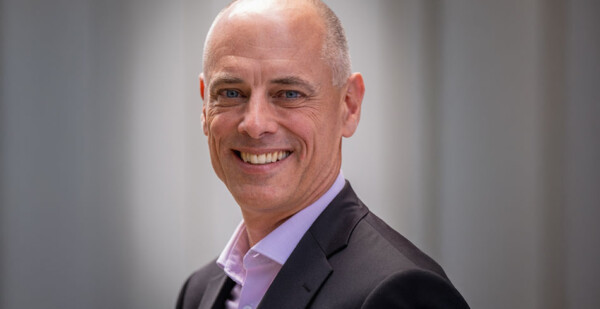
NEAC director Dr Stephen Craig says there were a number of drivers that led to creation of a National Energy Analysis Centre.
“One of my PhD advisors in Stockholm was the first chair of the Intergovernmental Panel on Climate Change (IPCC), Professor Bert Bolin,” he says.
“Bert was a true systems thinker with a deep understanding of the science and a drive to ensure scientific understanding translated into positive action in society. Bert’s achievements in the climate domain were one source of inspiration for establishing NEAC.”
Another major impetus, he says, came from the experience in defence, aerospace, and communications where systems engineering, and digital engineering more broadly, are well established.
“The energy transition struck me as being a real systems challenge but the application of modern socio-technical systems science and engineering to structure, guide and de-risk the process was limited. There seemed to be an opportunity for CSIRO as Australia’s national science agency to establish targeted and enduring digital infrastructure that would help to address this gap.
“The final piece of the puzzle came from looking at similar initiatives overseas, particularly the systems research of Professor Amro M Farid in the United States, who we were lucky enough to host as a Fulbright Scholar for six months at CSIRO in 2022, and Energy Systems Catapult in the UK, who had established a large-scale distributed living lab to support the energy transition there.
“Energy Consumers Australia (ECA) invited Paul Jordan from Energy Systems Catapult UK to present the keynote address at the ECA Foresighting Forum early in 2023, and we connected there.”
Citizen science on steroids
NEAC’s Living Lab is a significant and vital energy system/citizen science project and Dr Craig says a huge amount of effort has gone into making sure the benefits are truly multi-directional.
“We are putting a lot of thought and effort into ensuring that our Living Lab participants benefit from being involved,” he says.
“When they share their energy data, we will be able to provide personalised insights that could help them to reduce their energy costs, through changing behaviour, billing/tariff structure, government programs, or through investing in energy efficiency improvements.
“Attitudes and behaviours are absolutely key to the energy transition. One of the benefits of the Living Lab is that we can understand attitudes, and how they relate to behaviours, and observe changes in both over time.
NEAC has a number of research focus areas over the next year or two, including:
- Real-world EV load profiles and household grid interaction in Australia
- Household battery and VPP performance – measuring dispatch in Australian conditions
- Electrification field performance in Australian homes – heat pumps, cooking and the decarbonisation pathway
- Indoor thermal exposure, housing performance and health
- What Australian households actually pay – plan outcomes, market equity and the distribution of transition costs and benefit
- Longitudinal behaviour change – what works, for how long, and why.
Understanding consumer usage and adoption
With the Living Lab now boasting more than 800 participants nationwide, NEAC is talking to a number of DNSPs and TNSPs about accessing the Living Lab to understand the behaviour and plans of their customers better, in order to improve forecasting and infrastructure planning.
Network businesses can access insights from combining meter and behind-the-meter data with social profiles to understand not just what is happening at the connection point, but the “why” behind consumer usage and adoption.
Networks can use the Living Lab to:
- Gain customer insights to improve forecasting and infrastructure planning
- Trial products and incentives
- De-risk future scenarios
- Validate and refine customer personas.
Dr Craig says there’s also been a lot of interest from various state and federal government agencies.
“We are currently working with the NSW Department of Climate Change, Energy, the Environment and Water to develop customer insights to support the NSW Consumer Energy Strategy. Through the two-year project, 1,000 households and 60 small businesses in NSW have the opportunity to join the NEAC Living Lab, sharing their energy use information and their views about the energy system, including government programs and incentives.
“We will learn about attitudes and barriers to electrification and uptake of CER, and other non-network solutions, for different types of household sizes and demographics, and housing situations including renting, size and age of the house and so on.”
Innovators also have the opportunity to evaluate their technologies in the Living Lab, gaining valuable feedback on effectiveness and usability.
“The Living Lab gives researchers, innovators, and policymakers fast, scalable access to a pre-recruited, diverse pool of Australian households and businesses—without the time and cost of building recruitment from scratch,” Dr Craig explains.
“Research can scale from a single survey to a multi-year trial with real homes and businesses to understand user experience, system implications, evaluate energy programs and initiatives, and share insights with stakeholders. Participants, both households and businesses, receive personalised insights into their energy use.
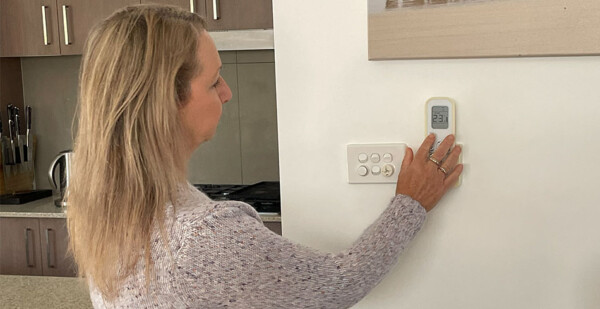
“For some participants, we are installing circuit-level electrical monitoring, interval gas monitoring, and indoor temperature and humidity monitoring. This will enable us to really understand what is going on behind the meter, and answer questions such as: How does household energy use behaviour change when solar is installed, and when a battery is installed? Why do some houses use a lot of electricity while others use very little? If every house in a neighbourhood stopped using gas, what would that mean for peak demand? How can we reduce peak energy demand while maintaining living standards?”
Related article: New CSIRO research centre to drive energy transition
Picking up the pace
The Living Lab is on a fast development path, and will soon include a portal for participants to use to complete surveys, connect their energy data and view results and comparison; as well as a portal for clients to explore and interact with de-identified data and visualise insights.
Dr Craig says, “Later this year we will connect our Living Lab to NEAC’s Systems Science Toolbox, including its whole-of-energy system model. This connection will enable us to scale Living Lab insights to model a suburb, region, state or the country, and to test in our Living Lab any consumer-based findings from the model.”
And as the Living Lab grows, other countries are watching with interest.
“While our Living Lab was inspired by Energy Systems Catapult in the UK, we believe NEAC is the first in the world to combine a Living Lab with systems science analytical capability to scale consumer insights and incorporate energy users explicitly into the heart of future system planning,” he says.
“This could be of great interest to other countries who are following a similar transition path.”
To enrol in NEAC’s Living Lab, click here. For more information about CSIRO’s energy research, click here.