The Australian Energy Regulator (AER) has published its final revenue decisions for five Victorian electricity distribution network service providers (DNSPs)—AusNet, Jemena, CitiPower, Powercor, and United Energy—for the 2026-31 regulatory period.
Electricity transmission and distribution network businesses are required to submit revenue proposals to the AER every five years outlining how much they intend to recover from consumers. The AER assesses these proposals to ensure consumers pay no more than necessary for safe, reliable and secure electricity services.
The AER’s final decisions aim to strike a balance between keeping costs affordable for consumers and ensuring networks can invest in the capital and operating expenditure needed to support the evolving energy system.
“We have carefully considered all submissions and feedback from stakeholders and reviewed the proposed expenditure to ensure that it is clearly justified, timely and efficient,” AER Board Member Lynne Gallagher said.
Related article: AER’s draft DMO signals possible price reductions
“Following our assessment, we have either accepted, rejected or in some cases, identified other solutions to address consumers’ concerns and deliver the outcomes they were seeking at a lower cost.”
The final decisions allow AusNet to recover $4,745.7 million, Jemena to recover $2,000 million, CitiPower to recover $2,039 million, Powercor to recover $5,335.4 million and United Energy to recover $2,319.2 million for the 2026-31 regulatory period.
While these decisions don’t set the impacts on customer’s electricity bills, high level estimates indicate a likely average annual decrease of $6-$38 in the distribution component of Victorian residential electricity customers’ bills across 2026-31.
This is because, even with the increase in approved revenue, forecast higher demand would result in the increases being shared among more customers, leading to lower bills than in the current period. Whether bills continue to fall in the later years of the regulatory period will depend on whether the increases in demand are realised.
The decisions include a combined $119 million across the networks to support initiatives for network and community resilience during and after extreme weather events, and over $112 million in new investment to improve network reliability.
With these costs ultimately borne by consumers, Gallagher reinforced the importance of networks effectively using their existing infrastructure to its full capacity.
“It’s critical that network businesses get the most out of the network we already have and look at alternative, non-network solutions where possible so that consumers only pay for targeted investment where and when it’s needed,” she said.
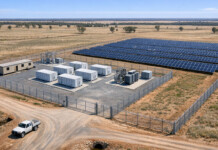
The decisions also support networks to integrate CER such as rooftop solar, which can have benefits for all consumers through lower wholesale electricity costs, lower networks costs and lower carbon emissions.
“We have approved a combined $199 million across the networks to better integrate consumer energy resources and introduced pricing options that reward customers who make the most of their energy when it is available and reduce the impact on the network,” Gallagher said.
Related article: AER delivers final revenue decision for regulated Basslink
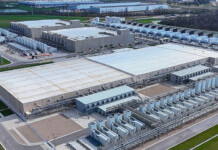
“Our decisions also help ensure data centres are paying their own way when connecting to the distribution network. This includes paying for both the direct cost of connection that is only used by the data centre, and a fair portion of the shared distribution network costs.
“We will continue to focus on improving consumer outcomes and ensuring the regulatory framework works for all consumers, including those who are vulnerable and at risk of being left behind as the transition progresses.”
The final decisions will come into effect from 1 July 2026.